There are already many problems in this market-like transaction, including a twist of roles where the masses, who should be the buyers, are themselves bought.
This is not just a “political dynamic” but a crisis across Sub-Saharan Africa. How can Africa have good leaders when we always corrupt the process from the grassroots level?
Growing up two decades ago, I overheard numerous political debates and speeches and read quite a lot of articles on political issues in newspapers, both local and from across the African continent. I found them to be very intelligible and understandable, even to what I now adjudge was my young mind at the time.
I understood the arguments and proposals because they made sense, though I picked no side. I looked at politics as an affair of adults who knew what they were doing. Parliamentary broadcasts also glued many young people to their televisions because they made sense: there were the right questions and, most times, the right responses.
Today, as an adult myself, I look at politics, especially, and without mincing words, at the same levels, with appalling disbelief and a whole lot of unanswerable questions. I have questions regarding the processes, the political players, and even the political “market” itself, which in sub-Saharan Africa today, consists largely of young people. Why market? Because politics is like a marketplace where politicians sell their proposals for building the nation and citizens are the political buyers.
But there are already many problems in this market-like transaction, including a twist of roles where the masses, who should be the buyers, are themselves bought. This is not just a “political dynamic” but a crisis across Sub-Saharan Africa. How can Africa have good leaders when we always corrupt the process from the grassroots level?
Coming to the political dialogue, why is there no criticism? Why are there no questions? Why is no one held accountable for brutal, politically motivated wounds? Why are leaders adored and praised all around? Even more importantly, why is there terror in what should be a free political space?
Ideally and by its very good nature, politics features the exchange of ideas in a constructively competitive way. It is not a competition against a person(s), but against a political worldview in exchange for a better one for the good of the nation. As such, love for the country ought to be shown not only through speeches, press briefings, or social media posts, but also through actual decisions that impact society, ensuring that no one bears the burden of pain and loss caused by injustice.
Nonetheless, young people are in a position to resist being bought politically by addressing, in every way possible, the circumstances that make them economically dependent. It is difficult to criticise or challenge those who directly control one’s livelihood. Yet, where even basic livelihood is difficult to secure, the desire for better governance becomes secondary to hunger and other basic needs.
For instance, in countries where young people aged 30 and below make up the largest demographic group, political debates should prioritise the conditions and concerns of this group. This will enable governments to maximise their potential for nation-building, as they collectively form a potential workforce across a wide array of sectors.
While it is true that the future of a nation lies in the hands of its young people, these young people have to be liberated from poverty, fear, and ignorance to the extent that they have a true sense of their freedom. They should be able to think out the political agendas of different political whims and align themselves with what appeals to their sensible minds as not merely right, but also just politics, favouring the growth they desire for their country.
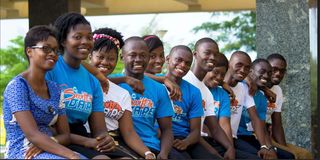
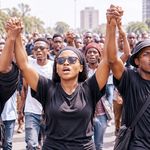
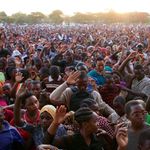
When young people are left out of the mainstream socio-political sphere, where they can be heard and actively involved in building the nation, they become available for campaign mobs, online propaganda, intimidation squads, goons, and even hired crowds at political rallies, an image that readily surfaces across numerous African countries today.
With the evolution of the digital world, political ecosystems have not been left untouched. It is impossible to practise politics in the same way it was done 60 years ago. While values should remain the same as the baseline of political engagement, especially genuine patriotism, justice, fairness and respect for the rule of law, the modality continues to evolve.
Today, people are more easily informed and therefore can also be more easily mobilised to take a stand, embrace a conviction, and even take action. The world has seen young people uniting through the internet and social media to demand fair political processes, etc. This shows that political tactics used 50 years ago, such as controlling mass media platforms like radio, TV and print media, are obsolete now.
Our countries risk being ruled by despots who have no genuine desire to serve the public good if young people do not engage with the side of politics that demands fairness, accountability, justice, and respect for the life and dignity of individuals. Being politically uninformed makes young people more likely to support the wrong side, setting a price at which they can be bought and used as political pawns, or better put, crowds for hire; a messy reality that is also gradually taking shape in the digital space.
Shimbo Pastory advocates for positive social transformation, and is a student of Theology at the Loyola School of Theology, Ateneo de Manila University, the Philippines.