Dar es Salaam. As the 2026 school term officially begins today, Tuesday, January 13, some students have faced major transport challenges, particularly from Dar es Salaam to upcountry.
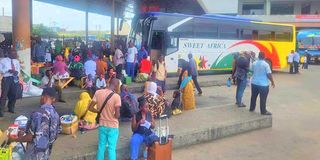
At Magufuli Main Bus Terminal and smaller hubs in Manzese and Shekilango yesterday, Monday, January 12, passengers struggled to secure transport, mostly parents accompanying their children.
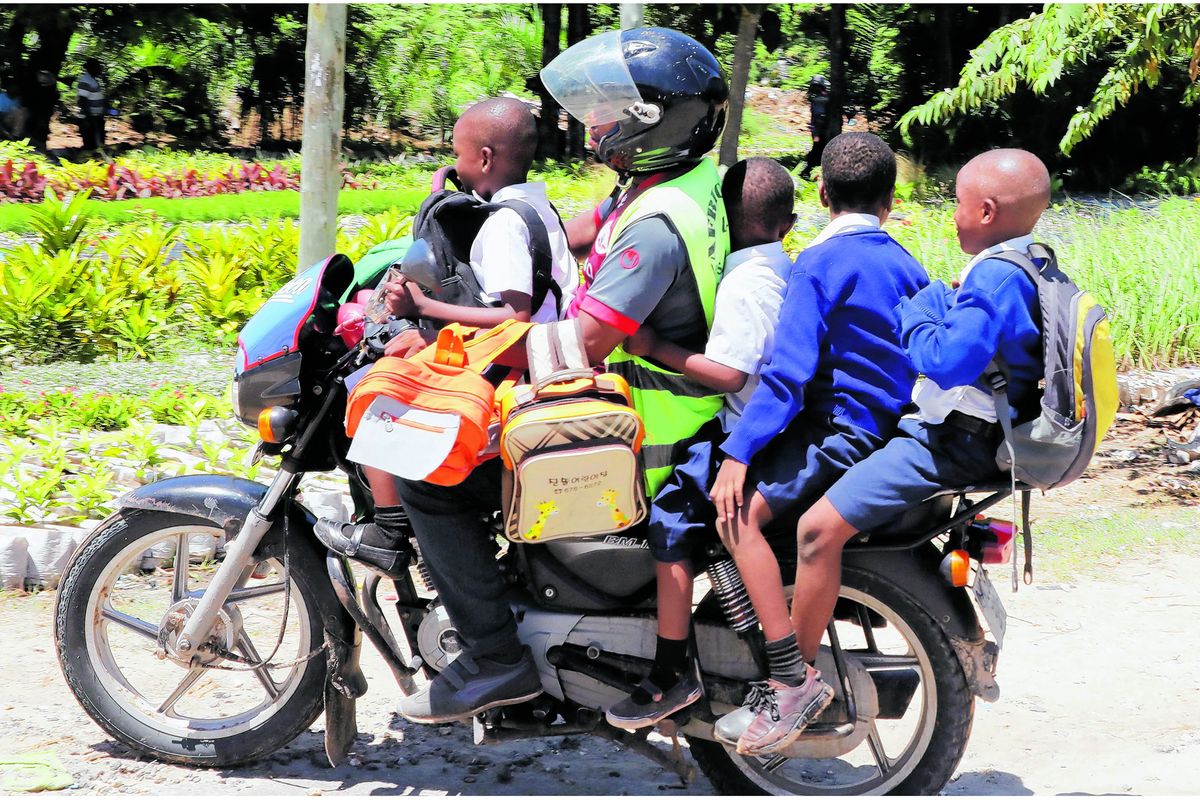
Carrying luggage, some travelled from Manzese to Shekilango by motorcycle taxi, while others went to Magufuli Main Terminal seeking transport, including informal “connect” services, which were scarce.
By 4 pm yesterday, several passengers had still not secured transport, risking missing the first day of school, though some institutions opened on January 5.
Transport difficulties were widespread, affecting trips to Morogoro, Mbeya, Dodoma, Singida, the southern highlands regions of Mbeya, Iringa and Njombe, and northern regions including Arusha, Kilimanjaro, and Tanga.
Amid this travel chaos, arbitrary fare hikes emerged, creating further hardship for travellers.
For operators, however, the situation has been an unexpected boon, as in recent days many vehicles were idle due to a lack of passengers, forcing reductions in road services.
Consequently, some schools arranged buses to transport students collectively, dropping them directly at their institutions.
This system reportedly eases travel difficulties for students, many of whom do not carry phones, as school leaders are present on the buses.
Beyond parents and students, ordinary passengers also struggled amid the influx of travellers.
The Citizen’s sister newspaper, Mwananchi, reporters stationed at the terminals from morning to evening witnessed chaos, including among students starting Form One.
The transport challenge also affected the Standard Gauge Railway (SGR) train to Morogoro and Dodoma from Friday through Monday, as tickets had sold out in advance.
Passengers said that the transport difficulties were confusing and stressful. Many expressed despair over the scarcity of buses, forced to wait without certainty, affecting children’s punctuality for lessons.
Several regretted not travelling earlier if they had known the situation. Some parents cited irregular income and social pressures as reasons for delays, while January’s numerous family and economic obligations further complicated timely travel.
Others argued that parents cannot rush children to school if there is nowhere to stay, though relatives could facilitate early travel.
A parent struggling to transport his child to Morogoro, Mr Gabriel Moshi, said most families rely on casual work and lack a steady income.
“It is easy to ask why we do not send children early, but our income is irregular. We live waiting for money, and when we get it, we spend it; that is why we delay returning children to school,” said Mr Moshi.
He added that parents avoid the hassle of seeking transport under the hot sun, but economic conditions leave them no choice.
Transporting her child to Kilimanjaro Region, Ms Sofia Lema said buses had been full for several days, and she had recently suffered the loss of a close relative, incurring unexpected expenses.
“I had a bereavement and spent a lot of money, which destabilised me financially. That is why I could not send my child early. Now I have the funds and am seeking transport, and I believe I will succeed,” said Ms Lema.
Taking a student to Dodoma, Ms Agnes Lucky said she missed an SGR ticket and hoped to manage on a bus.
“Every good Dodoma bus I checked for a ticket was full. If I had a steady income, I would have booked my child’s ticket early,” she said.
A parent of a Bukoba, Kagera Region school student, residing in Dar es Salaam, said their school arranges transport to pick up and return children.
“Parents can hire buses collectively, which is safer. School leaders travel on the bus, so guardians and parents should consider this system, which we use at our school,” the parent said on anonymity.
Boom for operators
Amid the transport agony, operators have benefitted, as buses are not travelling empty, and even minibuses seized the opportunity.
Fares from Dar es Salaam to Morogoro, usually Sh10,000, have risen to Sh15,000–Sh20,000.
A provincial bus owner, requesting anonymity, said: “We had a passenger shortage after many travelled before December 9. Then passengers stopped coming; now we compensate by size and honestly earn money.”
He added, “In recent days, the situation has improved. We travel to regions and back to Dar es Salaam with enough passengers, reducing operating costs. Without passengers, fuel cannot be bought, and profits are impossible.”
Despite this, some passengers at Magufuli Main Terminal complained about arbitrary fare hikes.
Nelia Rugaza said tickets were sold at different prices for the same journey, with some persuaded to pay extra to brokers under the pretext of bus scarcity.
“Some pay higher fares to avoid being late. Those without the means continue to loiter at the terminal, as each company tells us buses are full,” said Rugaza.
Mr Omary Mrisho said he waited over four hours for transport to Ifakara. “I arrived at 10 am and by 2:22 pm had not secured transport, while being asked to pay Sh65,000, though the official fare is Sh25,000. If by 5 pm I have not secured transport, I will return to where I came from,” he said.
Mr Muddy Limbu, travelling with his wife and young child, said he had been at the terminal since 11 am, hoping for a bus to Maswa without success, revealing that he was quoted Sh90,000 by a broker, while the usual fare is Sh65,000–Sh70,000.
Ms Naomi Msangi, travelling to Mwanza with her son, said she already had a ticket and was awaiting the bus’s arrival.
Drivers cite tricky situation
A driver, requesting anonymity, said the transport challenge affects passengers expecting to buy tickets and travel the same day.
Those who booked early may face minor delays for technical reasons, but passengers without tickets struggle to secure travel.
“Those who booked early may be delayed by a few minutes, but for those without tickets, securing transport today (yesterday, Monday) was difficult,” he said.
Another transport stakeholder, identified by the name of Elly, said the situation is worse for Morogoro buses, where many passengers book on the day of travel.
“Yesterday, buses were few and passengers many. Early bookings face no problem, but same-day travellers may get a minibus, though large buses are difficult to secure,” Elly said.
What Latra said
The Land Transport Regulatory Authority (Latra) officer in charge at Magufuli Main Bus Terminal, Ms Rukia Kibwana, said the authority acts on reported complaints.
“Agents help passengers secure transport. If there are no complaints, Latra officers have no evidence,” she said.
She added that illegal fare hikes are treated as theft, with legal action taken, including police reporting.
“Fare increases on electronic tickets are offences, and offenders are sanctioned, including fines,” said Ms Kibwana.
Register to begin your journey to our premium contentSubscribe for full access to premium content