UDSM’s green technologies to reduce construction costs
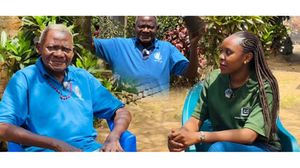
University of Dar es Salaam Laboratory Scientist, Mr Jason Kaijage, showcases an environmentally friendly construction product at the 50th Dar es Salaam International Trade Fair (DITF) grounds yesterday. PHOTO | Gadiosa Lamtey
Dar es Salaam. Researchers from the University of Dar es Salaam (UDSM) have unveiled a range of locally developed technologies aimed at reducing construction costs, lowering carbon emissions and improving energy efficiency as Tanzania seeks sustainable solutions for the construction and energy sectors.
Speaking to The Citizen yesterday at the ongoing 50th Dar es Salaam International Trade Fair (DITF), laboratory scientist Mr Jason Kaijage said the technologies were designed to tackle climate change through environmentally friendly alternatives to conventional construction materials and processes.
Among the innovations is Duracem, a cold asphalt technology for road construction and maintenance. Unlike conventional asphalt, which requires heating before application, the product can be used without heating, reducing emissions and cutting costs.
Mr Kaijage said the technology could lower road construction costs by between 20 and 25 percent while allowing roads to reopen within two to three hours after application.
“Conventional asphalt releases harmful gases during heating and increases construction costs. Our cold asphalt is cheaper and environmentally friendly,” he said.
The team has also developed a stabilising material applied beneath road surfaces in areas with high groundwater levels and salinity to improve road durability.
Another innovation, Nova Cement, is designed for areas with high moisture and salt content where conventional cement deteriorates faster. It can also be used to produce durable paving blocks and bricks.
Researchers have further developed insulated bricks and wall panels that help regulate indoor temperatures, reducing reliance on air conditioning and lowering electricity consumption.
The team has also developed a material that purifies biogas from organic waste and livestock manure, allowing it to be compressed into cylinders for household use.
Mr Kaijage said the research, which took more than two years, has completed laboratory testing, while some products, including cold asphalt, have already undergone pilot trials.
“The challenge now is moving from small-scale to commercial production so more people can benefit,” he said.
Register to begin your journey to our premium contentSubscribe for full access to premium content