UN Security Council to decide fate of Arusha genocide tribunal in June 2026
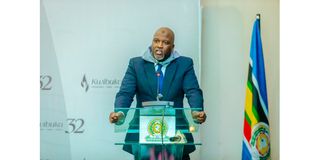
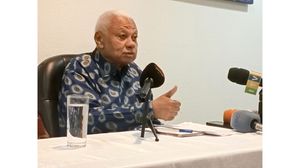
Assistant Secretary-General and Registrar of the International Residual Mechanism for Criminal Tribunals (IRMCT), Mr Abubacarr Tambadou, speaks during the 32nd commemoration of the Rwanda Genocide held recently at the East African Community (EAC) headquarters in Arusha. PHOTO| BERTHA ISMAIL
Arusha. The future of a 32-year-long quest for justice for nearly one million victims of the 1994 Rwanda genocide is expected to be determined in June 2026, when the United Nations Security Council convenes a decisive session anticipated to be held in Arusha, Tanzania.
The Council is expected to deliberate on the future of the Residual Mechanism for International Criminal Tribunals (IRMCT), which continues operations in Arusha following the closure of earlier international justice institutions established to address crimes committed during the genocide.
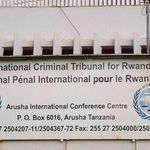
At the centre of the discussions will be the performance and long-term mandate of the International Residual Mechanism for Criminal Tribunals, which has been operational for 16 years, handling remaining judicial and administrative functions after the closure of the International Criminal Tribunal for Rwanda.
The IRMCT itself inherited responsibilities from the International Criminal Tribunal for Rwanda, which operated in Arusha for 15 years before formally closing in 2009.
Among the key outcomes expected from the 2026 deliberations is a decision on whether to permanently close the Arusha-based office or transfer its remaining functions to another location.
Assistant Secretary-General and Registrar of the IRMCT, Mr Abubacarr Tambadou, confirmed that the final decision on whether the institution will cease operations in Tanzania will be made during the June 2026 Security Council session.
He made the remarks during the 32nd commemoration of the Rwanda genocide held at the East African Community (EAC) headquarters, an event attended by members of the Rwandan community residing in Arusha and Kilimanjaro regions.
“The Security Council of the United Nations will take its final decision at its upcoming session; that is when we will know whether operations will be closed or functions relocated,” said Mr Tambadou.
He added that once the Council concludes, the IRMCT Arusha office will issue an official statement outlining the next steps.
If the decision is to close the facility, he said it would mark the end of a significant chapter in the international justice process that began more than three decades ago in the aftermath of the 1994 genocide in Rwanda.
The Arusha-based centre, located at Lakilaki Hill along the Arusha–Minjingu Road, was established in 2010 to take over the residual functions of the International Criminal Tribunal for Rwanda following its closure.
During the genocide, an estimated one million people were killed, while several suspects who fled justice remain at large to date.
Since its establishment in 1995, the ICTR has indicted 93 individuals accused of serious violations of international humanitarian law.
Of these, 62 were convicted, 10 cases were transferred to national jurisdictions, and three were referred to the IRMCT in 2010.
Additionally, 10 accused persons were acquitted during the tribunal’s operations in Arusha.
Rwandan authorities continue to stress that despite significant progress in accountability, several suspects remain fugitives, reportedly living freely across Africa, Europe, and North America.
In his address during the commemoration, President Paul Kagame called on states to intensify cooperation in extraditing remaining suspects to face justice.
He emphasised that reconciliation remains incomplete as long as perpetrators continue to evade accountability.
“Justice cannot be complete while those responsible for genocide are still at large, hiding in other countries. We will not allow what happened in 1994 to happen again,” President Kagame said during the commemoration held in Kigali.
He said that genocide begins with the denial of truth, division, and indifference, and emphasised Rwanda’s resilience and ability to rebuild from its tragic past