Why additional time for october 29 probe commision was necessary

Chairman of the Presidential Commission of Inquiry investigating the October 29 election-related chaos Justice (rtd) Mohamed Chande, speaks in Dar es Salaam yesterday.  PHOTO | CORRESPONDENT

Dar es Salaam. The decision to extend the mandate of the commission investigating the October 29 election-related chaos reflects the growing scale, complexity and sensitivity of the task facing the inquiry.

The commission, chaired by Justice (rtd) Mohamed Chande, was initially given 90 days to investigate the incidents. However, the timeline proved insufficient as the volume of evidence and public interest continued to rise.
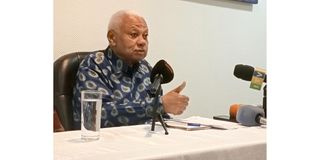
Speaking yesterday Judge Chande said the extension was necessary primarily due to the increasing flow of submissions from citizens.

As more people came forward with testimonies, documents and digital evidence, it became impractical to conclude the process within the original timeframe without compromising the quality of the findings.

“Our work is guided by evidence. We cannot ignore submissions once they are presented,” Justice Chande said during a press briefing.

One of the key challenges has been the nature of the evidence itself. The commission has received a mix of eyewitness accounts, official records and digital materials, including satellite images and videos circulating on social media. Such evidence requires verification through technical and scientific analysis to establish authenticity.

This process, Justice Chande said, is time-consuming but necessary to ensure credibility.           

Beyond verification, the geographical scope of the inquiry also expanded. While the commission initially planned to visit six regions most affected by the unrest, it later extended its outreach to 11 regions and 22 districts. The aim was to capture a broader and more balanced account, including perspectives from areas that remained largely peaceful.

This wider coverage has added depth to the investigation but also increased the workload, further justifying the need for additional time. The commission is also under pressure to meet high expectations from both domestic and international stakeholders. Established by President Samia Suluhu Hassan, the body is expected to produce a report that is not only factual but also credible and acceptable across different audiences.

To achieve this, the report will be prepared in both Kiswahili and English, adding another layer of work in ensuring accuracy and consistency across languages.

Another critical factor, Justice Chade said, is inclusivity. The commission has sought to engage a wide range of groups, including youth (popularly known as Gen Zs), traders, transport operators and civil society organisations. University students, for instance, presented their views through Tanzania Higher Learning Institutions Students’ Organisation and through the respective organisations of students of each college of higher learning.

Allowing these groups to participate meaningfully has required additional time but is seen as essential in building a comprehensive and representative record of events.

Justice Chande also emphasised that the commission operates independently, guided by its legal mandate and internal procedures. He dismissed claims that the extension was intended to influence the outcome of the report, insisting that the process remains transparent and evidence-based.

“We are responsible for writing the report. There is no external interference…We are the reporters, the editors and sub editors of the report,” he said, adding the only time that the commission met with the executive arm of the government was during the day when it (the commission) received the terms of reference.

Ultimately, he said, the extension is intended to ensure that victims of the October 29 incidents feel heard and that their experiences are adequately reflected in the final report.

The commission hopes that a thorough and credible inquiry will not only establish the facts but also contribute to national healing and inform future reforms.

In this context, said Justice Chande, the additional time is less a delay and more a necessary step to safeguard the integrity, inclusiveness and impact of the investigation.