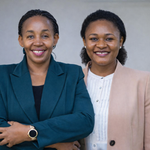
Currently, Yoramu has 19 years of experience in conservation in Tanzania—an area where the forestry sector has historically been male-dominated
Becoming the Chief Conservator of Sao Hill Forest Plantation under the Tanzania Forest Services Agency (TFS) for Tebby Yoramu, the Plantation Forest Conservator (PCO) at TFS, had no shortcut but required enduring a long journey with several stages.
The plantation contribute between 35-40 percent of TFS revenue annually with 135,903 hectares.
It all started with her intentional decision to pursue science subjects at Loleza Girls’ Secondary School for both Ordinary and Advanced Levels and later forestry and beekeeping conservation studies.
Currently, Yoramu has 19 years of experience in conservation—an area where the forestry sector has historically been male-dominated.
“Throughout my career journey, I have learned that leadership requires demonstrating the ability to deliver positive results with integrity. Over 19 years, I have built a strong professional foundation, work discipline and the courage to make tough decisions for the broader interests of the institution and the nation,” said Yoramu.
Yoramu, who is currently pursuing her Master’s Degree in Natural Resource Assessment and Management at the Open University of Tanzania, has worked for both government and non-governmental organizations on projects at national and international levels.
In 2007, she was employed in the Forestry and Beekeeping Division under the Ministry of Natural Resources and Tourism, starting at operational levels within the conservation sector, where she gained extensive field experience while serving in various positions.
With nearly two decades of progressive leadership in forest and beekeeping resource management, she began her career in 2007 as Assistant Manager (Second Division) at Sao Hill Forest Plantation.
From 2010 to 2012, she served as Assistant Regional Catchment Manager in Kilimanjaro, where she strengthened watershed protection and regional conservation coordination.
She later joined the Northern Zone as a Forest Officer in the Planning and Utilization Section (2013–2016), gaining extensive experience in sustainable forest planning and resource utilization.
Her leadership trajectory continued to rise when she was appointed Acting Assistant Conservator for the Central Zone Forest and Beekeeping Resource Management, while simultaneously serving as District Forest Manager for Bahi (2016–2018).
She was subsequently confirmed as Assistant Conservator for the same zone and district (2018–2020). In 2020, she advanced to Deputy Chief Conservator at Sao Hill Forest Plantation, overseeing Forest and Beekeeping Resource Management and since 2022, she has been serving as Chief Conservator of Sao Hill Forest Plantation—the pinnacle of her distinguished career in conservation leadership.
“I faced challenges at different stages, which I viewed as opportunities for learning and growth. Each new responsibility was a trust that required greater accountability. I believe all these experiences led me to my current leadership position,” says Yoramu.
Throughout her career, she has confronted deeply rooted perceptions within the forestry sector, including the belief that forestry work requires physical strength and is therefore better suited for men.
She added that she also faced doubts about a woman’s ability to lead large teams effectively, especially in a field traditionally dominated by men. Beyond the workplace, she navigated the demanding balance between professional responsibilities and family life in a society where women are often viewed as primary caregivers. These challenges tested not only her competence but also her resilience and determination to lead.
“What gave me strength was a deliberate focus on delivering visible, measurable results that would gradually change perceptions and silence doubt. My mentors and colleagues who believed in my leadership skills encouraged me, while my personal faith and deep passion for forestry sustained me through difficult moments,” she said.
She added that strong family support provided the foundation that enabled her to meet both professional and family obligations with confidence, proving that women can lead, nurture and excel all at once.
Asked how she broke social and professional barriers in a male-dominated forestry sector, she said she leads by example, engaging in all plantation operations—from nursery production to financial and equipment management—showing that leadership rests on competence and accountability.
“By embracing constructive feedback, following government guidelines and making fair, transparent decisions, I have fostered a results-driven culture that transcends gender stereotypes. I also promote women’s participation in employment, nurseries, beekeeping and small business opportunities, ensuring inclusive growth through transparent systems,” she says.
She has promoted women’s participation in both seasonal and permanent jobs, empowered women’s groups in nursery operations, beekeeping and value addition and given priority to women’s groups in small tenders such as catering and cleaning services, while ensuring transparent systems in allocating economic opportunities to eliminate unfair bias. Commenting on policies at TFS aimed at supporting women, she says there is emphasis on gender equality in recruitment, training and promotions. Women are encouraged to pursue professional development and leadership training.
“As a public institution, we adhere to national guidelines aimed at increasing women’s representation in leadership positions,” she says.
Commenting on how her leadership has changed societal perceptions, she says communities gradually change their views when they see a woman effectively managing national resources.
“Respect has grown not because I am a woman, but because of positive results. This inspires girls and women to believe that senior leadership positions are attainable,” she adds.
Her advice to girls and women aspiring to enter forestry is that they should view challenges as stepping stones, prepare academically, pursue their passion rather than waiting for alternative employment, seek mentors in forestry and conservation and recognize that forestry requires intellect, vision, integrity and professionalism.