Arusha. Tanzania is accelerating a broad set of investment reforms aimed at transforming the country into a $1 trillion economy by 2050, with government officials and development partners saying the success of the long-term development vision will depend on how effectively the country converts policy changes into investable, bankable and privately financed projects.
Speaking at the Tanzania Investment Summit 2026 in Arusha, senior government officials, diplomats and development partners said the country is now shifting from a policy-heavy development approach to an execution-led investment model anchored on private capital mobilisation, institutional restructuring and project preparation facilities designed to reduce investment risks.
The summit, organised through TIGF by the Economic and Social Research Foundation (ESRF) in collaboration with the United Nations Development Programme Tanzania (UNDP), brought together development finance institutions, commercial banks, pension funds, and private investors, was told that Tanzania’s Vision 2050 targets—including building a $1 trillion economy, increasing private sector contribution to more than 50 per cent of GDP and raising per capita income to at least $7,000—will require deeper reforms in how investments are identified, structured and delivered.
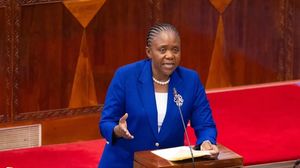
Minister for Information, Communication and Technology Angellah Kairuki said the government is deliberately moving towards alternative financing models, arguing that public resources alone cannot sustain the scale of ambition embedded in Vision 2050.
“Alternative financing is no longer optional—it is central to our development agenda,” she said, adding that more than 70 per cent of financing for national priorities is expected to come from the private sector. “We are deliberately advancing blended finance, public-private partnerships and stronger private sector participation.”
She said the Tanzania Investment Growth Facility has been designed as a practical tool to convert development priorities into investable opportunities, noting that the country has already prepared a pipeline of more than 60 projects worth billions of dollars across sectors including tourism, infrastructure, water systems, renewable energy and the blue economy.
According to her, the shift marks a break from traditional planning models where projects often remained at concept stage without structured financing pathways. “We are not only here for dialogue, we are here for decisions,” she said.
The emphasis on execution was echoed by Director of Investment Promotion at the Tanzania Investment and Special Economic Zones Authority (TISEZA) George Mukono, who said reforms within investment institutions are aimed at reducing fragmentation and improving service delivery to investors.
He pointed to the consolidation of investment-related agencies as one of the key reforms already undertaken.
“We used to have two separate institutions, but we almost did the same thing,” he said, referring to the restructuring that brought key investment functions under a single coordination framework.
He said the creation of a one-stop facilitation centre has also reduced the time and complexity involved in investor registration and approvals, allowing investors to move more quickly from incorporation to implementation.
“Processing and approvals have changed, and we have reduced the number of approval processes from company registration to the certificate of investors,” he said.
However, he acknowledged that land availability remains one of the most persistent constraints affecting investment growth, particularly for industrial and large-scale projects. He said the government is responding by developing serviced industrial zones with pre-installed infrastructure to reduce delays for investors.
The issue of regulatory efficiency was also raised in relation to overlapping inspections and fees imposed by multiple institutions. Mukono said ongoing reforms under the government’s regulatory review framework are expected to harmonise procedures and introduce joint inspections to reduce duplication.
Ambassador and Director of Economic Diplomacy at the Ministry of Foreign Affairs John Ulanga said Tanzania must also strengthen how it positions itself in global investment markets, arguing that the country’s competitiveness will depend on how well it structures bankable projects and aligns them with international capital expectations.
“We have to make sure that we create bankable projects and a pipeline from upstream to downstream,” he said.
He noted that attracting global capital requires fully structured investment ecosystems where infrastructure, logistics, industrial production and export systems are integrated rather than developed in isolation.
“The whole ecosystem of the project should be able to be financed,” he said, adding that Tanzania must adopt a more targeted investment promotion strategy based on comparative advantages across different partner countries.
Ulanga also highlighted the role of Tanzanians living abroad, saying diaspora capital could play a bigger role if properly organised into structured investment vehicles rather than individual remittance flows.
“How do we mobilise the diaspora to have investment vehicles?” he asked, noting that ongoing engagement with diaspora communities is already taking place through diplomatic missions.
Permanent Secretary in the President’s Office for Planning and Investment Fred Msemwa said the reforms are part of a broader economic transformation agenda aimed at strengthening productivity, exports and human capital development.
He said one of the key constraints identified by investors has been multi-taxation and regulatory complexity, which the government is now addressing through tax reform initiatives.
“The number one concern of investors to a large extent was our multi-taxation,” he said, noting that a presidential tax reform commission has already proposed measures aimed at improving efficiency and reducing friction in the tax system.
He said Tanzania is also prioritising sectors that demonstrate higher growth potential, citing agriculture as an example where export structures are gradually shifting from traditional cash crops to new value-added products driven by changing market dynamics.
“If you look at the statistics over the last 25 years, the export figures around major cash crops have remained approximately flat,” he said, adding that emerging agricultural value chains are beginning to show stronger performance.
He also said improvements in human capital are strengthening Tanzania’s competitiveness, arguing that the quality of skills in the labour market has significantly improved in recent years, particularly in technical and service sectors.
ESRF Executive Director Prof. Fortunata Makene said the summit reflects the importance of structured partnerships in turning development ambitions into tangible outcomes.
“Sustainable investment requires strong partnerships, informed dialogue, and a shared commitment to long-term development,” she said, adding that the platform is designed to strengthen Tanzania’s investment pipeline and support inclusive growth through practical engagement between public and private actors.
UNDP Resident Representative Shigeki Komatsubara said the Investment Growth Facility is helping to shift Tanzania’s development approach from intention to implementation.
“Through this platform, we are moving beyond development intentions to a practical system that turns national priorities into bankable investments, de-risks projects, and connects them directly to investors so that pipelines become real deals,” he said.
He added that the initiative is strengthening investor confidence by improving project preparation and linking capital directly to viable opportunities.
Register to begin your journey to our premium contentSubscribe for full access to premium content