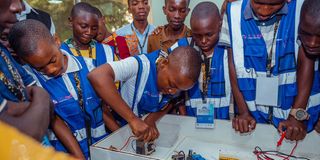
The support has enabled Project Inspire to establish hands-on STEM learning spaces that prioritise project-based learning and practical experience.
Dar es Salaam. What began as a modest idea nearly a decade ago has evolved into a national platform reshaping how young Tanzanians—particularly girls—engage with science, technology, engineering and mathematics (STEM).
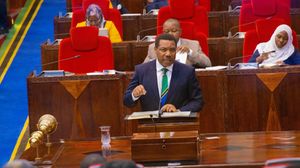
Speaking during the opening of the 9th National STEM Bootcamp in Dar es Salaam today, Project Inspire executive director Dr Lwidiko Mhamilawa said the programme had reached a defining moment, with alumni of earlier bootcamps now organising and running the initiative themselves.
“This work started as a simple idea about nine years ago. At first, it was just me and a small team running everything. Today, former beneficiaries are leading the bootcamp. That is the kind of impact we hoped for,” he said.
He said the programme, heavily supported by Canada through UNICEF alongside other strategic partners, complements Tanzania’s renewed push to strengthen STEM education under the new national education curriculum.
The support has enabled Project Inspire to establish hands-on STEM learning spaces that prioritise project-based learning and practical experience.
Three new centres have been set up in Songwe, Tabora and Kigoma, widening access to STEM education in areas where such opportunities were previously limited. The centres serve students, teachers and surrounding communities, with local teachers trained to sustain the model beyond the duration of the bootcamps.
Girls’ participation remains a central focus. Dr Mhamilawa said about 80 percent of the learning materials are tailored to encourage girls to engage with STEM, helping to address the persistent gender gap in science-related education and careers.
“Our aim is to ensure that girls see themselves represented in these spaces. That is how we break long-standing barriers,” he said.
Project Inspire said more than 87 percent of participants in recent programmes have been girls, exceeding initial targets. Over the past year, the initiative has reached more than 4,000 children and young people across several regions and worked with over 320 teachers to support long-term impact.
Local government authorities in participating areas have played a key role in facilitating the establishment and sustainability of the centres, organisers said.
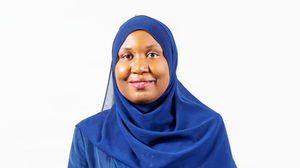
Addressing graduates, mentors and partners, UNICEF’s representative and Chief of Education, Ms Simone Vis praised Project Inspire for its commitment to underserved communities and investment in young people’s potential.
“Talent is universal, but opportunity is not. This bootcamp exists because young people from every corner of this country deserve access to the skills that will shape tomorrow,” she said.
Graduates were encouraged to view the ceremony as a beginning rather than an end, and to value teamwork, communication and respect alongside technical skills, which were described as essential for solving real-world problems.
The practical impact of the bootcamp was reflected in projects presented by students. Some said the programme had allowed them to turn classroom theory into working solutions while benefiting from mentorship by previous participants.
Among them was a Form Four graduate from Songwe, Adveria Meru (19), who showcased a project generating electricity using lemons and recycled components from small radios and torches. She said the idea stemmed from lessons on how acidic substances can produce electricity.
“This opportunity has helped me believe that, as a girl who loves science, I can achieve my dreams,” she said.
From Kigoma, Rose Shupa (17) presented a small machine designed to divide and measure soap bars using metal and plastic.
She said the idea was inspired by her experience selling soap at her family’s shop, where customers often complained about uneven portions.
“I wanted soap to be sold with equal measurements, just like sugar and other goods,” she said, adding that the bootcamp had motivated her to continue developing practical innovations.
Boys also took part in the programme. Thirteen-year-old Samri Kalago showcased a drone project.
“I came up with the idea of building a drone because I wanted to take aerial shots without having to hold a phone camera. I hope this is a right place for me to grow and learn more,” he said.