As Africa marks the bicentennial of its modern spice legacy, a powerful opportunity is emerging to redefine the continent’s role in one of the world’s oldest and most valuable industries. The global spices and cloves sector that was once shaped by colonial trade routes and extractive systems, is now being transformed by health-conscious consumers, sustainability demands, and a renewed appreciation for cultural heritage. For Africa, and particularly for Tanzania, this moment represents not just reflection, but reinvention.
The global spices market is currently valued at over $20 billion, with projections indicating steady growth over the next four years, driven by rising demand for natural, plant-based products. Within this, the global cloves market alone is valued between $5.7 and 6.1 billion in 2025, and is expected to reach $7.7 to 9.6 billion by 2031–2033, expanding at an annual growth rate of approximately 5 percent. Despite being a major producer, Africa contributes only a modest share of the total market value—highlighting a significant gap between production and wealth creation.
This growth is being fuelled by five irreversible global shifts. First is the rise of health-conscious consumption, as consumers increasingly turn to natural and plant-based ingredients. Second is the clean-label revolution, replacing synthetic additives with organic alternatives. Third is the expansion of wellness industries, including pharmaceuticals, nutraceuticals, and aromatherapy. Fourth is the rapid growth of wellness and wellbeing tourism, and finally, the resurgence of cultural tourism, where authenticity and heritage are central to consumer experiences.
Cloves sit at the intersection of all these trends. With antioxidant levels of approximately 290,000 ORAC units, they are among the most potent functional spices in the world, widely used in medicine, oral care, and health supplements. Today, the food industry accounts for over 49 percent of total clove consumption, but demand is rising sharply in pharmaceuticals, personal care products such as toothpaste and oils, and functional foods and beverages.
Globally, the Asia-Pacific region dominates both production and consumption, accounting for more than 46 percent of the cloves market. However, Africa is now the fastest-growing region, signalling a shift in global dynamics. Countries such as Tanzania, Madagascar, and Comoros remain among the world’s primary producers, yet they capture only a fraction of the value due to longstanding structural challenges.
These challenges are well known: the continued export of raw cloves with minimal processing; vulnerability to global price volatility; limited industrialisation and product diversification; weak branding and market positioning; and fragmented smallholder farming systems. In addition, Africa has yet to fully capitalise on emerging sectors such as wellness tourism and spice-based cultural experiences.
Within these challenges lies immense potential. Africa possesses a unique combination of agro-ecological advantage, cultural authenticity, and largely untapped value chains. Nowhere is this more evident than in Tanzania.
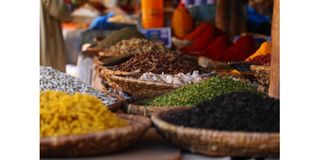
For nearly 200 years, Zanzibar, widely known as the “Spice Islands”, has been central to the global cloves story. Since the introduction of large-scale spice cultivation in 1821, the islands have built a reputation as one of the world’s leading exporters of premium cloves. By the 20th century, Zanzibar had become synonymous with quality in the global spice trade.
Despite this legacy, Tanzania today still exports primarily raw cloves, with limited penetration into high-value derivatives such as essential oils, extracts, and nutraceutical products. The absence of a strong pharmaceutical manufacturing base further limits the country’s ability to benefit from the rapidly expanding global demand for plant-based medicine.
This is the strategic opportunity that the Africa Women in Spices (AWIS) initiative seeks to unlock.
AWIS envisions repositioning Tanzania and Africa as a global processing hub, a continental centre for spice innovation and excellence, and a world leader in ethical, women-led spice value chains. Central to this vision is the establishment of a global spices cultural centre, including a Spices Museum and Living Laboratory, to preserve the 200 year heritage while driving research and innovation.
A key pillar of this transformation is the wellness and preventive health revolution. Cloves and other spices offer significant potential in anti-inflammatory treatments, immunity-boosting supplements, and natural health products. By investing in processing and research, Africa will move beyond raw exports to capture high-margin segments in pharmaceuticals and nutraceuticals.
Women already form the backbone of spice cultivation across Africa, but they remain underrepresented in ownership, processing, financing, and export leadership. The Africa Women in Spices movement aims to address this imbalance by organising women into cooperatives and enterprises, supporting inclusive industrialisation, and enabling them to lead innovation in value-added products.
With a global market growing steadily at around 5 percent annually, rising demand for natural and health-oriented products, and Africa’s unique cultural and agricultural strengths, the continent is well positioned to lead the next phase of the global spice industry.
For Tanzania, the path forward is clear. By shifting from the export of raw cloves to the export of innovation, identity, and value-added products, the country can reclaim its leadership in the global spice economy.
And at the heart of this transformation must be African women. These are the ones to not only sustain the industry, but redefine it.
The next 200 years of spices in Africa will not be written by chance. They will be designed—through vision, investment, and inclusive leadership. If that vision is realised, Africa will move from being a supplier of raw materials to a global powerhouse of wealth creation, innovation, and cultural influence.