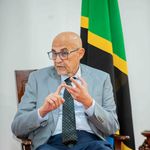
Let me join fellow Tanzanians to congratulate the newly appointed Vice President, Honourable Deogratius Ndejembi for being trusted with this number two position in the governance of the country. Occupying this position at a young age means carrying the aspirations of the young persons, who form the majority of the population of Tanzania.
The Vice President holds the second highest political office in Tanzania, serves as the principal assistant to the President, and stands first in the line of succession to assume the presidency should the office becomes vacant.
He manages assigned national agendas, which often include cross-sector government policies, disaster management coordination, and public accountability initiatives. He also performs any other executive duties or government functions delegated to him by the President.
That is already a tall agenda but there are another two duties that are under the portfolio of the Vice President. One is overseeing, harmonizing, and strengthening matters relating to the Union between the mainland (and here there are pressing issues that need addressing). Second, and which is of our interest in this article, is Environmental Management that is: Coordinating national environmental policies, climate change initiatives, pollution control, and sustainable conservation strategies.
The whole world now is environmentally conscious and deeply worried about the adverse impacts of global warming. Disastrous events, like the recent floods in Nepal and Tibet, and the predicted upcoming El Nino of the century, are all attributed to global warming.
With so many duties in the Office of the Vice President, it is possible to give limited attention to, or sideline, the environment, yet, the fact that that portfolio is in the Office of the vice President signifies that the nation highly values the importance of environmental management. Our country faces major environmental problems in both rural and urban areas which need action now.
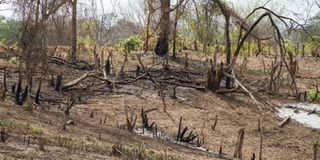
A critical one is widespread deforestation. According to Global Forest watch, natural forests cover roughly 27 million hectares, making up about 29 percent of the country’s total land area. Yet many of these forests are degraded. Tanzania loses about 300,000 to 400,000 hectares of forest and woodland each year due to agricultural expansion (some of which is encouraged by politicians), wood fuel demand (charcoal and firewood), and logging, be it legalized or not.
The deforestation rate is estimated at around one percent annually, which is double the global average. Badly hit regions are the Coast (Pwani), Lindi, Morogoro, Ruvuma and Tabora.
The Strategic Environmental Management Transformation Programme (2026–2030) tied to National Development Vision 2050, which hopefully the Vice President will be briefed about, envisages ecosystem restoration by, among others, planting and managing two billion trees annually and restoring five million hectares of degraded forest land. Is this being done?
Occasionally we see a dignitary planting a tree here or there under the floodlights of fanfare. Does this make a difference? We need to emulate Ethiopia’s ambitious tree planting effort, spearheaded by the Green Legacy Initiative, launched in 2019 and which has successfully mobilized millions of citizens to plant over 40 billion seedlings in its first several years, raising the nation’s forest cover significantly. The 2026 campaign targets planting 8 billion seedlings during the rainy season.
It is reported that, recently, on August 3rd 2026, a single-day nationwide push saw over 26.2 million citizens plant 805.3 million tree seedlings within 12 hours.
Another key problem is land degradation. Roughly 41 percent of Tanzania’s land is degraded, and over 60 percent suffers from soil erosion due to unsustainable farming practices, overgrazing, bush fires, and clearing land.
Tanzania is also exposed to climate change vulnerability, experiencing more frequent droughts, severe floods, unpredictable rainfall, and rising temperatures. Studies are also showing that urban areas are warming faster than rural areas, due to “cementing”, as a result of construction and other civil works (eg roads)
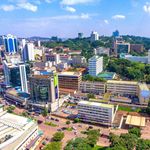
Our urban areas are growing in an unplanned manner, and here we can also learn from Ethiopia. This contributes to environmental problems, when for example, people build in river valleys and on urban wetlands. The regulation preventing building within 60 meters of a river bank, has long been relegated to archival coffers. Town planners must be brought back to work. Currently, they are idle.
Trees are routinely cleared for building and implementing infrastructure development programmes (and here we can mention our Tanesco as a prominent enemy of trees). Urban open spaces, which would contribute to environmental preservation are wantonly converted into building land.
Recently, an academic from Mzumbe University has been appointed to assist the Vice President with environmental matters. Hopefully, he, and other staff in the VPO, will come up with an urgently implementable programme to tackle environmental issues.
In rural areas villages authorities and villagers could be required to grow their own forests. In urban areas, urban river valleys and wetlands, as well as roads, open spaces, schools and all institutions should be tree lined.
The VP may want lo lead by example, by growing hectares and hectares of his own Deogratius Ndejembi Forest Reserve.