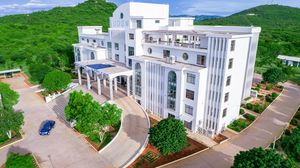
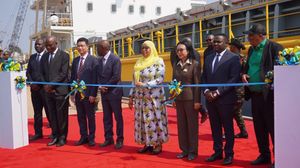
The decision to relocate the Dar es Salaam Maritime Institute from the city centre to Kimbiji is a welcome one. It shows that the government recognises a basic truth about urban growth. Cities cannot keep expanding on yesterday’s logic. They must be redesigned for tomorrow’s needs.
But this should not be treated as a standalone intervention. It should be the beginning of a much bigger rethink of Dar es Salaam’s waterfront and the kind of city Tanzania wants to build for the next hundred years.
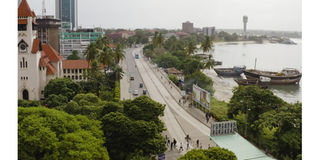
Anyone familiar with the area around the port and the Zanzibar ferry terminal knows the reality. It is overcrowded, chaotic and carrying far more than it was designed to handle. Passenger traffic, cargo movement, informal trade and commercial activity are all compressed into one small and highly strategic part of the city. The result is urban dysfunction.
What makes this even more unfortunate is that the same area also contains some of Dar es Salaam’s most important landmarks and visitor sites.
The Old Boma, St. Joseph’s Cathedral, the State House precinct, the port itself and some of the city’s most distinctive historic architecture all sit along or near this stretch. Add the fish market and the Kigamboni ferry, and the contradiction becomes obvious. This should be one of the most memorable urban experiences in Tanzania. Instead, it is too often congested, dirty and unwelcoming.
The Zanzibar ferry harbour lies at the centre of this pressure. What should be an efficient gateway for people and commerce has become a constant source of congestion.
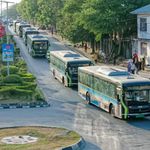
Roads around the terminal are routinely clogged by vehicles loading and unloading goods, by trucks waiting to collect cargo and by spillover from transport activity that has long outgrown its setting. The surrounding streets struggle to function.
Movement slows. Access becomes difficult. One of the city’s most important spaces is consumed by disorder.
That disorder is not only a transport problem. It is also an urban and civic failure. Petty trading, food stalls, weak waste management and overcrowding have turned parts of a potentially magnificent waterfront into spaces that feel neglected and hostile to residents and visitors alike.
A waterfront is not just another transport corridor. It is the face a coastal city presents to itself and to the world.
If Dar es Salaam is serious about modernisation, then mobility must sit at the centre of planning. A modern city is not defined only by the height of its buildings or the size of its economy.
It is defined by how well it moves, how efficiently it handles goods and how well it uses public space.
By that standard, the current arrangement is no longer defensible.
Relocating the maritime institute creates an opening. It gives policymakers a rare chance to ask a bigger question. What should this part of Dar es Salaam become? Should it remain an overburdened transport zone trapped in permanent congestion? Or should it be transformed into a coherent, attractive and efficient waterfront that supports logistics while also serving the city itself?
If the goal is real transformation, then the rethink cannot stop with the college. The Zanzibar ferry terminal must also be part of the discussion. Keeping ferry operations in the same cramped location while expanding surrounding port functions risks preserving the very problem this relocation is meant to solve.
A more visionary approach would consider moving ferry operations to a better planned site designed around modern transport needs and long-term urban logic. That would improve logistics between Mainland Tanzania and Zanzibar, reduce pressure on central roads and free the current waterfront for a more intelligent mix of public use, tourism, commercial development and urban design.
Around the world, successful waterfront cities understand that the edge between land and sea is not merely operational space. It is civic, cultural and economic space. In places such as Copenhagen and Cape Town, waterfronts have been turned into destinations through thoughtful planning, promenades, boardwalks, restaurants, public access and integrated transport. They work not because commerce was removed, but because it was organised intelligently.
Dar es Salaam deserves that same level of ambition. Imagine a clean boardwalk linking heritage, commerce and leisure. Imagine well-planned restaurants, public seating, walking areas and a harbourfront that feels dignified rather than improvised. That is not fantasy. It is what happens when cities decide that prime waterfront land should serve more than congestion.
This is not an argument against trade with Zanzibar. It is an argument for handling that trade better. The connection between the Mainland and Zanzibar is vital. It deserves infrastructure that reflects its importance. A more suitable ferry and cargo arrangement would not weaken that link. It would strengthen it.
Dar es Salaam has reached a moment when incremental change is no longer enough. The city needs a waterfront master plan worthy of its history and its future. Above all, it needs leaders who understand that modernising a city is not just about building more. It is about planning better.
Moving the maritime college is a good move. But if Dar es Salaam truly wants to modernise, it must go further. It must rethink the Zanzibar ferry terminal, decongest the port area and reclaim the waterfront as a place of movement, beauty and civic pride.
Ibrahim Kyaruzi is a strategic communications consultant based in Dar es Salaam