War rarely surprises. It announces itself in warnings ignored, signals dismissed, and choices deferred. The latest confrontation between Israel, the US, and Iran is no exception. It is a collision long in the making. And by the time the first aircraft crossed into Iranian airspace, the outcome had already been determined.
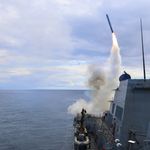
For years, the military balance had been shifting decisively against Tehran. Israeli strikes in 2024 degraded its air defence systems, opening corridors that have proven fatal. American carrier strike groups have been repositioned across the Gulf.
Strategic bombers were rotating around regional bases. Intelligence assets—satellite, cyber, and human—had tightened a noose around Iran. This was encirclement by one of the most sophisticated war-machines ever assembled.
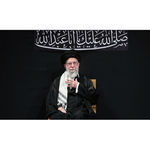
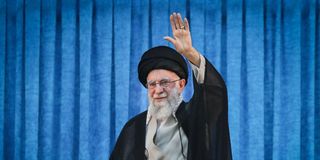
The impact was devastating. In the opening strike, Ali Khamenei was killed. Dozens of senior military commanders perished as well.
In just 12 hours, 900 targets were hit: command centres, missile silos, and communications hubs. The scale and ferocity of the assault are almost without precedent in modern warfare.
Iran’s response was immediate: missile launches against Israel and to American military bases in seven other countries. It also closed the Strait of Hormuz – which carries 20 percent of global oil supply – sending shockwaves through global markets.
Yet even here, the asymmetry was glaring. The closure hurts Iran as much—if not more—than its adversaries, choking its own lifelines while inviting overwhelming retaliation.
So, we return to the uncomfortable truth: Khamenei didn’t have to die. Lest there is confusion: I don’t mourn him.
He ruled through repression and slaughtered tens of thousands of his own people to preserve power. And yet, even such a regime is expected to recognise reality when survival is on the line. Iran had clear, viable, rational paths to avoid this outcome. Tehran chose none of them.
The first path was simple: de-escalate. Iran demonstrated an ability to calibrate its responses—to strike symbolically, to preserve face while avoiding catastrophe.
It could have continued that path: reduce provocations, rein in its proxies, and signal a pause. Instead, Tehran did the opposite. It escalated—both in words and in action—strengthening the very case for the strike that followed.
The second path was effective diplomatic engagement. Yes, there were negotiations, but Iran’s posture assumed the power dynamics remained the same. They weren’t. Iran had to offer something to save itself. Remaining locked in absolutist positions in the face of massive destruction was very imprudent.
The third path was internal recalibration. Iran’s greatest vulnerability is its domestic fragility. An economy under severe strain, a population increasingly restless, and a political system reliant on repression.
Redirecting resources to economic stabilisation and rebuilding political legitimacy could have strengthened Iran’s hand externally. Instead, the regime doubled down and massacred its own people, weakening itself on both fronts.
To understand the scale of this miscalculation, you have to see the imbalance Iran was facing. This wasn’t just a disadvantage—it was overwhelming. The combined power of the US and Israel brings unmatched firepower, advanced technology, and real-time intelligence.
Israel has shown it can sustain high-intensity operations over long periods. The US adds global reach, deep logistics, and near-total surveillance capability. The speed with which the death of Khamenei was confirmed—with the Americans getting images from the scene within hours—shows just how exposed Iran had become.
Meanwhile, Iran’s position had been weakening for some time. Its air defences were largely neutralised. Its missile stockpiles—once central to its deterrence—had been significantly reduced. Its proxies, including Hamas and Hezbollah, had been steadily degraded.
At home, the economy was under severe strain, hit by sanctions and years of mismanagement. Public unrest pointed to a regime increasingly at odds with its own people. In that context, survival required prudence. Iran misread the moment.
Seeking peace is often mischaracterised as weakness. But rationality is not synonymous with surrender. Charging into a conflict one cannot win is not courage—it is folly. Clinging to an ideology that guarantees one’s destruction is not integrity—it is fanaticism.
Iran’s decades-long hostility towards the US and Israel has yielded only isolation, economic hardship, and now, military devastation. $2 trillion in wasted GDP over 20 years. 300 billion dollars wasted on Jihadist groups. None of it prevented this outcome.
History offers an alternative script. Anwar Sadat chose peace with Israel after years of war, reshaping Egypt’s trajectory without sacrificing its sovereignty. The peace has held. Egypt was not subjugated; it was stabilised.
Iran could have followed a similar path—maintaining its identity, its religion, even its advocacy for the Palestinian cause—without entrenching permanent enmity. After all, without self-imposed enemies, it would not need huge stockpiles of weapons built for perpetual war.
In the gospels, Jesus Christ once framed war in brutally practical terms: if your ten thousand cannot defeat twenty thousand, you make peace before the battle begins.
It is not weakness—it is intelligence. Iran ignored that calculus. It chose defiance over survival. The result, I pray not, will be Tehran turned into rubble.
It didn’t have to be that way.
Register to begin your journey to our premium contentSubscribe for full access to premium content