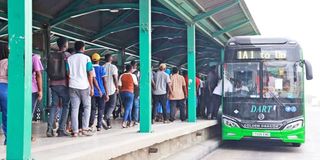
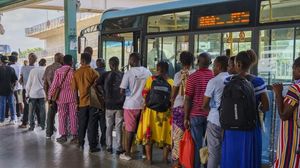
Come July 1, 2026, Mofat Company Limited, the contracted private operator for Phase II of the Dar es Salaam Bus Rapid Transit (BRT) system, will have a monopoly on the Mbagala, Gerezani, Kivukoni route, on which the current transport service providers, mainly the minibus daladalas, bodabosas, and bajajis, will be unlicensed, giving the Company a monopoly on that route.
Under a 12-year contract with the Dar Rapid Transit Agency (DART), the Company is responsible for managing daily passenger transport, fleet deployment, and station services along the Gerezani–Mbagala corridor via Kilwa Road.
The removal of daladalas (etc) from this route may sound strange. After all, competition is the rule of the game. Indeed, modern economics is largely against monopoly, though there are exceptions. For example, there are economic activities that are seen as natural monopolies.
A natural monopoly is a market where a single firm can serve the entire demand more efficiently than multiple competing businesses. This occurs in industries with massive startup and fixed infrastructure costs, leading to continuous economies of scale where average costs fall as production increases.
A good example is where it is economically inefficient and a wasteful duplication of physical resources, for two or more companies to build identical infrastructure (such as, two sets of water pipes or power grids or sewer lines) for the same street.
The case of BRT is different and falls under the Public Private Partnership (PPP) set of activities, which came in, in the late 1970s, early 1980s, to tap the resources within the private sector, to build or provide services, which traditionally fell under the public sector.
The public sector has to create a situation which would make such activities bankable (i.e. profitable), and attractive for the private sector to invest in.
Doing so means mitigating exposure (of the private sector investment) to a number of risks.
This could be done through contractual allocation of risks to the parties in the partnership, best suited to manage them (e.g., construction risk to the contractor, demand risk to the operator).
In the case at hand, DART owns the infrastructure. Ideally, it should have also offered the bus services. But, resources, as well as managerial assets may be wanting. Recourse was done to bring in a private operator under a 12-year contract (concession).
Key aspects of the Company’s role and operations include fleet operations where Mofat is tasked with operating a fleet of hundreds of gas-powered (CNG) buses on dedicated lanes (owned by DART) to ensure fast and eco-friendly urban travel. The operator was expected to manage the demand risk.
In meeting its obligations, Mofat which started operations in October 2025, soon found that it was running at a loss mainly because of low ridership on its imported buses.
This is what, in PPP lingo, is grouped under “Market and Demand Risk”, that is, “The risk that the infrastructure or service fails to generate sufficient revenue, such as traffic on a toll road or ridership on a train line falling below projections”.
The blame was put on daladals, bodabodas and bajajs, which continued to attract passengers, compared to the luxurious, “airline quality” buses which the private operator had fielded. The government was requested, to mitigate the demand risk by banning these other service providers to boost ridership on the new buses, which would, in turn translate into higher cash flow and profitability of the Company.
Mbagala is reputed to be the most populous neighbourhood in Dar es Salaam. Its residents are largely in low-income brackets, who travel a lot to and from the city centre to collect merchandise, including fish, to trade in. It is thus confounding that there should be a problem with passengers.
The problem could be market mismatch: the type of services provided, the price charged and what the people want and can afford.
Daladala and other current service providers, are reputed for being flexible, stopping regularly in between official bus stops, on request (msaada tutani), or on seeing a potential passenger.
The staff (kondas) are very helpful, especially with loading and unloading mizigo (loads which passengers are taking with them). The fare is also comparatively low.
Mofat airline standard of services and the fare structure may not match the demand and pockets of sections of the population.
Market segmentation is a reality. Mitigating the demand risk, is common in PPP arrangements, but the government may want to think about providing alternative routes for daladala owners and operators. This is a concern which was raised way back in time, when BRT was being conceived.
Lusugga Kironde is Professor of Land and Urban Economics and lead consultant at TKA Company Ltd.