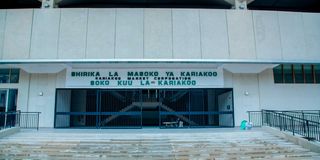
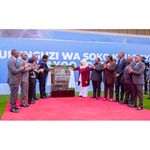
The Kariakoo market in Dar es Salaam has recently been in the headlines, chiefly because Her Excellency the President opened it after extensive repairs of the damage caused by a fire almost five years ago, in July 2021.
Kariakoo has a long history behind it, dating to the pre-colonial days, when it did not even carry that name.
Various pre-colonial documents show the current Kariakoo, including Ilala, as being a Sultan’s Shamba, on which slaves worked.
One Schoeller, a German land speculator, had purchased 213 hectares in Kariakoo and was planting palm trees and renting part of the area to natives, charging them rent. Many local people, known then as natives, settled haphazardly on this land.
The German government wanted a planned, but segregated town, so many natives were being moved from the city centre to Kariakoo. New arrivals from the rural areas also settled in Kariakoo.
The government planned the area in a grid pattern, and planned for a neutral zone (the current Mnazi Mmoja open space) to separate natives from Europeans and Indians. Non-natives were not allowed to reside in the native area, excepts for carrying business there.
Before the modern market, the site featured a steel-structured building used by both German and British forces. The German constructed it as both an exhibition area and a market.
After the British conquered Dar es Salaam, in 1916, the structure was converted into a military depot where porters were recruited and commissioned.
In order to deliver supplies to the frontline soldiers, the British had established the Military Labour Bureau, which was later renamed the Carrier Corps (Porter soldiers).
Recruitment of the porters was from the British own colonies of Kenya, Nyasaland, Uganda and Northern Rhodesia but also from German and Portuguese East Africa and the Belgian Congo.
It is estimated that some 95,000 porters died on duty, as a result of diseases, heavy loads and long distances.
After the war, the Carrier Corps depot was converted into a central market for Dar es Salaam in 1923.
However, the name Kariakoo (from Carrier Corps) had taken hold, and there were other Kariakoo Depots in Nairobi, Voi and Mombasa, in Kenya.
A decade into Independence, the government embarked on establishing a modern market. Designed by Israel-trained Tanzanian architect Beda Amuli, it aimed as reflecting a traditional village market where people would sit and trade under a mango tree. This concept is very much studied by future architects.
The current, iconic, multi-story Kariakoo market structure was built in the 1970s, officially opening in 1975 to accommodate the growing commerce in the area.
Kariakoo has been at the central psyche of the nation, highly prized by various Leaders. Today, Kariakoo remains the largest market in Tanzania, serving as a vital commercial hub not just for Tanzania, but also for neighbouring countries. However, it retains its name from its WWI military history.
Land values in Kariakoo, are among the highest in the country, and are now reflected in every building from the past days, being converted into multi-story structures.
Sometimes, these structures do not follow safety regulations. Fire outbreak, and structural failure have taken place in Kariakoo in recent years. Overcrowding on the streets by informal traders is a major challenge.
At one time in the past, Kariakoo was considered to be the secondary CBD of Dar es Salaam; the primary one being in the city centre areas. This has now changed. Kariakoo is the primary business centre of the city.
In order to keep the Kariakoo market modern the government has poured billions of shillings, into this structure, enjoining users to look after this national treasure.
As we celebrate Kariakoo being an international market, we need also to contemplate the fate of the men and women who gave name to this area, and this market.
Are there any people who associate themselves with those porters who were part of the British army during the first world war?
This may be realized by constructing three monuments around the market. The first monument should reflect the resources that have gone into this market.
The second monument, preferably of Tanzanian renowned architect Beda Amuli, would reflect indigenous thinking reflected in the building’s architecture.
The third one, would reflect the Carrier Corps, the porters who gave name to the area. I understand that the Askari Monument has, on its side, a carving of native porters.
This is not adequate. Future generations must be reminded of these porters, who served under the British government.