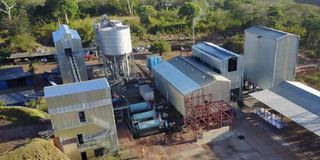
A signing ceremony in Morogoro last week tells a story far bigger than one graphite mine. Henan Yudi Mining, a Chinese firm few outside the sector would recognise, committed Sh 266 billion, roughly $100 million, to develop a deposit at Mbwade village, with government taking a 17 percent non-dilutable free-carried interest under Tanzania's now-standard equity structure for strategic minerals.
Minister for Minerals Anthony Mavunde noted it was the fourteenth such framework agreement his ministry has signed with critical minerals investors. The deal closed in the time it takes many Western-backed juniors merely to confirm a feasibility study.
That contrast is the story worth telling to anyone allocating capital toward Africa's mineral wealth.
Let us consider Nachu. Magnis Energy Technologies arrived in Ruangwa District over a decade ago promising 240,000 tonnes a year of high purity graphite and, eventually, a binding offtake agreement with Tesla itself.
Compensation payments were made, a resettlement village was built, environmental certificates were secured. Then came a default notice on the special mining licence, subsequently lifted, followed by a corporate reorganisation into Ryzon Materials.
This year the project changed hands again: its Tanzanian subsidiaries were folded into Sow Good Inc, a Nasdaq listed company whose core business, until now, has been to freeze dried candy.
A decade of promise ended in a reverse takeover by a snack manufacturer. Whatever one thinks of that outcome, it is not the trajectory sophisticated capital allocators point to as a model.
Let us also consider Mahenge, the world's second largest graphite reserve, held by Black Rock Mining with government retaining a 16 percent free-carried stake.
The project has assembled an enviable syndicate: POSCO International as strategic partner and offtaker, the Development Bank of Southern Africa, South Africa's Industrial Development Corporation, and CRDB Bank locally. Early works are essentially complete.
Yet the company has, again, extended its credit facility deadline, this time to November 2026, still short of the final investment decision that would unlock construction. Years of institutional grade financing architecture, and the mine has yet to produce a tonne.
None of this reflects a lack of geological promise. TISEZA’s data for the first quarter of 2026 shows why global capital should be paying closer attention regardless: $1.14 billion in registered investment, with China again the largest single source of FDI at $227 million, ahead of the UAE, Mauritius, India and South Africa.
Widen the lens to the FDI stock accumulated since 1997 and China accounts for close to a third of the total, more than double the United Kingdom in second place.
This is not a new phenomenon. It is a structural feature of how capital currently reaches Tanzania's resource sectors, and the graphite pipeline illustrates precisely why.
The uncomfortable question for Western companies, DFIs, sovereign funds and private equity houses eyeing the critical minerals opportunity is not whether Tanzania's graphite is investable.
Government has been consistent: standardised free-carried interest terms, a published order of priority sectors, and, as of this year, a Critical and Strategic Minerals Strategy moving through stakeholder consultation to govern the shift from raw export to domestic beneficiation.
The real question is whether Western capital structures, built for shareholder consensus, layered ESG due diligence and public market scrutiny, can move at a pace that competes with a state-directed Chinese counterparty willing to sign, fund and break ground within a single financial quarter.
There is a version of this argument that ends in resignation, that China has simply won the race and the rest should adjust expectations accordingly.
I would push back on that. Tanzania's own posture, styled sovereign pragmatism by President Samia Suluhu Hassan, explicitly invites diversified capital rather than a single dominant partner, and Mahenge's backers continue to cite supportive American and European critical minerals policy, not resignation to Chinese primacy.
Amne Suedi is the Managing Director of Shikana Investment and Advisory, Honorary Consul of Switzerland in Zanzibar, and Chair of the Switzerland-Tanzania Chamber of Commerce. Views expressed are strictly Amne Suedi’s only.