As Africa strives to accelerate its transition to clean, sustainable energy and responsibly harness its vast mineral wealth, two sister nations of the United Republic of Tanzania and the Republic of Zambia, are emerging as pivotal partners in this continental endeavour.
Their historic ties, geographic contiguity, and shared economic aspirations provide a compelling foundation for deeper bilateral and multilateral collaboration across responsible mining, clean energy access, and regional economic integration.
This strategic imperative has taken on renewed urgency ahead of the Tanzania-Zambia Business Forum and IAZ Insurance Conference 2026, scheduled for June 16 to 19 at the Radisson Blu in Lusaka.
Organised jointly by IAZ, Umoja Conservation Trust (UCT), and Glow Consulting Services (GCS), the Forum will bring together governments, private sector leaders, risk managers, insurers, and conservation agencies to shape a shared blueprint for future partnership.
One of Africa’s most profound development challenges lies in universal access to clean cooking fuels. Today, sub‑Saharan Africa remains home to nearly one billion people who lack access to modern, safe cooking solutions, with four in five households relying on inefficient, polluting biomass fuels such as firewood and charcoal.
This reliance contributes to an estimated 815,000 premature deaths annually across the continent due to household air pollution and is linked to 1.3 million hectares of deforestation each year, eroding environmental resilience and women’s economic participation.
Tanzania, despite progress, illustrates both the challenge and the promise of transformation. Historically, close to 90 percent of Tanzanian households depended on traditional biomass for cooking as recently as 2020, with clean fuel adoption languishing below global averages.
However, concerted policy action has yielded measurable gains: clean energy access for cooking in Tanzania more than tripled from 6.9 percent in 2021 to 23.2 percent by early 2025
Recognising the vast public health, environmental, and socio‑economic dividends of clean cooking, Tanzania launched a Sh130 billion nationwide clean cooking communication strategy aimed at achieving 80 percent clean cooking adoption by 2034. This underscores long‑term policy commitment and cross‑sector engagement.
Substantial hurdles remain. Recent research confirms that where clean fuels such as LPG and electricity are available, affordability and supply reliability constraints still compel many households to rely partially or predominantly on traditional fuels, perpetuating a pattern known as “fuel stacking.”
Mining for Africa’s energy future
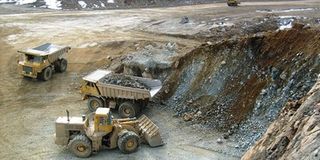
Across the Copperbelt, Zambia’s mining sector remains a backbone of economic output and export revenues. As Africa’s second‑largest copper producer and one of the world’s top ten suppliers of the metal, Zambia reported copper output of approximately 890,346 metric tonnes in 2025, marking significant growth and recovery after global market disruptions.
Previous years saw a robust climb — with Zambian copper production increasing by 12 percent to around 820,676 tonnes in 2024 according to PwC.
Copper is indispensable to the global energy transition because it is a fundamental input in renewable energy systems, electric grid infrastructure, electric vehicles, and energy storage technologies.
As global demand intensifies, Zambia is pursuing ambitious targets to expand output even further, with government plans to more than triple copper production to 3 million tonnes by 2031.
This scale of expansion, if realised responsibly, would not only place Zambia at the heart of global clean energy supply chains but also catalyse industrial development across Southern Africa.
While Tanzania’s copper production (modest compared with Zambia) stood at approximately 10,000 tonnes in 2023, its broader mineral portfolio is substantial, encompassing gold, gemstones, nickel, cobalt, graphite and rare earth elements, and contributing significantly to export earnings and employment.
In 2025, the Tanzanian mineral sector contributed over 11 percent of national GDP, reflecting both macroeconomic importance and an expanding base of extractive value.
Critically, both nations face the shared imperative of integrating environmental, social, and governance (ESG) principles into mining operations.
Responsible mining not only safeguards ecological integrity and community well‑being but also unlocks access to premium international markets and impact capital.
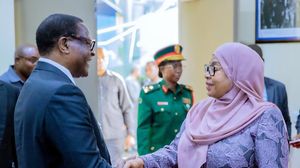
The brotherly relations between Tanzania and Zambia that is founded on decades of cross‑border economic integration, shared liberation histories, and cultural affinity, furnish a strong platform for formalised regional cooperation.
Regional cooperation in energy and mineral value chains can deliver economies of scale, reduce trade costs, and strengthen bargaining power in global markets.
For instance, harmonised regulatory regimes and standardised supply chain governance enhance investor confidence and reduce transaction costs. In the energy sector, coordinated investment in renewable generation and distributed clean cooking supply chains can bolster energy security across both nations and the broader region.
A shared vision
The Tanzania-Zambia Business Forum and IAZ Insurance Conference 2026 represents a defining moment for African public and private leadership.
As Tanzania and Zambia deepen strategic cooperation on responsible mining, clean cooking energy, and regional infrastructure, they embody a model of African solutions for African challenges.
By forging bilateral and multilateral agreements that integrate government resolve with private sector dynamism, and by engaging risk managers and insurers as enablers rather than observers, this partnership offers a roadmap for resilient, equitable, and sustainable development across the continent.
In the era of the energy transition, the combined strength of Tanzania and Zambia as rooted in shared heritage, complementary resources, and visionary leadership, offers a compelling testament to what can be achieved when African nations act in concert.