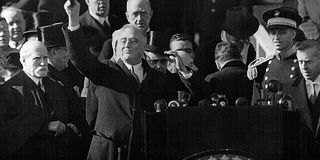
The first 100 days concept began in the presidency of Franklin D. Roosevelt on March 4, 1933, the day Franklin D. Roosevelt was inaugurated as the 32nd president of the United States.
Soon after her inauguration, the President promised to fulfill a number of tasks within one hundred days of taking office. She made her promises in her speech while inaugurating new Parliament.
From November last year to January this year one hundred days are beckoning and already a timetable has been published showing the dates (between 24 January and 3 February) when 10 honourable ministers are required to tell us the public, how their sector ministries have fulfilled the President’s promises of what should have been addressed now.
If you are like me, you may have asked yourself, why 100 days? Why not more, why not less? I have done some research and seem to have decoded the tradition of “the first 100 days”, a concept originally used in the United States, but now adopted in many countries.
The Tanzanian President has also decided to adopt that tradition, but to get the understanding, we need to go back to 1932, surely a long time back.
The first 100 days concept began in the presidency of Franklin D. Roosevelt on March 4, 1933, the day Franklin D. Roosevelt was inaugurated as the 32nd president of the United States. The United States, but indeed, the whole of the industrialised world, was suffering from what got to be known as the Great Depression.
During the Presidential campaign Mr Roosevelt had had signaled his intention to move with unprecedented speed to address the problems facing the nation in his inaugural address, declaring that he was prepared under his constitutional duty to recommend the measures that a stricken nation in the midst of a stricken world may require.
The new President’s specific priorities at the outset of his presidency were getting Americans back to work (employment), protecting their savings and creating prosperity, providing relief for the sick and elderly, and getting industry and agriculture back on their feet.
The “First 100 Days” originated from Franklin D. Roosevelt (FDR)’s presidency in 1933, when he utilized a special congressional session, lasting around 100 days to rapidly pass 15 major pieces of New Deal legislation to combat the Great Depression. Coined by FDR in a July 1933 radio address, it became a, benchmark for evaluating new U.S. leaders' effectiveness.
Taking office during the height of the Great Depression, FDR faced a, banking crisis that required immediate, decisive action. Between March 9 and June 17, 1933, the US Congress passed numerous measures, including the Emergency Banking Act (to rescue the banking system that had literary collapsed), Emergency Conservation Work Act (jobs), and Federal Emergency Relief Act, to stabilize the economy.
Although it referred to the special session, FDR formalized the phrase in a radio address on July 24, 1933, to describe the intensive, early, period of his administration.
He immediately summoned the United States Congress into a three-month (nearly 100-day) special session, during which he presented and was able to rapidly get passed a series of 15 major bills designed to counter the effects of the Great Depression.
With President Roosevelt’s urging, Congress passed 77 laws during his first 100 days as well, many directed towards reviving the economy of the United States through various public works projects.
Following Roosevelt’s three terms in office (and just under three months of a fourth term), many other presidents also made significant decisions during their first 100 days. Roosevelt signed 99 executive orders in his first 100 days.
This approach also gave credence to what is now known as Keynesian Economics, where the government intervenes fundamentally in the running of the economy to ensure stability, economic growth and equity.
Franklin D. Roosevelt spent the first week of his presidency dealing with a month-long series of bank closures that were ruining families nationwide.
He closed the entire American banking system on March 6, 1933. On March 9, Congress passed the Emergency Banking Act, which Roosevelt used to effectively create federal deposit insurance when the banks reopened.
At 10 p.m. ET that Sunday night, on the eve of the end of the bank holiday, Roosevelt spoke to a radio audience of more than 60 million people, to tell them in clear language “what has been done in the last few days, why it was done, and what the next steps are going to be.” It was the first of 30 evening radio addresses to the Nation.
From the above simplified summary, the US President FDR, took definite steps to address the ailments that the country was suffering from. Historians agree that the President’s actions resulted into a “remarkable turnaround in the public’s confidence”.
So, as the Honourable Ministers tell us what has been done in the 100 days after the President’s new term, we expect, not new promises, but actual steps taken and leading to a change into public confidence.