This is the world we must all strive to build together
By Wanjira Mathai
Eight decades have passed since the world last had to rebuild itself from total ruin. It is easy, across that span of time, to forget what made the rebuilding necessary.
The United Nations came into being in 1945, following the devastation of the Second World War, with one central mission and that was to maintain international peace and security.
The Charter it was founded upon was an important document that became one of the pillars of the international system in which we live today, a framework born directly from the catastrophic failure of nations to talk, cooperate, and restrain themselves before two global wars consumed tens of millions of lives.
Idealistic experiment
Multilateralism was actually not an idealistic experiment but rather our human family’s best and painful effort to counter what happens when nations act alone.
Multilateralism is the alliance of multiple countries toward a common goal and this means that even the smallest powers have voice in global matters.
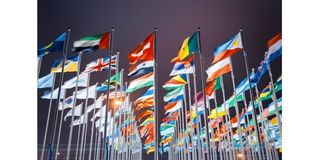
From that founding principle grew not just the United Nations, but the entire architecture of modern international cooperation which includes the World Health Organization, the World Bank, the World Trade Organization, UN climate change (UNFCCC) and many other frameworks through which nations have chosen negotiation over confrontation. From 51 founding member states in 1945, that community of nations has grown to 193 today. We must celebrate this as a testament to how deeply the world has embraced the idea that shared problems demand shared solutions.
Yet as we marked International Day of Multilateralism and Diplomacy for Peace. The day came at a time when multilateralism and peace are under great strain. It seemed less of a celebration and more like an urgent reminder of the scary space we are entering.
The International Day of Multilateralism and Diplomacy for Peace highlights a fundamental truth and that is that no country can solve today’s challenges alone. Dialogue, diplomacy, and multilateral solutions provide the surest path to a peaceful and just world.
The system built in the aftermath of World War II was designed precisely for moments like this. To abandon it now through isolationism, unilateralism, or simple indifference would be a dangerous mistake.
It is in precisely such moments of fracture that multilateralism and peaceful coexistence become both aspirational and existential.
Across Africa, rising energy prices are assaulting everyday life, and if left unaddressed through coordinated international action, the pressure they create will be massively disruptive and could translate into social and political unrest that no single government can contain alone.
At its core, multilateralism is built on the understanding that the world’s challenges are shared, and that we are bound to each other in ways that no wall or tariff can dissolve.
This January, at the World Economic Forum in Davos, Canadian Prime Minister Mark Carney gave voice to what many had long feared to say plainly. He spoke of a rupture in the world order, the end of a pleasant fiction, and the beginning of a harsh reality where the actions of great powers are submitted to no limits, no constraints. His warning was strong.
“The old order is not coming back.” It was a candid acknowledgment of the unfortunate dynamic that the strong do as they will, and the weak endure what they must. And yet, against that bleak backdrop, something quietly hopeful unfolded at United Nations headquarters in New York this week.
Four candidates vying to succeed Secretary-General António Guterres stepped before the General Assembly in a series of interactive dialogues, outlining their vision for the United Nations and answering questions from Member States and civil society representatives.
They were Rafael Mariano Grossi (Argentina), Rebeca Grynspan (Costa Rica), Macky Sall (Senegal) and Michelle Bachelet (Chile). As General Assembly President Annalena Baerbock reminded the room, the next Secretary-General will not only shape the future of the institution but, in their role as the strongest defender of the UN Charter, also that of the international rules-based order itself.
That candidates still present themselves for the SG office is itself an act of faith in multilateralism. It is the system refusing to surrender and that we must celebrate.
In light of dwindling Overseas Development Aid (ODA), what African countries must do is form a united front. Not tomorrow, but now.
Because for too long, the continent has arrived at the international stage divided, negotiating as fifty-four separate voices when we could speak as one. A single stick is easily broken. A bundle is not.
Ancient wisdom
That ancient wisdom has never been more urgently needed than at this moment. This also means empowering the African Union as a genuine instrument of collective will.
Together, Africa holds the keys to the world’s sustainable tomorrow. The multilateral system will not disappear and we should not wish it away. Humanity will always need mechanisms to collaborate, to resolve disputes, to pursue common goals.
But the multilateralism that emerges from this period of rupture must be one rebuilt on fairness and equality, where every nation arrives at the negotiating table with equal standing and equal voice.
Wanjira Mathai is MD for Africa and Global Partnerships at the World Resources Institute and Chair of the Wangari Maathai Foundation