Trendy treason: Is African democracy on trial?

By Festo Mulinda

One thing about the digital generation is the art of trending. A habit, style or just a funny meme gets adopted by multiple individuals and reshared the world over.

Well, African governments appear to have embraced a trend of their own, and, as Generation ‘Z’ might put it, it’s rocking!

Throughout my brief spell on the blue planet, treason has always been associated with acts such as armed rebellion, espionage or attempts to overthrow governments by force.

Post-independence Africa experienced its fair share of coups, with governments rising and falling to the sound of gunfire.

Julius Nyerere, who himself survived a military mutiny in 1964, once described Tanzania’s greatest achievement rather modestly: “We have survived.” Treason was that obvious.

Fast-forward to 2026, and treason is increasingly surfacing in political disputes involving opposition leaders across the continent.

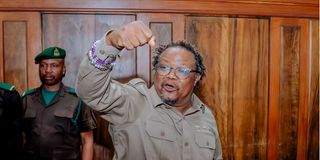
Tanzania’s Tundu Lissu, Uganda’s Kizza Besigye, South Sudan’s Riek Machar, Rwanda’s Victoire Ingabire, and Zambia’s Brian Mundubile and Makebi Zulu have all faced detention or prosecution under serious national-security or treason-related charges. Zambia’s latest addition to the conversation makes me wonder: to what end? Is democracy on trial?

Look closely at these cases and one thing becomes difficult to ignore: none of those accused was openly involved in military-style attempt to seize power. Some were engaged in political campaigns, challenged elections or demanded reforms. Only Machar’s case is different, involving allegations linked to armed conflict.

One striking feature is that treason charges are non-bailable. Could that be the strategy? Lock them up, get rid of the political noise and “work” for the people in peace! It could. Besigye has spent years in detention for almost as long as I have known him, allowing Mzee Museveni to thrive and secure landslide ‘victories’ in elections. Lissu, Machar and Ingabire have likewise spent extended periods under state custody or facing prosecution, with Mundubile and Makebi Zulu becoming the latest names in the conversation.

Zambia is perhaps the surprise package. It has long been regarded as one of Africa’s more competitive multiparty democracies. Its current president, Hakainde Hichilema, knows what it means to be an opposition politician: he spent years challenging the establishment before finally winning power in 2021. Yet, on his second bid, he chose the approach he has seen work in neighbouring countries.

Following Zambia’s disputed August 2026 election, opposition leader Brian Mundubile and his running mate, Makebi Zulu, were charged with treason after rejecting the election results and alleging irregularities. This sounds too familiar to ignore.

The question is not whether treason should remain a crime. Of course it should. States have a legitimate responsibility to defend constitutional order and national security. The real questions are more uncomfortable: When does protecting the state become protecting those who hold power? Why do serious national-security charges so often appear in moments of intense political competition and elections? It sometimes seems that dissent becomes treasonous when elections are near, and less so afterwards.

However, the cases are not identical, and that matters. Lissu, Besigye, Mundubile and Zulu are associated with political opposition and challenges concerning elections and governance. Ingabire’s case involves allegations including conspiracy and creating a criminal organisation. Machar’s case, meanwhile, involves allegations connected to armed violence.

This is not a defence plea for the accused. It is an analysis of what these cases could mean for democracy. Some governments may genuinely possess evidence of conspiracies, armed rebellion or attempts to destabilise the state. Opposition politicians are not automatically innocent simply because they are opposition politicians. Nonetheless, democracies must always understand one fundamental distinction: political dissent is not the same thing as treason.

A democracy is supposed to accommodate disagreement. Opposition parties exist to challenge governments. Citizens have the right to demand reforms. Politicians have the right to criticise elections and public institutions, including challenging election results through lawful means.

Kenya offers an instructive example. When Raila Odinga rejected the 2017 presidential election outcome and, in January 2018, was symbolically sworn in as the “People’s President”, the government regarded the act as a serious challenge to state authority. Yet he was not ultimately prosecuted for treason. The confrontation was eventually resolved politically through the famous handshake with President Uhuru Kenyatta.

Governments have the right and duty to prosecute genuine criminality. But that power must not become a tool for redefining political disagreement as criminality simply because it threatens the establishment.

When national-security laws become a preferred response to political competition, the courtroom can gradually replace the ballot box as the arena in which it is decided who is permitted to participate in politics. And the consequences extend far beyond those charged.

Journalists become more cautious. Civil society becomes defensive. Opposition parties become selective in their engagements. Ordinary citizens begin calculating the personal risks of political participation.

Eventually, a country may continue holding elections while democracy becomes increasingly hollow.

Under current trends, democracy is on trial. And if it loses, Africa may discover that democracy does not always disappear through armed coups.