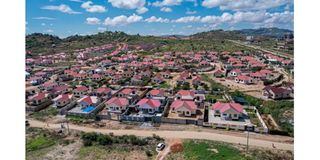
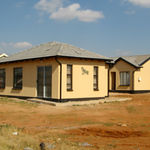
The second African Urban Forum took place recently at the Kenyatta International Conference Centre (KICC), Nairobi, between 8-10 April 2026 under the theme “Adequate Housing for All: Advancing Socio-economic and Environmental Transformation”. It noted that, as African Cities continue to expand, the need for safe, affordable and sustainable housing was becoming more urgent.
Tanzania was well represented at the forum, with a team headed by the Minister responsible for Lands. Among the important points that the Minister said was that Tanzania was determined to ensure that every citizen has decent and affordable housing. Leaders committed to sustainable urban development, tackling rapid urbanisation through improved housing, resilient infrastructure, and innovative financing to meet the African Union Agenda 2063.
A few weeks earlier, a Cabinet Minister had urged providers of housing in the public sector to make sure they constructed houses suited to the pocket of ordinary Tanzanians, housing which is affordable.
The question at hand is: What is affordable housing? A number of factors have to be considered. Paramount among these, is household income. In developed countries, where, most people acquire housing by way of buying a complete product, usually second had, a rule of thumb is that housing is affordable if its cost falls within 25-30 percent of household income.
The second key factor is the cost of putting up the house, which is dependent upon a number of factors, such as the cost of land, building materials, the size and type of the house, cost of labour, as well as the cost of money.
There is also the market price of the houses, in part determined by the forces of demand and supply. Where there is high demand in a situation of limited supply, the cost of housing naturally goes up.
In developed countries, there is a standard of housing that is expected in society. Nobody is expected to live in an incomplete house; a house without electricity or piped water for example, or without a toilet; indeed, public authorities would not allow it. So, when we talk about affordability, we are talking about a certain, minimum standard for a house, the cost of acquiring which, is within reach of the majority of households.
Households would be expected to mobilise a deposit, usually 25 percent of the cost of the house, and get the balance as a loan (mortgage) from financial institutions, such as housing banks. They then service this loan (paying back the principal amount plus interest) for a number of years running to 30 years in some cases. They have debt, but they live in a complete house, now.
There would be an affordability problem if household cannot easily mobilise the deposit, or service the mortgage, from their income. Lenders calculate house affordability by analyzing household monthly disposable income.
The above, is largely related to acquiring a house for ownership. However, affordability also affects renters, where house rents for a normal house or accommodation are too high compared to household income.
Housing is considered a basic human right, just as is food. So, when a substantial part of the community in a country cannot afford to buy or rent decent accommodation, there is an affordability problem. Currently, there is an outcry in many parts of the world, that housing is unaffordable.
In developing countries like Tanzania, the situation is different. Very few people acquire house ownership through buying. Many take a very long route of acquiring land as a separate process and then constructing slowly over a number of years in a process known as incremental construction.
At any time during this process, the household may decide to occupy their house, in full or in part, whether fully completed, or with many missing elements, as long as they can have a roof over their head. They do not have debt, but they may not live in a house that is considered complete.
Although public authorities are supposed to sanction the households’ occupation of their house, they rarely do so. If they did, many households would be considered illegal occupiers of their own houses. By tolerating low standards, public authorities increase affordability.
The same applies to rental housing. In most cases, ordinary housing accommodation renters live in houses that are incomplete, which they can afford, given their levels of income; but also, which the landlords can afford to put up.
Housing affordability, therefore, depends on the country and on what can be tolerated or considered acceptable, relating income to the cost of what standards for a house or accommodation.
If we want to talk about decent, affordable housing in Tanzania, we have to talk about household income on the one hand, and the cost of various kinds of houses/accommodation on the other. It may well be, that given their incomes, ordinary people cannot afford the minimum standard house, if it is constructed to fully completion.
As we have argued countless times before, we need a housing policy to discuss and settle all these.