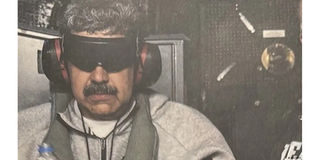
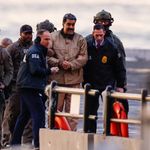
On the night of January 2, 2026, Nicolás Maduro went to sleep a president—loud, defiant, and wrapped in the illusion of permanence. He woke up in an American jail cell, facing the very brand of justice he had denied to countless Venezuelans.
The audacious operation to extract him was the stuff of Hollywood legend, only this time the consequences were terrifyingly real.
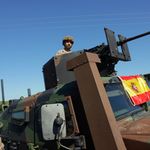
Codenamed “Operation Absolute Resolve”, the mission was a clinical masterpiece. A massive joint effort was involved: Delta Force, cyber-warfare units, intelligence teams, and 150 aircraft. Drones and cyber strikes jammed communications.
Special operations helicopters swooped on Caracas, neutralising the presidential guard in minutes. By the time Venezuelans realised what was going on, Maduro and his wife had already been spirited away. Cleanly and surgically.
This dramatic crescendo followed years of escalating friction. From the US perspective, Venezuela had become a destabilising force—a leftist satellite bankrolling rogue regimes, flooding the region with narcotics, and flaunting every democratic norm.
For Venezuela, it was a story of anti-imperialist resistance, a nation defending its sovereignty and, crucially, its vast oil reserves—the largest on the planet.
Then came the slow boil: collapsing oil prices, mass repression, economic freefall, and a Venezuelan state increasingly dependent on Russia and Iran for survival. By the time President Trump returned to office, the relationship had deteriorated into open hostility, leading to Maduro’s “rapture”.
Two stories, two camps
Predictably, the world split into two camps. Critics—particularly on the global left—condemned the raid as a flagrant violation of sovereignty and international law. To them, it was American imperialism driven less by justice and more by oil. “This isn’t liberation,” one European diplomat argued, “it’s a hostile takeover.”
But there’s another camp—whose opinion is echoed in our social media—cheering what they call unyakuo: a Kiswahili word for being snatched away, or in biblical terminology, a rapture.
To them, Maduro was a tyrant who had strangled his country and brutalised his people. If Venezuelans couldn’t remove him through elections, protests, or institutions — all of which he had rigged, crushed, or corrupted — then someone else had to.
I believe choosing one of these narratives alone is to fall into the trap of the single story. The morality of the action and its utility do not have to be an either-or proposition.
We can question the legality of the intervention while still acknowledging the profound relief that a great evil has been removed from the people of Venezuela.
To appreciate that, we must remember what Venezuela used to be.
In 1950, Venezuela’s GDP per capita was the 4th highest in the world, trailing only the US, Switzerland, and New Zealand. Hundreds of thousands of Europeans migrated to Venezuela because of its superior economy, infrastructure, and public services. When oil prices quadrupled after OPEC’s embargo, Venezuela capitalised. Cities modernised. And, crucially, that made democracy flourish.
But resource wealth is a double-edged sword. The Dutch Disease crept in. Inequality deepened. Corruption spread. And when Hugo Chávez came to power in 1999, he rode a wave of populist anger that changed Venezuela’s story.
Initially, he had luck on his side. Oil prices skyrocketed from $20 to $140 per barrel. Over a trillion dollars passed through his hands. And he used it to build a vast welfare state: free housing, healthcare, education, transport, and so on. It was generous, intoxicating, and utterly unsustainable.
From populism to police state
When the money dried up, the mask slipped. Chávez laid the groundwork; Maduro perfected the police state. Surveillance expanded.
Opposition leaders were barred from elections, harassed, and disappeared. Between 2016 and 2019, there were about 19,000 extrajudicial killings. Elections became a theatre: ballots without choice.
The result? Venezuela became a failed state. Hyperinflation reached 1 million percent. Oil production came to a halt. Once-proud hospitals had no medicine.
People voted for change, but the Maduros of this world believe that democracy is a tool to gain power, not to relinquish it. So, Venezuelans started to vote with their feet: nine million people fled—over a quarter of the entire population. That is a verdict no propaganda can change.
Enter Trump. No, he’s not Santa Claus. His motives may be strategic, or even self-serving. But Maduro had it coming.
The globalisation of unyakuo
So here we are. The morality of America’s actions raises serious questions about a world order where the strongest act as judge, jury, and executioner. But the utility of such actions is undeniable.
Thus, we ask: If dictators deny their people every peaceful path to change, must the world always wait for civil war, mass bloodshed, or decades of suffering? Isn’t there room for a surgical, precise, minimally intrusive alternative — unyakuo?
Perhaps the takeaway here isn’t about America’s overreach—it’s about accountability. The Maduros of this world believe that their borders shield them from any consequences. But this unyakuo signals otherwise. And if it makes even one of them sleep a little less comfortably, perhaps that is not such a bad thing.
If justice cannot come through the front door, let it come through the roof.
Charles Makakala is a Technology and Management Consultant based in Dar es Salaam
Register to begin your journey to our premium contentSubscribe for full access to premium content