Why and how Great Lakes govts should develop ASM compliance framework
By Bryan Bwana
Artisanal and Small-Scale Mining (ASM) drives economic opportunity for millions across Africa’s Great Lakes and East African region.
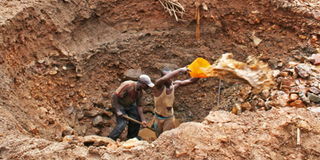
From gold and gemstones to tantalum and tin, ASM contributes significantly to national exports, rural livelihoods, and economic inclusion. Yet, despite its importance, the sector remains largely informal, environmentally hazardous, socially risky, and under-regulated.
This contradiction not only undermines the sector’s long-term viability but also blocks access to global markets that increasingly demand responsible and traceable minerals.
A regional ASM compliance framework, harmonized across East African governments—can transform ASM into a formal, equitable, and sustainable engine of growth.
Drawing on global best practice and emerging realities, such a framework would enable environmental protection, human rights compliance, safer operations, stronger markets, and regional integration.
Why the Great Lakes region needs a regional ASM compliance framework
ASM accounts for a substantial share of minerals exported by the Great Lakes countries such as Tanzania, Uganda, Kenya, Rwanda, Zambia and the Democratic Republic of Congo. It supports millions of rural livelihoods, contributes significant foreign exchange earnings, and drives local entrepreneurship and business linkages.
However, lack of formal compliance means that huge mineral revenues leak outside formal systems, environmental degradation persists and workers lack protections or social safety nets. Without structured compliance, ASM’s contribution will remain unstable, predatory, and undervalued.
Demand-side pressures Are Increasing Globally
Operators and exporters are now required to meet international standards if they want to access global supply chains. Standards such as the OECD Due Diligence Guidance for Responsible Supply Chains of Minerals, World Gold Council’s Responsible Gold Mining Principles, Fairmined Certification etc require traceability, environmental compliance, human rights protections, and socio-economic safeguards.
Global buyers are increasingly rejecting untraceable minerals, especially if linked to child labour, conflict, mercury pollution, or environmental harm. The Great Lakes region cannot compete in global value chains without formal compliance systems.
Current national ASM regulations in the Great Lakes region differ widely. For example, licensing categories vary, environmental requirements differ, reporting obligations are inconsistent, governance and enforcement capacity vary, traceability systems are not interoperable etc.
This fragmentation constantly increases compliance costs for regional buyers, weakens enforcement capacity, allows cross-border regulatory arbitrage and limits regional data coherence. A harmonized regional framework will help build credibility, attract investment, and reduce smuggling. ESG, Environmental and Social Risks Require Collective Action
ASM operations often use rudimentary techniques that damage land, pollute water, emit mercury, and expose workers to health hazards.
While some national laws exist, enforcement is weak. Institutionalised regional standards will make environmental and social safeguards consistent, measurable and auditable. This will lead to better outcomes for the economies, workers, communities, and ecosystems.
The Great Lakes regional ASM standards framework must be informed by established global standards and adapted for ASM realities.
Best Practice Principles to Inform the region’s Framework
Used by responsible refiners and buyers, this guidance defines risk categories, outlines supply chain traceability and requires annual reporting. A regional mineral traceability hub could implement a shared risk management platform.
Fairmined and fairtrade certification
This is a voluntary certification system that rewards ASM units for reducing environmental harm, ensure fair wages and community investment and provide price premiums to miners. These interventions are driven by the fact that certified ASM gold has wider access to ethical buyers in Europe, North America, and Asia.
IFC performance standards and ISO 45001 and ISO 14001
Though designed for large projects, these standards inform stakeholder engagement, environmental mitigation planning and health and safety principles. All global standards are complex, and must be simplified to be adapted for ASM cooperatives and associations. The following steps outline a practical roadmap on how the Great Lakes region governments could build a Regional ASM framework;
Create regional ASM body
Under institutions such as the East African Community (EAC), Intergovernmental Authority on Development (IGAD) and South Africa Development Cooperation (SADC). This body would then be charges with drafting regional standards, coordinating implementation, facilitating compliance reporting and harmonizing licensing and data systems.
Create a unified traceability and risk monitoring system
A shared digital platform is instrumental in registering ASM miners, tracking mineral flows from mine to export and linking with national customs and geological information systems. This would boost global buyer confidence.
A regional standard should include:
Baseline environmental protection requirements; Rehabilitation obligations for mined land; Health and safety minimum standards; Mandatory medical screening and exposure tracking. These should be scaled for ASM realities, with tiered requirements based on scale and risk.
Tiered compliance categories
Not all ASM units are the same. A tiered framework allows: Entry level compliance (basic legal registration); Environmental and traceability compliance; Voluntary certification (e.g., Fairmined); Formalize and Support ASM Cooperatives
Governments must provide legal status to cooperatives and ASM associations. This will lead to formalisation and the advantages that could tug along like training on compliance, access to finance, shared processing facilities (e.g., mercury-free plants) etc. This will in return increase productivity and reduce risk.
Agreements for certificates of origin, environmental compliance certificates and health and safety training. Mutual recognition would reduce paperwork and increase regional integration.
Global examples of Regional Cooperation
West Africa’s ECOWAS Principles
ECOWAS has developed harmonized mining policies that guide member states toward aligned legal frameworks.
Southern Africa Development Community (SADC) Mineral Development Strategies
SADC promotes best mining practices, environmental safeguards, and regional cooperation.
Colombia’s National Formalization Models
While not regional, Colombia’s experience shows how coherent formalization can build certified ASM sectors that access global markets.
It is clear, global supply chains will increasingly source only traceable, responsibly mined minerals. Mobile traceability, digital health records, and satellite monitoring will make compliance accessible to ASM units. If implemented, the Great Lakes region stands to lead globally by being one of the first regions with a harmonized ASM compliance framework. A classic of regional integration driving competitive advantage
Bryan Toshi Bwana is the Founding Trustee, Umoja Conservation Trust (UCT)