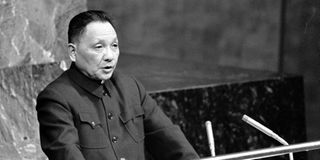
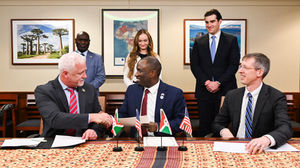
Deng Xiaoping, the Chinese leader who launched sweeping economic reforms in 1978, championed a pragmatic philosophy that prioritised improving people’s living standards over ideological confrontation, arguing that poverty could never be the goal of socialism. PHOTO | COURTESY
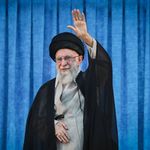
Reading discussions about Iran on WhatsApp and social media reveals something deeper than foreign policy disagreements. It reveals how ideology shapes the way many of us think about the world.
For me, when I am given a choice between South Korea, Japan, or Taiwan on one side and North Korea on the other, the choice is obvious. When I compare Saudi Arabia, the UAE, or Egypt with Iran, the choice is also obvious.
The same goes for Chile, Costa Rica, Colombia, and Mexico versus Cuba. One group of countries chose pragmatism and development. The other chose ideological confrontation and isolation.
Yet in our conversations, we often hear a different argument. We are told that the prosperous countries are merely “puppies” of the United States.
That they are colonised or controlled by the West. Meanwhile, the countries that chose ideological resistance are praised for their independence and courage.
But is that really the right way to think about it? Do we honestly believe the strategic choices made by North Korea are superior to those made by South Korea?
South Korea was poorer than many African countries in the 1960s. Its GDP per capita in 1960 was around $158. Today it exceeds $35,000. It is a global industrial powerhouse, home to companies like Samsung, Hyundai, and LG.
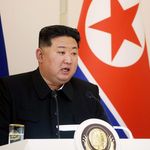
North Korea chose a different path. It pursued communism, military confrontation, and isolation from the global economy. Today, it is one of the poorest countries on earth. South Koreans export semiconductors and electric cars. North Koreans struggle to produce enough food.
Yet somehow, in our discussions, the successful countries are described as weak, compromised, or colonised. Why do we think this way?
An interesting story is often told about Deng Xiaoping, the Chinese leader who launched China’s economic reforms in 1978. Deng visited a rural commune where people proudly declared that they would rather starve than adopt “capitalist” methods of production. Deng’s response was blunt: that is exactly why you are starving.
His philosophy was simple: poverty is not socialism. Deng argued that the purpose of any system is to improve the lives of the people, not to fight ideological wars.
And history proved him right. Under Mao’s collectivised agricultural system, China experienced one of the worst famines in human history between 1958 and 1962. Estimates vary, but it is possible up to 40 million people perished.
After Deng introduced pragmatic reforms—allowing markets, private enterprise, and foreign investment—China experienced the fastest poverty reduction in history. China lifted over 700 million people out of poverty between 1981 and 2015. Reality mattered more than ideology.
This raises a deeper question. Why do we prefer ideology to success? Why would anyone defend a system that produces poverty rather than accept one that produces prosperity?
In many ways, ideology behaves like religion. Once people commit to it, evidence no longer matters. Results no longer matter. Loyalty to the idea becomes more important than the well-being of the people.
This is why we spend time debating issues about Iran, Cuba, or North Korea, which are thousands of kilometres away. Those discussions help us not only to understand the world but also to understand ourselves better.
Human societies face the same choices over and over. The way we interpret global events reveals the ideas that shape our own thinking. And ideas have consequences.
Some argue that choosing peace or compromise is a form of weakness.
They say that if our fathers had followed that path, we might still be under colonial rule today. But that argument misunderstands history. Seeking peace is not the same as accepting oppression.
In Tanganyika, Julius Nyerere pursued a largely peaceful strategy for independence.
Tanganyika did not fight a violent liberation war like Algeria or Kenya. Through negotiation and political organisation, independence was achieved in 1961.
In South Africa, Nelson Mandela spent 27 years in prison. Yet when he emerged, he chose negotiation instead of revenge. He could have pursued an ideological path—one that demanded total victory over his opponents.
Instead, he chose compromise. The result was not surrender. The result was a peaceful transition that prevented South Africa from descending into civil war.
Yet interestingly, the puritans that praise regimes like North Korea or Iran often criticise Mandela for being a “sellout.” In their view, compromise is betrayal. Conflict is authenticity.
For them, the purpose of politics is to prove ideological commitment—not to improve the lives of people. They believe that their slogans and hashtags matter more to history than their results.
South Korea, Taiwan, and Japan chose integration—and they prospered. China embraced pragmatism.
The result was the fastest poverty reduction in history: 700 million people lifted out of extreme poverty over four decades. Meanwhile, countries that prioritise confrontation remain trapped in stagnation.
One last point. Regimes such as North Korea, Venezuela, and Iran routinely repress and kill their own citizens. If their ideologies are so superior, why do they resort to oppression for political preservation?
Ideas shape nations. Quite often, the difference between prosperity and poverty is simply the courage to choose better ideas.
Register to begin your journey to our premium contentSubscribe for full access to premium content