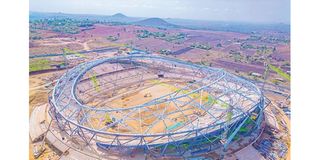
Dar es Salaam. The newly built Arusha football stadium, one of Tanzania’s flagship infrastructure projects ahead of the 2027 Africa Cup of Nations (Afcon) finals, is expected to be ready for testing in July, the government has announced.
The stadium, which is being constructed by China Railway Construction Engineering Group (CRCEG), is designed to strengthen Tanzania’s capacity to host major continental football events and boost sports development in the northern zone.
Speaking with The Citizen, Government Chief Spokesperson and Permanent Secretary in the Ministry of Information, Culture, Arts and Sports, Mr Gerson Msigwa, said the project is progressing well and has already reached 74 percent completion.
He noted that the contractor has assured the government that the remaining work will be completed in time for a July handover, after which the testing phase will begin.
“The construction company has done a great job so far. We do not have pressure regarding the 32,500-seater stadium in Arusha. We are on track,” said Msigwa.
According to him, the testing period will be critical in determining the stadium’s readiness and identifying any areas that may require additional finishing touches before it is officially commissioned.
“Once the construction work is completed, we will begin testing the stadium. The aim is to identify any unfinished features and ensure everything meets the required standards,” he added.
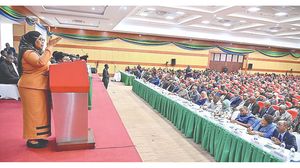
The Arusha stadium is among key venues expected to play a central role in Tanzania’s preparations for Afcon 2027, which the country will co-host alongside Kenya and Uganda under the East African “Pamoja” bid.
The tournament is set to attract Africa’s top football nations and thousands of visiting supporters, making modern, high-capacity facilities a major requirement.
Government officials have repeatedly emphasised that the success of hosting Afcon will depend not only on match venues, but also on supporting infrastructure such as training grounds, transport systems, accommodation facilities, security arrangements and fan experience services.
The Arusha project is expected to contribute significantly to that broader plan, while also leaving a lasting legacy for Tanzanian sport beyond the tournament.
Msigwa said the government remains committed to ensuring the stadium meets international standards, noting that the testing phase will involve technical assessments and operational checks aimed at confirming that all major components are fully functional.
These checks are expected to include evaluation of the playing surface, lighting systems, dressing rooms, spectator seating areas, access routes, emergency response mechanisms, media facilities and other essential features required for high-profile fixtures.
The government spokesperson said the pace of construction has provided confidence that Tanzania will meet its deadlines as Afcon 2027 draws closer.
He also confirmed that the stadium will be built at a cost of Sh338 billion, inclusive of taxes.
The investment reflects the scale of the project and its importance to Tanzania’s ambition of positioning itself as a competitive destination for international sporting events.
Once completed, the Arusha stadium is expected to benefit local football clubs, regional tournaments and national team engagements, while also supporting other sports and large public events that require a modern arena.
Stakeholders in the sports sector believe the facility could stimulate economic activity in Arusha by attracting visitors for matches, conferences and entertainment events, creating opportunities for hotels, transport operators, vendors and small businesses.
For Arusha residents and football fans across the country, the stadium is also expected to enhance the match-day experience, providing a safer and more comfortable environment compared to older venues, while giving the region a major sports landmark.
With the July testing timeline now set, attention will turn to the final phase of construction as the contractor works to meet the promised deadline.
Government officials say they will continue monitoring progress closely to ensure the project stays on schedule and delivers a stadium capable of meeting both Afcon requirements and long-term national needs.