As the world marks World Water Day under the theme “Water and Gender,” attention turns to a critical truth that water scarcity is not gen der neutral. Across East Africa, and particularly in rural Tanzania, the burden of water insecurity falls disproportionately on women and girls.
They walk long distances in search of water, often before sunrise or after dusk. They miss school, delay economic activities, and sometimes put their safety at risk. Water access is, therefore, not just about survival, it is about equity, opportunity, safety, and human dignity.
When water systems fail, it is women’s time, girls’ education, and families’ well-being that suffer most. When water systems succeed, women gain time for entrepreneur ship, leadership, and community building. Gender-responsive water infrastructure is not a social luxury; it is a development necessity.
Women at the forefront In Tanzania
Waterforce Africa Ltd is demonstrating how water engineering can intentionally address these gender realities. The locally led firm views water not merely as infrastructure, but as a tool for social responsibility, inclusion, and community empowerment.
With a focus on sustainability, local manufacturing, and gender-inclusive systems, the company is redefining how communities, institutions, and industries access and manage water.
“When we design water and sanitation systems, we ask a simple question: who benefits most?” said Mr Shivanand Poojari, Waterforce Africa Ltd Chief Executive Officer (CEO).
“I believe when you empower women, you automatically uplift communities. When women are empowered in water access and management, entire communities benefit through better health, education, and productivity,” the CEO elaborated.
According to the CEO, the company has intentionally embraced diversity within its own workforce, continuing to promote inclusion within its workforce and project engagement.
Waterforce’s projects are grounded in practicality and proximity. Boreholes, solar-powered pumps, storage tanks, and distribution networks are strategically located near homes, schools, and health centres to reduce walking distances.
Sanitation facilities are designed to ensure privacy and dignity, particularly for adolescent girls, he stated. According to him, these interventions dramatically reduce the daily burden of water collection, improve hygiene, and free up time for schooling, entrepreneurship, and family care.
The impact is especially transformative for women and girls, who are traditionally responsible for water collection. Beyond infrastructure, he said, WaterForce empowers communities to manage their own water systems.
Female participation in local water committees is actively encouraged, and residents are trained in operations and maintenance.
“When women are included in decision-making, systems work better, communities thrive, and girls stay in school,” the CEO commented.
Industrial and institutional impact
Waterforce Africa Ltd’s work extends far beyond households, playing a critical role in strengthening Tanzania’s industrial backbone.
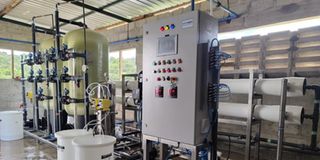
At Mtibwa Sugar Limited, the company engineered an integrated water treatment system featuring a 150 m³/hr clarifier, a 40 m³/hr ultrafiltration unit, and a 30 m³/ hr Reverse Osmosis (RO) plant, Mr Poojari added.
The system addressed high turbidity levels and strict boiler water requirements, improving steam efficiency, operational stability, and industrial productivity.
In Zanzibar, he said, a 20 m³/hr RO plant installed at Ikraam Bottlers and Creamery Limited guarantees safe drinking water for public consumption while supporting the tourism sector.
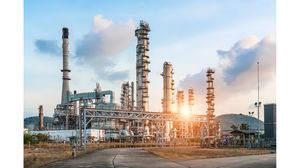
Meanwhile, at Kwala Industrial Park — the Sino–Tanzania Industrial Park — WaterForce is installing a 500 KLD sewage treatment plant to ensure proper wastewater management within a growing hub of industry, logistics, and transport.
This reflects the importance of integrating environmental infra structure into Tanzania’s industrial growth agenda, he said.
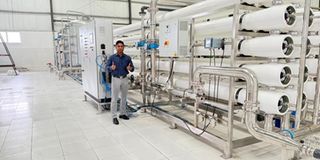
A 70,000 litre per hour water treatment plant consisting of Reverse Osmosis technology for Watercom Tanzania Ltd. The man standing next to the facility is Waterforce Africa Ltd CEO Shivanand Poojari.
Building resilience in the face of climate change
Climate change adds urgency to Waterforce Africa Ltd’s mission. Droughts, erratic rainfall patterns, and power instability increasingly threaten water security across East Africa, the CEO explained.
The company’s solutions are designed with resilience in mind: groundwater development informed by hydrogeological surveys, solar-powered pumping systems, water recycling and reuse technologies, and treatment systems capable of handling variable water quality, he said.
“Resilience means infrastructure that works even in the driest months or when the power grid fails,” the CEO said and added: “Communities and industries alike must have reliable water, no matter the climate.”
Commitment to sustainability and local expertise
WaterForce Africa Ltd stands out through its commitment to local manufacturing, OEM capability, Tanzanian engineering expertise, and long-term sustainability, Mr Poojari elucidated.
According to him, projects are not simply installed; they are com missioned, monitored, and maintained. Local operators are trained to ensure systems continue delivering value long after construction is complete.
Strategic partnerships further amplify impact. Collaborations with government institutions, NGOs, industrial developers, and international technology partners ensure that projects are technically sound, financially viable, and socially inclusive, he connotes.
“Water security is national security,” the CEO said, adding: “Tanzania has the talent, technology, and private-sector capacity to solve its water challenges, what we need is collaboration and commitment.”
Real impact, lasting change
The results, he stated, are visible and measurable. Communities once spending hours daily collecting water now enjoy nearby, safe, and reliable sources. School attendance improves particularly for girls.
Women gain time for income-generating activities and leadership roles. Health outcomes strengthen. Industrial operations run more efficiently and sustainably, he explained.
In celebrating this World Water Day, Waterforce Africa Ltd’s story underscores the profound link between water access, gender equality, and economic development.
Infrastructure alone is not enough; systems must be inclusive, resilient, and sustainably managed. When water flows closer to home, women walk less, children attend school, and communities thrive. When industrial water systems are engineered responsibly, industries grow without degrading the environment.
When local engineers are empowered and communities are trained, solutions endure. Waterforce Africa Ltd is not just delivering water, it is transforming every drop into opportunity, dignity, and empowerment.
As a local Original Equipment Manufacturer, Waterforce Africa Ltd believes Tanzania must continue building its own engineering capacity in water infrastructure.
Because water is more than life; it is a force for equality, growth, and socially responsible progress for everyone, everywhere, now and for generations to come.