After years of despair, 90 Zanzibar amputees walk again with free prosthetic limbs
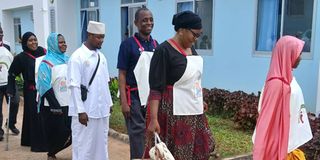
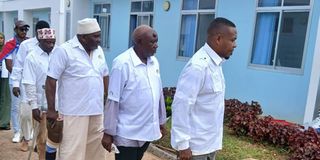
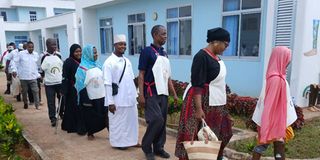
Some of the beneficiaries fitted with free prosthetic limbs practise walking at Mbuzini District Hospital in Mjini Magharibi Region, Unguja. PHOTO | JESSE MIKOFU
Unguja. Ninety people who had lost one or both limbs have been fitted with free prosthetic legs in Zanzibar, giving them renewed independence and hope after years of living with limited mobility.
The beneficiaries received the prosthetic limbs under the Zanzibar 100 Limb Project, a partnership between the UK-based Naya Qadam Trust and the Zanzibar Global Health and Education Foundation (ZGHEF).
Assessment, fitting and rehabilitation services were carried out over nearly a month, from June 1 to July, at Mbuzini District Hospital in Unguja.
Speaking after receiving their prosthetic limbs on July 10, 2026, several beneficiaries described how the support had transformed their lives, enabling them to regain mobility and look forward to supporting themselves once again.
Hashim Haji, a resident of Bububu, said he lost both legs in an accident, leaving him unable to work and dependent on others for daily care.
He said receiving the prosthetic limbs had restored his confidence and given him hope of returning to income-generating activities.
Fatma Abdalla Juma, a Form Two student from Pemba, said she had struggled to attend school after having one of her legs amputated.
"The prosthetic leg will help me return to school, continue my education and carry out my daily activities. Losing my leg was one of the greatest challenges I have ever faced," she said.
She recalled that she sustained an injury after falling at school before seeking traditional treatment at home, which worsened her condition. Doctors at Micheweni Hospital later determined that the bone had been severely damaged and recommended amputation.
Another beneficiary, Saleh Salim Khamis, said he became entirely dependent on family members after losing both legs.
"Now I can walk on my own and resume activities that will help me earn a living," he said.
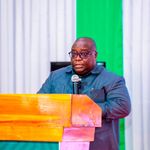
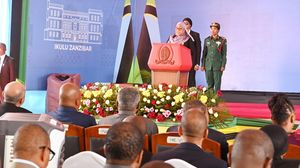
Speaking during the project's closing ceremony, the Chairperson of the Zanzibar Council for Persons with Disabilities, Mr Ali Omar, said the high cost of prosthetic limbs had placed them beyond the reach of many people with disabilities.
"Many people have been unable to afford prosthetic limbs because of the cost. This initiative has brought enormous relief," he said.
He added that beneficiaries had also been forced to travel to Dar es Salaam to access the service, increasing the financial burden.
"Many people with disabilities have lost hope and felt like a burden to society. Today, we have seen 90 people stand and walk again with confidence," Mr Omar said.
He said the project had restored more than mobility, bringing back dignity, confidence, inclusion and the opportunity for beneficiaries to live independently and contribute to society.
Mr Omar said the long-term vision was to build a Zanzibar where people with disabilities are empowered to live independently, while calling on development partners to extend similar support to those still awaiting assistance.
ZGHEF Secretary El'Jabir Shao said the project had been a challenging undertaking but described its successful completion as a major achievement, despite falling short of the original target of assisting 100 beneficiaries.
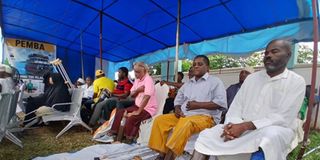
Some of the 90 beneficiaries who received free prosthetic limbs sit after being fitted at Mbuzini District Hospital in Mjini Magharibi Region, Unguja. PHOTO | JESSE MIKOFU
"It was not easy, and nothing like this had been done before. We thank God that we have succeeded," he said, while urging people with disabilities to become more active in advocating for their rights.
Project coordinator Ms Zarina Jafferji, a Zanzibari living in the diaspora, said the initiative would help many amputees regain normal lives and participate fully in society.
She added that, alongside fitting prosthetic limbs, specialists from Bangladesh and Nepal had trained local professionals to provide the service in Zanzibar, reducing the need for patients to travel outside the Isles for treatment in future.