Arusha. The High Court of Zanzibar has acquitted Rehema Mwinyimkuu Mohamed, who had been charged with transporting four kilograms of heroin, after ruling that the prosecution did not prove its case beyond reasonable doubt as required in criminal trials.
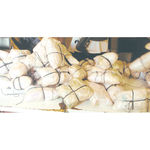
The State alleged that on January 31, 2022, at about 2:10 a.m., at Abeid Amani Karume International Airport (AAKIA) in Mjini Magharibi Region, Unguja, the accused entered Zanzibar carrying a yellow plastic package containing a black packet with powder later confirmed to be heroin weighing four kilogrammes.
Judge George Kazi delivered the judgment acquitting the accused on Tuesday, February 3, 2026 while hearing the criminal case, and the Judiciary subsequently uploaded the decision on its official website.
During the trial, the accused was represented by Advocate Suleiman Yusuf Ali and, despite her absconding, the court proceeded in her absence under section 260 (1) of the Criminal Procedure Act.
The judge observed serious procedural flaws in the manner in which the accused was arrested, searched, and in how the alleged drug exhibit was handled and stored before being produced in court.
The court stressed that although the hearing took place without the accused because she had fled, the prosecution’s duty to prove the charge did not lessen, and the court was obliged to examine the evidence with heightened caution.
The judge found that the search of the accused’s luggage was not conducted in line with legal requirements, particularly because police failed to involve two independent civilian witnesses as required in drug-related searches.
The court noted that the individuals who purportedly witnessed the search were security officers, which fell short of legal standards, and that investigators failed to prepare an inventory of seized items or obtain a written acknowledgement from the accused confirming recovery of the exhibit.
The court also highlighted conflicting testimony regarding where the search actually occurred, as one witness said it was conducted at the airport baggage inspection area while another insisted it took place at the Airport Police Station.
Judge Kazi ruled that the inconsistency was material, undermined the credibility of the prosecution, and exposed weaknesses in the chain of custody because there was no documentary proof that the exhibit remained secure and untampered from seizure to laboratory analysis.
Additionally, the court found uncertainty over the actual weight of the alleged drugs, since it was unclear whether the four kilogrammes referred to the substance alone or included its packaging, a critical issue in narcotics cases.
Evidence
According to the prosecution, the accused arrived at Abeid Amani Karume International Airport (AAKIA) from South Africa on an Ethiopian Airlines flight on January 31, 2022.
Corporal Rashid of the Anti-Narcotics Unit testified that he became suspicious of the accused due to her anxious behaviour while standing in the arrivals queue.
He told the court that after calling her aside for questioning, he searched her red bag in the presence of an Airport Security Officer and found a package wrapped in yellow Sellotape suspected to contain drugs.
The accused was then arrested, the bag was preserved and marked as an exhibit, and other prosecution witnesses said the substance was taken to the Government Chemist Laboratory, which confirmed it was heroin weighing four kilogrammes.
Despite her absconding, Advocate Suleiman Yusuf Ali continued to represent the accused, and the court lawfully proceeded in her absence under section 260 (1) of the Criminal Procedure Act.
The acquittal reaffirmed the necessity of strict compliance with criminal procedural safeguards in drug cases.
The judge further reminded law enforcement agencies that technical lapses in arrest, search, evidence handling, and documentation can fatally weaken otherwise serious cases.
He said procedural safeguards exist not to shield offenders but to ensure fair trials, preserve integrity of evidence, and protect the administration of justice from avoidable miscarriages rooted in investigative negligence and evidentiary reliability.