Financing gap threatens Tanzania, Africa in SDGs push
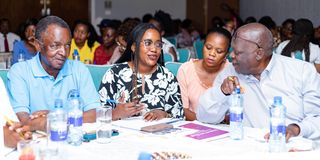
Stakeholders engage in discussions during a recent breakfast meeting in Dar es Salaam, hosted by Policy Forum to address key sector reforms. PHOTO | COURTESY
Dar es Salaam. A widening financing gap is threatening the achievement of the Sustainable Development Goals (SDGs) by 2030, with Africa requiring about $1.3 trillion annually to remain on track, while global needs are estimated at $4 trillion.
The SDGs, adopted by the United Nations in 2015, form a 15-year blueprint comprising 17 goals and 169 targets aimed at ending poverty, protecting the planet, and promoting shared prosperity.
Five years after the halfway mark to 2030, progress remains uneven. Globally, implementation stands at 18 percent, compared to six percent across Africa and 18.2 percent in Tanzania, underscoring persistent structural and financing constraints.
The funding challenge came into sharp focus during a recent breakfast meeting in Dar es Salaam organised by Policy Forum under the theme: “Leave no one behind: Stakeholder engagement in the Voluntary National Reviews (VNR) and Accountability for child rights within the SDGs.”
Speaking at the event, the Tanzanian Sustainable Development Platform (TSDP) co-convener, Mr Stephen Chacha, recalled that as the Millennium Development Goals (MDGs) neared completion, resource mobilisation intensified.
However, he said, resources are now being withdrawn as the world approaches the SDGs deadline, casting doubt on the likelihood of meeting the 2030 targets.
“Globally, the SDGs require around $4 trillion, while Africa alone needs about $1.3 trillion annually. Yet these resources remain far from sufficient to sustain implementation,” he said.
Mr Chacha argued that the problem is not an absolute shortage of funds but weak prioritisation and allocation, particularly in many African countries.
He added that data gaps further undermine implementation, with only 37 percent of required data currently available to guide planning and monitoring, expressing hope that planned surveys would raise coverage to between 65 and 70 percent.
He noted that financing pressures have also affected civil society organisations, which play a critical watchdog role.
“Several groups have struggled following the scaling down of operations by the United States Agency for International Development (USAID), contributing to reduced support for SDG programmes,” he said.
Despite the constraints, he said Tanzania has recorded gains in the under-five and maternal mortality, expanded access to medicines, improved rural energy supply, and digitalization.
During the forum, Save the Children technical specialist, Mr Barnabas Kaniki, drew on Tanzania’s experience, including the 2023 VNR, to outline children’s priorities and recommendations.
He said children reported that some survive on one or two meals a day because of poverty, high food prices, and rising living costs, undermining concentration and school performance.
They called for government action to reduce taxes, stabilise food prices, diversify diets, introduce free school feeding programmes, promote youth participation in agriculture, raise awareness of balanced nutrition, and improve agricultural infrastructure.
On SDG 3 on health and wellbeing, children cited limited access to services in rural areas, long distances to facilities, medicine shortages, transport constraints, high treatment costs, inadequate mental health services, stigma, and low awareness.
They recommended constructing more health centres, deploying mobile clinics, subsidising care for vulnerable families, integrating mental health support into primary healthcare, and conducting sustained public awareness campaigns.
“Regarding SDG 4.1 on quality education, children welcomed free schooling but raised concerns about declining standards, shortages of teachers, classrooms, toilets, and textbooks, as well as persistent child marriage contributing to girls dropping out,” he said.
“They also proposed recruiting additional teachers, upgrading infrastructure, supplying desks and learning materials, expanding vocational colleges, enforcing laws against child marriage, and providing inclusive services and assistive devices for learners with disabilities,” added Mr Kaniki.
He said on gender equality, children highlighted harmful cultural practices, discrimination, and teenage pregnancies.
Recommendations included engaging parents and community leaders, promoting alternative rites of passage, and integrating comprehensive sexuality education into school curricula.
Under SDG 8, children pointed to child labour and street work, urging support for family livelihoods, stricter enforcement of labour laws, alternative learning pathways, and reunification of street children with their families.
On SDG 13 on climate action, they expressed concern about deforestation, pollution, and climate shocks, recommending environmental education, reforestation, renewable energy initiatives, and meaningful child participation in climate programmes.
For SDG 16 on peace, justice, and strong institutions, children reported violence at home, school, and in communities, compounded by weak reporting systems and limited prosecution of offenders.
They called for training for teachers, parents, and community members on child rights, strengthened child-friendly reporting mechanisms and helplines, and safe channels for reporting abuse.
UNA Tanzania youth head, Ms Judith Urio, said the platform provides technical guidance to civil society organisations, produces shadow reports, and facilitates participation in regional and global forums.
She added that members will contribute to the 2026 VNR process, regional SDG forums, and the High-Level Political Forum.
Assistant Director of Multilateral Cooperation in the Ministry of Foreign Affairs and East African Cooperation, Mr Songelael Shilla, said significant progress had been made in expanding access to education, with primary and secondary schools now established in every ward.
However, he acknowledged quality concerns, noting that better standards must match improved access.
On the term indigenous people, he said the government considers all tribes equal, with none more indigenous than another.
Addressing proposed amendments to the Law of Marriage Act, he said the Bill had been delayed due to cultural and religious sensitivities but was now at an advanced stage.