Mbeya. Mbinga District Council in Ruvuma Region expects to harvest 20,000 tonnes of coffee this season, as local authorities roll out targeted strategies to boost productivity and align local output with international market standards.
Mbinga is a major producer of commercial crops, notably maize and coffee, which sustain rural livelihoods and generate crucial own-source revenue for the council.
Speaking at the Nanenane agricultural exhibition on Wednesday, August 5, 2026, District Coffee Inspector Leo Lukenda highlighted coffee as an economic lifesaver for local farmers due to favourable yields and rising market prices.
He noted that annual production rose from 10,000 tonnes to 18,000 tonnes over the past three years, with expectations to hit 20,000 tonnes during the current agricultural year.
"This growth stems from continuous extension services and training provided to farmers. Enthusiasm is high due to lucrative market prices, particularly since our crop targets export markets," said Mr Lukenda.
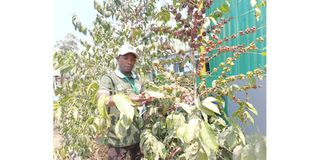
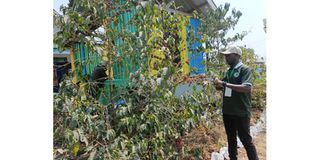
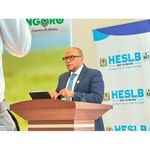
Mbinga District Council Coffee Inspector, Mr Leo Lukenda, on Wednesday, August 5, 2026, examines a coffee tree at the John Mwakangale grounds in Mbeya, where the Southern Highlands Nanenane exhibition is underway. PHOTO | SADAM SADICK
He added that rising seasonal prices have attracted youth to coffee farming, shifting away from past trends dominated by older generations.
Government fertiliser subsidies have also acted as a major catalyst, he said, encouraging more smallholders to expand coffee production.
"Prices remain very encouraging, currently ranging between Sh9,000 and Sh12,000 per kilogramme depending on quality as the harvesting season begins," said Mr Lukenda.
"Our experts focus on pre-harvest management to ensure quality before produce reaches buyers. We urge farmers to maintain high standards throughout the harvest," he added.
To bolster output, the council plans to distribute over two million high-quality seedlings, enabling farmers to produce competitively for international buyers.
Local farmers welcomed the council’s interventions but highlighted ongoing input challenges.
A farmer from Lyombo Village in Linda Ward, Mr Yukundusi Solomon, acknowledged that rising farmgate prices motivate higher investment, though input shortages persist.
"The primary challenge is securing farm inputs, as local demand exceeds supply. The government should improve rural distribution networks to resolve this bottleneck," said Mr Solomon.
A resident of Litembo Village, Mr Emanuel Hyera, attributed steady yield increases to proper fertiliser application and adoption of the high-yielding compact coffee variety.
"Mbinga grows several coffee varieties, but research proves compact delivers optimal returns. Stable prices ensure we recoup our investments," he said.