Dar es Salaam. While Tanzania ranks fourth among Africa’s largest coffee producers and is pushing to strengthen agricultural exports, new research warns that climate change, shifting global markets and domestic policy reforms are placing the backbone of the sector under growing strain.
The findings, unveiled yesterday in Dar es Salaam, by an international team of scholars, show that Tanzania can still unlock its coffee production potential if it urgently reforms how the sector is governed and supported.

The research comes at a critical time, when coffee remains one of Tanzania’s most strategic export crops, supporting over 450,000 smallholder farmers and generating hundreds of millions of dollars in foreign exchange each year.
Yet behind this strong national ranking lies a fragile reality. Smallholder farmers, who produce about 90 percent of Tanzania’s coffee, are increasingly exposed to climate shocks, volatile prices and a buyer-driven global value chain that shifts risk downwards.
Rising temperatures, unpredictable rainfall and the spread of diseases such as Coffee Berry Disease are already cutting yields and undermining quality, the very factor that determines premium prices on international markets.
It is against this backdrop that the Paradoxes of Climate-Smart Coffee (PACSMAC) research project raises hard questions about whether current policies are doing enough to protect farmers’ livelihoods, even as they aim to stabilise production and exports.
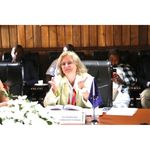
Scholars from the University of Dar es Salaam, the University of Basel, Copenhagen Business School (Denmark) and partner universities in Ethiopia during the workshop, argued that Tanzania must urgently rethink how it governs and supports coffee production.
“While Tanzania has embraced climate-smart agriculture in policy, the reality on the ground is different,” said Project Coordinator for Tanzania at the University of Dar es Salaam, Prof Christine Noe.
“Rising climate risks and procurement reforms intended to empower cooperatives have increased uncertainty, weakened long-term buyer–producer relationships and reduced farmers’ access to agronomic support, quality control and social services,” she said.
She added that many climate interventions still prioritise production volumes, quality and export stability, while paying far less attention to household-level livelihood resilience and diversification, which are critical for farmers facing climate shocks.
Prof Stefano Ponte of Copenhagen Business School noted, “The buyer-driven system means smallholders carry most of the climate risk.”
“As climate uncertainty increases, buyers are less willing to invest in long-term relationships with cooperatives, which weakens farmers’ access to training, credit and quality support,” he said.
Ironically, some domestic reforms meant to empower cooperatives have added new layers of uncertainty. While farmers are encouraged to sell through cooperatives to improve bargaining power, many cooperatives lack adequate financing, management skills and modern processing facilities.
“Without strong institutional capacity, cooperatives cannot function as effective climate adaptation hubs,” said Dr Pilly Silvano from UDSM. “Instead of protecting farmers, the system sometimes exposes them to greater market and climate risks.”
Speaking at the conference, Assistant Director of Policy at the Ministry of Agriculture, Dr Adella Ng’atigwa, acknowledged that Tanzania’s coffee production is under threat and said the PACSMAC findings come at a critical time.
“Research has already demonstrated that rising temperatures in coffee-growing regions have a serious negative impact on yields,” she said.
“Smallholder farmers are battling unpredictable weather, fast-spreading diseases and severe economic pressure.” She said the government recognises the value of research conducted at farmer level, as it helps bridge the gap between science, markets and realities on the ground.
“Now it is our turn as stakeholders to use this evidence,” Dr Ng’atigwa said. “Policymakers and private sector partners must translate these findings into tangible support programmes, fair pricing models and resilient infrastructure.”
She outlined measures already being implemented by the government, including the distribution of improved, climate-resilient coffee seedlings, expansion of extension services, and increased investment in irrigation schemes to reduce farmers’ dependence on rainfall.
“Due to prolonged dry spells, many farmers have faced serious losses. We are investing heavily in irrigation so farmers can have reliable production, including improving coffee farming practices,” she said, adding that research such as PACSMAC will help close existing policy gaps. The researchers argue that truly climate-smart coffee must go beyond better seeds and farming techniques. Instead, it must place livelihood resilience at the centre.
“Resilience is not just about producing more coffee,” said Prof Janina Grabs of the University of Basel. “It is about enabling farmers to adapt, diversify or even transition out of coffee when climate risks become unmanageable.”
The PACSMAC project recommends reforms to stabilise buyer–farmer relationships, strengthen cooperative capacity, enforce women’s land and leadership rights, and align climate and agricultural policies with household resilience rather than export performance alone.
Register to begin your journey to our premium contentSubscribe for full access to premium content