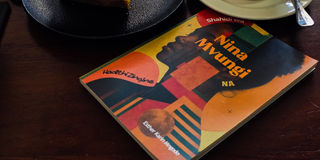
This collection of Afro-futuristic stories is set in various parts of Tanzania. The seven stories differ in setting and character, yet they speak to one another as they explore themes of mental health, betrayal, religion, belief systems, and superstition.
Imagine the world ends in three days. No negotiation. Nothing. This is it. If this were your reality now, would you still live the way you do? What would you force yourself to change, knowing you will never see the world beyond those three days?
This is Diana’s reality in a story titled Bila Jua in Shahidi Wa Nina Mvungi Na Hadithi Nyingine by Esther Karin Mngodo.
This collection of Afro-futuristic stories is set in various parts of Tanzania. The seven stories differ in setting and character, yet they speak to one another as they explore themes of mental health, betrayal, religion, belief systems, and superstition.
Bila Jua is a story I am still thinking about days after finishing the book. In it, we meet Diana Mapendo, who lives with her husband, Robert Mapendo, a bureaucrat tasked with informing the nation about the end of the world.
But as it is with many “patriotic” people, their devotion exists in the eyes of the public and rarely in their own homes. As the nation praises Robert for his courage, Diana longs for his presence, not just physically, but in all the ways a wife longs for her husband.
“It’s a major responsibility, I get it. But Robert doesn’t get me. How can his patriotism exceed his love for his wife? He claims that we must obey all the statutes and fulfil all the criteria. Really? When faced with death?”
Mngodo uses this story to gesture toward climate change. Human activity has led to the destruction of life as we know it, and the speculation feels worth considering, given the pace at which the world is moving and how casually the earth is taken for granted, with no care for future generations.
Mental health is a theme Mngodo explores with tenderness, showing that each person carries their own struggles. This is evident in how difficult it can be for people to show up fully as themselves without fear of the world’s response.
Diana wrestles with this, even as the world ends, questioning who she has been in this lifetime and how she feels about the life she has lived.
“The other day I heard my neighbour shriek, and I was jealous. My entire life, I have never allowed the world to see me as I am; only the darkness knows me. My mother taught me that if I had to cry, I should cry alone in my room, then emerge with a bigger, brighter smile than everyone else.”
What I like about this collection is how connected the stories feel. Moving to the story that gives the book its title, Shahidi Wa Nina Mvungi, I am reminded of a longing many humans carry. To have their lives witnessed, their existence acknowledged.
That you are here, and I see you. I am here, and I love you. Not many of us are lucky enough to experience this.
In this story, Mngodo suggests there is a world beyond what we can see. Just as believers believe in guardian angels, she introduces witnesses who observe our lives and report back to ‘Big Bwana’.
As we follow Nina, a woman in her 30s, we meet Brother Morpheme, who has witnessed her entire lineage. He understands the trauma that lives in her blood, even when it is invisible in the physical world. Having seen the sorrows of many women, Nina’s story troubles him deeply, particularly after she turns 30, an age when many societies consider women “expired goods” if they are not married.
“I wish someone was here to see this. Not just the shitty things, but all of it. I wish someone knew me inside out. Why do I feel so alone? I want someone to stick with me through thick and thin.”
Nina cries herself to sleep, break-up after break-up. One cannot help but wonder whether knowing that someone is witnessing our lives, even invisibly, might ease that loneliness and longing to belong.
These stories are written with care and tenderness, even as they confront difficult themes. In Mtoko wa Kwanza, Mngodo examines self-abandonment in the face of religion, questioning cases of self-immolation through the lens of mental health. In Bidhaa Adimu, people with albinism are treated as walking mines, exposing the violence of superstition embedded in their everyday life.
The stories are imaginative and speculative, asking readers to consider how they show up in the world, their belief systems, and their relationships with others. This collection leaves a sense of possibility and the hope that a better future can still be imagined.
Jane Shussa is a digital communication specialist with a love for books, coffee, nature, and travel. She can be reached at [email protected].