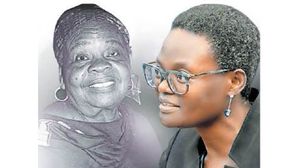
Last Sunday was Mothers Day. I am not a mother in the biological sense. But I spent the day honouring and being honoured because I have come to believe that motherhood is less about biology and more about what you do with your love.
I am a mother to my nieces and nephews. I show up, and I care for them; I am one of the people they come to.
And I am not alone in this; many women have mothered me, and they are mothering their communities in different ways.
That week, I found myself thinking about Chimamanda’s Dear Ijeawele: A Feminist Manifesto in Fifteen Suggestions, a book I had read before, but not as the person I am now.
The woman who read it then believed that motherhood required a biological claim. She would not have counted herself in. I do now.
In Dear Ijeawele, Adichie writes a letter to her friend Ijeawele, who has just had a daughter, Chizalum, and asks Chimamanda how to raise her as a feminist.
It is proof, I think, that it takes more than one person to raise a child.
A biological mother should not be expected to do it alone, and it would be a mistake to build motherhood around that expectation. The support system a mother has shapes most of the child’s upbringing, and the mother’s own mental health.
For Adichie, feminism is not a one-size-fits-all concept. It is always context-dependent.
She shares two premises she believes underpin feminism.
One premise is that, I matter. I matter equally. Not if only. Not as long as, I matter equally. Full stop. The second premise is a question, Can you reverse X and get the same results? I agree with both of these premises.
When you apply them, it is easier to make decisions in everyday life.
Adichie offers fifteen suggestions to help her friend raise a feminist daughter.
But as I reread them, I kept thinking about how they were not only for daughters.
They are for raising any child into an adult who sees others fully and understands that every person deserves dignity simply because they are human.
Several of the suggestions revolve around a theme I could not stop thinking about: the weight women carry alone and the lie that they should carry it.
Women are socialised to believe that caring for children is their responsibility alone and that a good mother simply knows how to do it.
When a successful woman is interviewed, someone always asks, How do you do it all? As though the answer should be: alone, and without complaint.
Two of Adichie’s suggestions speak directly to this. She tells her friend to remain fully herself and to do it together.
To accept help when it is offered. I sat with that for a moment. I do not know how to accept help or ask for it.
I have spent a long time believing I should be able to handle things on my own. I know I am not alone in this. In the coming weeks of early motherhood, be kind to yourself. Ask for help.
Expect to be helped. There is no such thing as a superwoman. Parenting is about practice and love, she writes.
A suggestion I believe deserves more attention is the one about gender roles, the roles defined for children as early as age three.
In most homes, girls are expected to do the dishes and cook, while boys are sent to the farm.
Adichie does not mince words on this. Gender roles are nonsense, she writes.
She tells her friend never to say her daughter should or shouldn’t do something because she is a girl.
Because you’re a girl is never a reason for anything. Ever.
In my family, we were raised to be equal. My siblings and I did every chore equally, depending on how my mother allocated them. My mother was a teacher. Perhaps that is why she never treated our potential as gendered.
Our choices of what to study at university had nothing to do with our genders.
They had everything to do with what we believed we could do and what we wanted.
One might not agree with all fifteen suggestions. But they are a starting point for any parent, any guardian, anyone raising a child, to decide what kind of human they want to help shape.
As I reread this book, I thought about how I can continue to be a good example to my nieces and nephews.
Adichie suggests that Ijeawele teach her daughter to read because reading is how her daughter will understand and question the world.
It made me think about my reading time with my nephew. Children become what they grow up seeing.