Research and real-life experiences reveal that nurturing talent in schools can improve learning, build life skills and open doors to employment—challenging long-held beliefs among parents.
In an increasingly competitive labour market, talent is emerging as a critical asset—enabling young people not only to secure livelihoods but also to create opportunities for others, particularly in the creative and sports industries.
Yet, across Tanzania, a persistent tension remains. For many families, nurturing talent, especially in sport and the arts, is still viewed as a distraction from academic success rather than a complementary pathway. This mindset, experts warn, risks locking out a generation of young people from opportunities that extend far beyond the classroom.
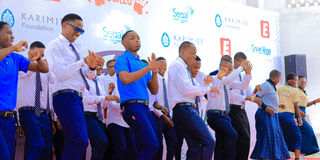
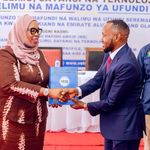
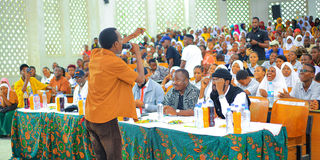
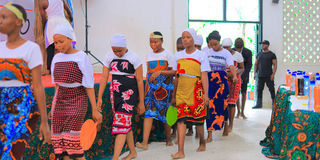
Speaking after the Uwezo Festival finals held recently in Dar es Salaam, which brought together secondary school students from the Coastal Zone through the Uwezo Bonanza and Uwezo Awards, Great Hope’s National Projects Coordinator, Noelle Mahuvi, underscored the urgency of shifting this narrative.
“Some parents still show limited support when it comes to their children expressing their talents. This discourages many young people and, ultimately, suppresses potential that could transform not only their lives but society as a whole,” she says.
Ms Mahuvi’s argument is not merely anecdotal. A growing body of global research shows that integrating play, sport, and creative arts into education significantly improves learning outcomes, employability, and social development.
According to Unesco, quality physical education and school sport programmes enhance students’ cognitive performance, concentration, and academic achievement, while also building critical life skills such as teamwork, resilience, and leadership.
Similarly, Unicef highlights that structured play supports emotional well-being and helps children develop problem-solving abilities—skills that are essential in the 21st-century economy.
Since 2016, Great Hope has been working with secondary schools through initiatives such as Uwezo Bonanza and Uwezo Awards, reaching more than 100 schools in Dar es Salaam and the Coast Region. The programmes identify and nurture talents in areas ranging from music, drama, and fine arts to acrobatics and fashion design.
But beyond talent showcases, the initiatives are deliberately designed to embed entrepreneurship and practical learning.
“We are not just identifying talent, we are equipping students with the skills and knowledge to transform those talents into economic opportunities,” Ms Mahuvi explains. “Education is important, but so is developing what a child can do beyond the classroom.”
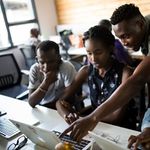
Through the Uwezo Awards, students design and implement entrepreneurial projects using locally available resources. The proceeds are often reinvested into community initiatives, creating a cycle of learning, innovation, and social impact.
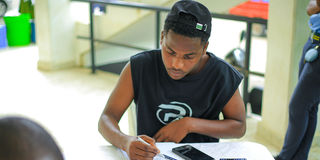
For Form Six student Ramadhani Juma, the experience has been transformative.
“I have learnt how to use resources around me to create opportunities,” he tells Smart World in an interview. “I can now produce items like liquid soap and candles, and I understand how to run a small business.”
The science of play and sport in education
Education experts argue that such approaches align closely with global best practices. Research by the World Bank shows that education systems that integrate extracurricular activities—especially sport, tend to produce more adaptable and employable graduates.
An education specialist based in Dar es Salaam, Dr Asha Msuya, notes that play and sport are not peripheral—they are foundational.
“When children engage in structured play and sport, they develop executive functioning skills—planning, focus, self-control—that directly influence academic performance,” she said. “These are the same skills employers are looking for.”
A 2022 report by the Organisation for Economic Co-operation and Development (OECD) further reinforces this, indicating that students who participate in sports and creative activities demonstrate higher levels of motivation, better school attendance, and stronger social connections.
In Tanzania, where youth unemployment remains a pressing challenge, these findings carry particular weight. By some estimates, hundreds of thousands of young people enter the labour market each year, many without the practical skills required to navigate it.
One of the biggest barriers, however, remains societal perception.
Ms Mahuvi points out that many parents still prioritise academic performance at the expense of talent development.
“We need parents to understand that talent is not a waste of time. It is an investment,” she says. “Through talent, a child can solve real-world problems and even create employment.”
Experts agree that addressing this requires both community awareness and policy alignment.
A sports development analyst, Dr Josephat Kahama, argues that Tanzania must institutionalise talent development within its education framework.
“We cannot treat sport and the arts as extracurricular luxuries,” he notes. “They must be integrated into the curriculum, supported with infrastructure, and guided by trained professionals.”
This aligns with calls for the Ministry of Information, Culture, Arts and Sports, alongside education stakeholders, to establish structured talent development centres—similar to business incubation hubs—where young people can nurture their abilities from an early age.
Lessons from global practice
Countries that have successfully integrated sport and play into education offer valuable lessons. In nations such as Finland and Canada, physical education and creative arts are considered core components of holistic learning.
According to Unesco, such systems not only improve academic outcomes but also foster innovation and social cohesion.
Closer to home, Rwanda has made strides in embedding sports development within schools, linking it to national talent identification programmes.
For Tanzania, scaling initiatives like Uwezo could have far-reaching implications.
First, it would help bridge the gap between education and employment by equipping students with practical, income-generating skills.
Second, it would improve student engagement and retention, particularly for those who struggle in traditional academic settings.
Third, it would nurture a generation of confident, creative, and resilient young people.
Dr Msuya believes the impact could be transformative.
“If we take talent seriously, if we invest in play, sport and creativity—we will not only improve our schools, we will reshape our economy,” she says.
The road ahead
Great Hope’s ambition is to expand its reach beyond the Coastal Zone, ensuring that more schools and regions benefit from its programmes. But scaling such efforts will require collaboration between the government, development partners, schools, and communities.
For now, the message is clear: classrooms alone are not enough.
As Tanzania navigates the demands of a rapidly changing world, the future of its education system may well depend on how effectively it embraces what happens beyond the desk—on the playing field, on the stage, and in the creative spaces where young minds discover who they truly are.