Budget shortfalls stall laboratory construction projects in schools
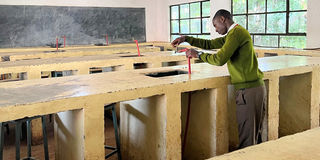
Many schools, particularly in rural areas, continue to operate without modern laboratories equipped for practical training in physics, chemistry, and biology. PHOTO | CORRESPONDENT
Rombo/Lushoto. Budget constraints remain a major obstacle limiting the development of science laboratories in Tanzania’s secondary schools. Despite government efforts to improve learning environments, inadequate funding for laboratory construction has slowed the development and upgrading of these facilities.
Many schools, particularly in rural areas, continue to operate without modern laboratories equipped for practical training in physics, chemistry, and biology. This deficit restricts students’ comprehension, limits skills development and undermines their ability to compete in science subjects. Teachers are often forced to rely on theoretical instruction, which curtails creativity and diminishes learners’ motivation.
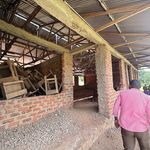
A survey conducted by The Citizen in Rombo District (Kilimanjaro Region) and Lushoto District (Tanga Region) between November 2025 and January 2026 revealed that many laboratory buildings remain incomplete, awaiting funds, particularly in Lushoto District, where community-led construction projects began as early as 2018.
In Rombo District, ordinary classrooms have been converted into makeshift laboratories to circumvent the high costs of erecting new buildings. To address the shortfall, Lushoto District Council has allocated funds annually to complete four laboratories, leaving other schools waiting longer for the infrastructure they require.
According to the budget for the Prime Minister’s Office, Regional Administration and Local Government (PMO-RALG) for the 2025/26 fiscal year, Tanzania had 4,894 government secondary schools with 8,710 science laboratories covering biology, chemistry, and physics. Based on the total number of schools, 14,682 laboratories should exist. This leaves a shortfall of 40.68 per cent, meaning nearly 2,000 schools operate without any laboratories.
This gap highlights poor implementation and enforcement of Regulation 15(1)(c) of the 2016 Secondary School Registration Guidelines, which mandates that regional or district education officers verify the presence of functional laboratories during school inspections before registration.
Government allocations
The government has, for four consecutive years, allocated funds to complete laboratories nationwide and set aside resources for procuring various equipment and chemicals. Allocations have been emphasised in PMO-RALG budget speeches for the fiscal years 2022/23 to 2025/26.
In the 2022/23 budget, the government allocated Sh8.73 billion to complete 291 laboratory rooms in secondary schools across the country. By February 23, 2023, Sh8.13 billion had been disbursed for the completion of 217 laboratory rooms. After completing construction, the government planned to procure laboratory equipment and chemicals for 234 new ward-level secondary schools built in various councils nationwide.
However, the budget document did not specify the actual amount allocated for this purpose. A similar approach continued in the 2024/25 fiscal year, targeting the completion of 203 secondary school science laboratory rooms nationwide. This trend continued into 2025/26, with the budget indicating that Sh10.5 billion had been allocated to complete laboratories constructed through citizen-led initiatives in councils across the country.
Challenges at the school level
Speaking to The Citizen, Mraokeryo Secondary School headteacher in Rombo District, Ms Winled Kimario, explained that laboratory needs are incorporated into school plans and strategies, but securing funding is challenging.
“Laboratories are sometimes included in the work plan because the existing ones are insufficient. However, accessing funds is difficult, as schools also require other essentials. Prioritisation is therefore necessary, and that determines what is done first,” she said.
A teacher at Makiidi Secondary School, also in Rombo District, Mr John Venance, cited limited space as another obstacle, noting that classrooms occupy all available land, delaying laboratory construction. “Even if funds are available, a decision must be made on where to build labs. Multi-storey laboratories could resolve the problem by replacing some classrooms,” he suggested, urging the government to support infrastructure development or allow communities to participate in initiating laboratory construction.
Impact on students
Teachers emphasise that the absence of laboratories is a major reason many students opt for Arts subjects over sciences. The lack of suitable facilities reduces motivation, with many students choosing Arts or Commerce instead.
Mr Venance said the scarcity of laboratories undermines students’ enthusiasm for science.
“We emphasise the importance of these subjects and provide incentives, but once students access laboratories, their interest grows because they perform exercises by seeing and hearing, not just reading theory,” he said. At Makiidi Secondary School, only 28 of 94 Form Four students study science. Mr Kimario noted that teachers are sometimes forced to transport equipment to classrooms for practical lessons, risking damage to the materials.
“Transporting equipment is risky, as some items require careful handling. Breakages are possible,” he said.
Stakeholders’ perspective
Education stakeholder Dr Luka Mkonongwa emphasised that science is largely practical.
“No scientist can be trained using alternative exercises alone. Laboratories are essential. Science cannot be learned like Kiswahili or History, which rely mostly on theory,” he said. Researcher and education policy analyst at the Open University of Tanzania (OUT), Dr Muhanyi Nkoronko, added that the lack of laboratories prevents teachers from fully imparting scientific methods and skills, resulting in fragmented knowledge.
“This hinders the country’s ability to produce scientists in the future. Some sectors may lack qualified personnel if this situation continues,” he warned.
Trends at universities
The shortage of laboratories and practical learning opportunities is reflected in university enrolment patterns, where Arts and Commerce courses dominate.
Tanzania Commission for Universities (TCU) data for 2024 showed that the most popular programmes for the 2024/25 academic year were Commerce, Education, Social Sciences, and Medicine, a trend that persisted from 2021/22 to 2024/25.
Among 151,882 first-year students admitted in 2024/25, 106,249 enrolled in these disciplines. Commerce enrolment, the largest, increased by 42.35 per cent over four years; Social Sciences by 21.4 per cent; Education by 18.14 per cent; and Medicine by 10.71 per cent.
In contrast, teacher education admissions fell by 16.42 per cent between 2023/24 and 2024/25. Mining and Earth Sciences consistently recorded the lowest enrolment, with only 604 students admitted in 2024/25, a slight rise from 570 in 2021/22. Despite a roughly six per cent increase over four years, enrolment remains critically low.
Private schools
Private schools differ because registration mandates adequate infrastructure, and without it, schools cannot be registered under existing guidelines. The Association of Owners and Managers of Private Schools and Colleges in Tanzania (Tamongosco) CEO, Mr Benjamin Nkonya, noted that the quality control system favours government schools, as registration enforcement relies on government officials, making compliance challenging.
“In government schools, the government pays for everything. In private schools, parents assess quality before enrolment. Success is often linked to laboratories; we invest heavily because without them, performance is limited,” he explained.
Motivating students
To attract students to science, teachers provide incentives, including notebooks, cash, or recognition before peers.
A physics teacher at Shambalai Secondary School in Lushoto District, Mr Deusdedith Mkama, said creating a friendly learning environment encourages interest.
“We praise top performers publicly and award medals temporarily until someone surpasses them. This fosters competition and enthusiasm,” he said. Another teacher at the same school, Mr Godson Mshana, added that public recognition motivates students to perform better and maintain high standards.
Infrastructure improvements
PMO-RALG Deputy Minister, Mr Reuben Kwagilwa, said rapidly growing urban areas face space constraints, particularly in Dar es Salaam, Mbeya, and Arusha.
He cited Temeke District in Dar es Salaam, where around 130 children are born each day, creating a need for three new classrooms daily. To cope, the government has shifted from low-rise to multi-storey schools, providing sufficient classrooms, teacher offices, and laboratories.
“We no longer build single-storey structures in Dar es Salaam. In some cases, old buildings have been demolished to make way for new multi-storey facilities,” he said.
The Deputy Minister added that the government continues to allocate funds annually for infrastructure development. In the 2025/26 fiscal year, PMO-RALG provided resources to complete 350 laboratory structures and purchase equipment and chemicals for 300 new secondary schools.
According to him, this follows the previous distribution of laboratory chemicals to 231 ward-level schools and laboratory equipment to 486 schools in two phases.
“Equipment from the first phase reached 231 schools, including eight of 26 regional girls’ schools. The second phase, for the remaining 255 schools, will be completed by 30 June 2026,” the budget speech reads.
Moving forward
The shortage of laboratories in Tanzanian government schools hampers practical learning and reduces student interest in science. Addressing these gaps requires consistent government investment, efficient planning, and community participation to ensure all students can access both theoretical and practical science education.
Without such interventions, Tanzania risks perpetuating low enrolment in science-based disciplines and failing to produce the next generation of qualified scientists, engineers, and technical professionals vital for national development.
Register to begin your journey to our premium contentSubscribe for full access to premium content