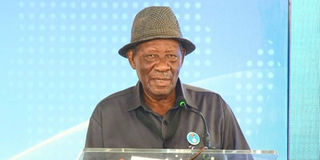
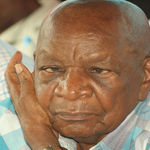
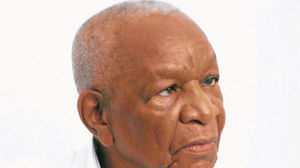
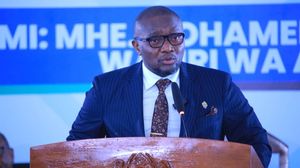
Dar es Salaam. Chairperson of the Mwalimu Nyerere Foundation (MNF), Joseph Butiku, convened a meeting in the city on Monday where he spoke on several national issues, urging Tanzanians and political stakeholders to accept the Presidential Commission set up to investigate the unrest that erupted on election day, 29 October 2025.
Speaking in Dar es Salaam on Monday, 19 January, Butiku urged Tanzanians to accept the Commission, warning that those who reject it should not expect to overturn its findings.
“I ask that we accept the Presidential Commission. People may reject it, but it is the body chosen to provide us with information. We can accept its recommendations and challenge what we disagree with—but we should not reject the Commission; we should support it in its work,” he said.
In November last year, President Samia Suluhu Hassan appointed an Independent Commission of Inquiry, chaired by retired Chief Justice Mohamed Chande Othman, to examine the causes and circumstances of the post-election unrest, which followed opposition claims of irregularities and reports of clashes between protesters and security forces. The Commission has received mixed reactions. Opposition parties Chadema and ACT-Wazalendo criticised it, claiming it was not independent and that some members were linked to the unrest. Chadema vice chairperson John Heche said it was impossible for the accused to investigate themselves, stressing the need for an international commission, a position echoed by ACT-Wazalendo.
Responding to these concerns during the Commission’s launch in Dodoma in November last year, President Hassan expressed confidence in the body, emphasising the importance of a domestic investigation before involving external teams.
“While our colleagues in the opposition have expressed a preference for an international body—seeking oversight from the UN, AU, or European Union—I maintain unwavering confidence in this domestic Commission. Your collective expertise and vast experience are more than sufficient to address these challenges, and I am certain your recommendations will provide the necessary roadmap for our progress,” she said.
President Hassan gave the Commission three months to begin its work and highlighted seven key areas for investigation. These included examining the root causes of the unrest, assessing youth grievances, analysing opposition statements, including alleged incitement before the election, reviewing relations between political parties and the Electoral Commission, evaluating the role of NGOs, and exploring alternative ways to address disputes peacefully. The Commission was also asked to assess state responses to the unrest and whether they were appropriate.
And on Monday, January 19, 2026, Mr Butiku said he had convened a meeting of elders to discuss the causes of the unrest, noting that the events of 29 October shook national unity. He said youths, described as the children of the nation, clashed with police, set houses on fire, and caused widespread fear in Dar es Salaam.
He said that some accounts indicated that people going out to buy necessities were shot at, and that the threat of gunfire kept residents indoors.
He revealed that his own house was among those targeted for arson. “I was warned that demonstrators were heading to my home while I was inside. I decided to hide on my own and did not tell any relatives, as I had been warned my house would be burned,” he said.
Butiku said security forces and the TPDF later intervened and MNF leaders asked for his assistance in promoting national unity.
Butiku also addressed broader challenges in governance, noting that weaknesses in the rule of law stem from a Constitution that has long resisted amendment. He expressed hope for reform under President Hassan, who pledged to begin work on constitutional issues within 100 days of her inauguration.
On a separate matter, Butiku spoke about former Tanzanian Ambassador to Cuba, Humphrey Polepole, who met him twice before resigning in 2025. He said Polepole sought advice on his challenges and that he had advised him to follow his conscience regarding his resignation.