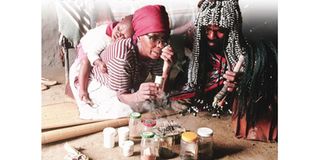
Dodoma. The Minister for Health, Mr Mohamed Mchengerwa, has ordered a crackdown on unregistered doctors and traditional healers, directing that all individuals providing medical or herbal treatment must be formally registered.
He said the move aims to reduce deaths and health complications caused by the misuse of medicines taken without proper medical guidance.
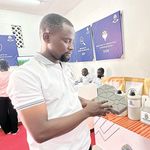
Mr Mchengerwa issued the directive on Wednesday, March 25, 2026, while visiting the pavilion of the National Institute for Medical Research (NIMR) during a meeting with traditional medicine practitioners in Dodoma.
He said all practitioners must be recognised through registration under relevant professional bodies responsible for research and traditional medicine services.
“It is not possible for a nation to allow anyone to claim to be a doctor or a traditional healer without being recognised. If someone gives medical advice, we must know who they are and whether they are authorised,” he said.
His remarks come amid a rapid increase in traditional medicine outlets in major cities, raising concerns over regulation of the sector.
Despite expansion of specialised medical services in the country, including cancer treatment, kidney transplants, heart surgery, neurosurgery, bone marrow transplants and in vitro fertilisation (IVF), the use of traditional remedies has also been rising.
In Dar es Salaam’s Kariakoo area, one street that previously housed general retail shops now hosts dozens of outlets selling herbal products. Similar trends are reported in Mbagala, Buguruni and Manzese, where traditional medicines, both locally produced and imported, are increasingly common.
Traders in Kariakoo say rent for a single stall ranges from Sh800,000 to more than Sh2 million per month, indicating that the business remains profitable despite high operating costs.
Mr Mchengerwa warned that some practitioners discourage patients from seeking hospital treatment and instead recommend unverified remedies, a practice he said has contributed to serious health problems.
“We are receiving many cases of young people aged 15, 16 and 17 developing kidney complications because proper procedures have not been followed,” he said.
He directed NIMR to ensure that anyone claiming to have medicine capable of treating a disease must be registered and verified, warning that those who fail to comply will face legal action.
“My directive is to establish a clear system to identify all traditional medicine practitioners. The government will protect those who follow the law, but anyone who speaks about medicine must pass through the recognised system and have their remedies approved,” he said.
He also urged the institute to inform the public about approved traditional medicines and directed the ministry to support training programmes for practitioners to improve standards.
Speaking at the meeting, the Chief Medical Officer, Dr Grace Magembe, said traditional medicine serves about 60 percent of the population in Tanzania, while globally it is used by about 80 percent of people.
She said inspections conducted last year found that 17 percent of traditional medicines were adulterated, while 25 percent were contaminated due to poor storage, prompting action against those responsible.
Register to begin your journey to our premium contentSubscribe for full access to premium content