Tanzania stakes its future on education reforms, ownership
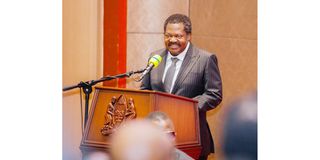
Vice President, Dr Emmanuel Nchimbi, addresses stakeholders during the international conference on Education Policy and Curricular Reforms at the University of Dar es Salaam (UDSM) yesterday. PHOTO | COURTESY
Dar es Salaam. Tanzania’s ability to transform its education system over the next 25 years will depend on whether the country can match bold policy reforms with equally strong investment in infrastructure, teachers and learning resources, The Citizen has learnt.
This was the central message at the International Conference on Education Policy and Curricular Reforms held at the University of Dar es Salaam (UDSM) yesterday where leaders warned that implementation- not policy design, will determine success.
Vice President, Dr Emmanuel Nchimbi, underscored both the promise and the pressure facing the ongoing reforms, while rallying collective action from all stakeholders, including parents at the grassroots.
“Tanzania has decided to build an education and training system that equips its citizens with knowledge, skills and a positive mindset to contribute to national development,” he said.
He emphasised that the success of the new education policy and curriculum will depend on how well the country mobilises society as a whole.
“All these efforts require a high level of understanding from parents and the public so that they are ready to collaborate with the government where necessary,” he said.
He said there is need for nationwide ownership of the reform agenda.
The current reforms stem from a comprehensive review of the 2014 Education and Training Policy, culminating in the 2023 edition, alongside sweeping curriculum improvements across all levels of education.
The government’s intention is clear: to shift from a largely theoretical system to one that builds competence, combining knowledge with practical skills relevant to the labour market.
Minister for Education, Science and Technology, Prof Adolf Mkenda, noted that the reforms were inspired by a broader national vision to strengthen quality and relevance in education. “The goal is to ensure that education equips learners with the ability to adapt to global changes and contribute meaningfully to national development,” he said.
Key changes include the introduction of 10 years of compulsory education, expanded pathways for vocational and general education, and reforms in adult and non-formal education systems.
However, translating policy into results is proving to be the real challenge.
Dr Nchimbi was candid about the scale of demand: “Implementation of these reforms is essential, but it comes with significant requirements. We must expand classrooms, sanitation facilities and ensure enough teachers are recruited across all subjects.”
He added that the push for compulsory education up to Form Four will also require massive expansion of technical colleges and universities.
The government has already started strengthening existing vocational schools and constructing new ones, while also increasing student loans and university enrolment.
But the Vice President stressed that these efforts must accelerate to keep pace with population growth and rising demand for education.
At the heart of implementation lies the role of higher learning institutions, particularly University of Dar es Salaam, which is spearheading research, teacher training and curriculum alignment.
UDSM Vice Chancellor, Prof William Anangisye, revealed that the university has already revised 270 academic programmes to align with the new policy direction.
“Our responsibility goes beyond teaching. We must also contribute to policy debates and ensure that programmes reflect the changing demands of society and the labour market,” he said. Of these programmes, 76 have already been accredited, with a significant portion designed for flexible delivery, including online and blended learning, an important step towards expanding access.
He added: “Education systems cannot remain static. They must evolve with science, technology and global trends.”
The missing link: community ownership
Despite progress, one theme dominated discussions at the conference: reforms cannot succeed without strong grassroots participation.
The Vice President emphasised that parents and communities must play a central role.
“All these efforts require a high level of understanding from parents and the public so that they can be ready to collaborate with the government where necessary,” he said.
He further called for a multi-stakeholder approach involving private schools, religious institutions and civil society organisations.
“The implementation of these reforms requires the participation of all stakeholders… including ensuring that learning environments are conducive and adequately equipped, especially for practical education,” he added.
An education policy expert, Dr Amon Mbere, argued that financing must match ambition.
“You cannot implement competence-based education without investing heavily in teachers and infrastructure. Laboratories, workshops and digital tools are not optional—they are central,” he said.