Dar es Salaam. Tanzania’s commercial capital is facing severe congestion that has evolved from a commuter inconvenience into a major economic bottleneck, threatening the city’s role as a vital gateway for regional trade, experts say.
With major transport corridors carrying commuter, cargo and commercial traffic simultaneously, competition for limited road space has reached an unsustainable point.
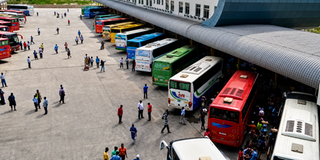
At the centre of the challenge is the long-running dispute over Dar es Salaam’s intercity transport system, particularly the struggle to enforce exclusive passenger boarding and alighting at the Magufuli Bus Terminal in Mbezi Luis.
Experts say Tanzania’s biggest transport planning gap may not be a shortage of roads, buses or terminals, but the failure to make different parts of the transport system function as one.
The gap is increasingly visible in the dispute over the use of the Sh50.9 billion-plus terminal, where repeated government directives have failed to fully resolve tensions involving operators, passengers and authorities.
For transport and logistics expert Dr Thomas Mburi, the issue goes beyond where long-distance buses pick up and drop off passengers.
“Tanzania needs to move from enforcement-driven transport management to integrated planning, where road, rail, terminals and urban public transport are designed around the entire passenger and freight journey,” he told The Citizen.
Urban planning expert Dr Amos Mgeni similarly argues that transport infrastructure must be designed around the city it serves.
“A terminal cannot work efficiently simply because it has been constructed; it must be connected to the people and economic activities it is intended to serve,” he said.
This is where the country’s transport planning faces its biggest test.
Dar es Salaam’s congestion costs the economy through lost productivity, fuel wastage, vehicle wear and delays, while the city’s main corridors carry commuter, cargo and commercial traffic at the same time.
The Magufuli terminal was designed to address part of this challenge. It was built to accommodate more than 3,400 buses a day while improving safety, regulation and municipal revenue collection.
Yet the dispute over its use keeps returning. Recently, Dar es Salaam Regional Commissioner Albert Chalamila ordered operators using unauthorised terminals to relocate to Magufuli within six days.
The directive temporarily eased congestion at Shekilango, but left a wider question unanswered: why do passengers and operators continue to find alternative boarding and alighting points attractive despite the availability of a modern terminal?
Experts point to urban geography and the cost of onward travel.
Dr Mburi said a passenger travelling from upcountry could reach Mbezi Luis only to face another costly journey to Mbagala, Temeke, Kigamboni, Chanika or the city centre.
In some cases, he said, the feeder journey can cost almost as much as the intercity trip.
Tanzania Logistics and Transport Association president Alphonce Mwingira has similarly argued that the debate should not be reduced to where buses park, but should consider the passenger’s entire journey.
Changing the modus operandi
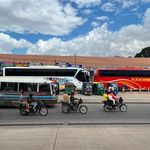
Dr Mburi said daladalas, bajajis and bodabodas should be integrated into the formal transport system as first- and last-mile services, with designated routes and stopping areas connecting neighbourhoods to major terminals.
“Instead of treating daladalas, bajajis and bodabodas as disorderly competitors, planners should organise them as formal first- and last-mile services,” he said.
There is also a financial dimension to the dispute.
According to Bus Drivers Association (Uwamata) documentation, operators face multiple charges along their routes, including Sh9,000 in combined parking and municipal fees at Magufuli, in addition to station charges in several regions.
Electronic ticketing can also tie up significant working capital. A 50-seat bus charging Sh30,000 per passenger, for example, could require Sh1.5 million in upfront fare reserves.
Experts therefore argue that if the Government wants compliance, it must ensure that compliance is commercially viable.
International experience offers some lessons.
Kampala has sought to map and engage existing transport operators before introducing new systems. Nairobi has a central bus terminal while allowing some operators to maintain private terminals.
Singapore combines restrictions with efficient public transport and strong first- and last-mile connections, while London places continuous stakeholder engagement at the centre of transport planning.
For Tanzania, experts say, the answer is not to abandon Magufuli Terminal or regulation, but to make the terminal part of an integrated network.
Dr Mgeni said the real test should be whether Tanzania can create a system in which “the investor gets predictable rules, the operator gets a viable business, the Government gets sustainable revenue and the passenger gets a cheaper, faster and safer journey.”
Register to begin your journey to our premium contentSubscribe for full access to premium content