Modern drying racks transform working conditions for sardine traders in Mwanza
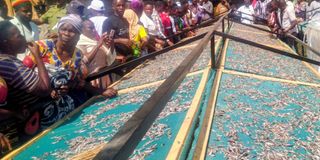
One of the modern drying racks at Mwanza’s Mswahili fish landing site, where sardines are now safely dried, installed by the Blue Victoria Organisation. PHOTO|SAADA AMIR
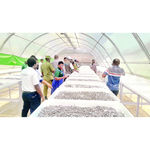
The newly installed drying racks are fitted with rain-protection features, allowing them to be used in both sunny and wet conditions. They are expected to improve drying methods, reduce losses and raise incomes for fishers and traders.
Mwanza. Small-scale sardine traders at the Mswahili fish landing site in Mwanza are set to benefit from safer and more efficient working conditions following the installation of modern fish drying racks, an initiative designed to cut post-harvest losses and improve product quality.
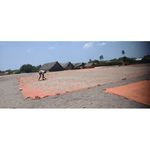
For many years, congestion and limited space at the landing site forced traders to dry sardines along roadsides, near the railway corridor and on rocks. These practices exposed traders to serious health and safety risks, compromised hygiene standards and reduced the market value of their produce.
The newly installed drying racks are fitted with rain-protection features, allowing them to be used in both sunny and wet conditions. They are expected to improve drying methods, reduce losses and raise incomes for fishers and traders.
Speaking at the handover ceremony on January 27, 2026, Blue Victoria Project Officer Mr Shabani Mwita said the organisation had donated four modern drying racks valued at more than Sh4 million to address the challenge.
“The racks are made from modern materials that allow water to drain directly to the ground, enabling faster and cleaner drying of fish,” Mr Mwita said. “This intervention aims to reduce post-harvest losses and improve the quality of fish products reaching the market.”
Sardine trader Asia Welu said traders often dry fish on rocks to speed up the process using heat, but largely because there are no designated drying areas.
“There are many of us trading sardines here. If the fish do not dry properly, they develop a bad smell and we lose the market,” she said.
Another trader, Rahel Zephania, said the racks would significantly reduce the risks traders previously faced while operating in hazardous areas.
“One rack can dry more than three buckets of sardines. We are requesting more racks so that traders who are drying fish along the road can move to safer areas,” she said.
Trader Sad Swed noted that the design of the racks allows for quicker drying compared to traditional methods.
“The wire mesh material allows water to pass through directly, unlike cloth or sacks that absorb moisture and delay drying,” he said.
Chairperson of the Mswahili Beach Management Unit (BMU), Mr Lugo Fasheni, said the landing site has more than 100 sardine traders, many of whom had been operating near the railway corridor—an increasingly dangerous situation due to the ongoing construction of the Standard Gauge Railway (SGR).
“We appreciate this support, but we also call on other stakeholders to invest in similar infrastructure to support women and men working at this landing site,” Mr Fasheni said.
Blue Victoria Executive Director Mr Festus Massaho said the Mswahili landing site was selected because of its high sardine production, limited space and dense population.
He added that the project is funded by the United Nations Educational, Scientific and Cultural Organization (Unesco) through its youth empowerment programme and aligns with the Ministry of Livestock and Fisheries’ priorities of strengthening the fisheries value chain and ensuring food safety.
“The Mswahili Beach Management Unit produces large volumes of sardines, yet the landing site is very small. This has forced traders to dry fish along roads and near the railway, which is risky and contributes to losses,” Mr Massaho said.
He noted that the site supplies a significant share of the sardines consumed in Mwanza City, making it a strategic location for efforts aimed at reducing post-harvest losses in the fisheries sector.
The Mswahili landing site remains one of the main sources of sardines for Mwanza City and surrounding regions, making the initiative a decisive step towards improving safety, food quality and livelihoods within the fisheries sector.