Revealed: The law application link in Handeni bridge crisis
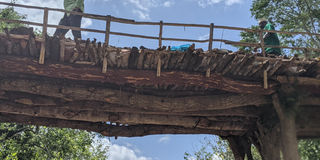
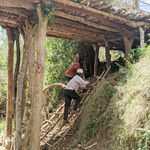
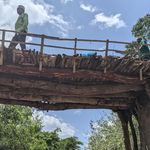
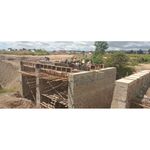
Contrary to what the law says, temporary and potentially dangerous bridges are used for extended periods in Handeni District without a plan for permanent, safe bridge construction. PHOTOS | NEVUMBA ABUBAKAR
Tanga. Despite clear laws outlining the government’s responsibilities for constructing and managing rural roads and bridges, residents of Kwasunga, Kwamsisi and Miono villages in Handeni District continue to face danger every rainy season, relying on unsafe temporary crossings.
A three-month investigation by The Citizen (October to December 2025) found that the Mligazi River Bridge challenge does not stem from lack of laws, policies, or construction expertise, but from weak implementation, delayed funding and shifting priorities, leaving residents to pay the price with their lives, children’s education and local economic activity.
Section 5(1)(b) of the Tanzania Roads Act of 2007 (Cap. 13) requires road authorities to ensure safe access to roads, bridges and communication routes, especially in rural areas.
Yet, despite provisions covering maintenance planning, construction approvals and infrastructure budgeting, enforcement in some rural areas remains weak.
Section 9(2) prohibits constructing road or bridge infrastructure without approval from relevant authorities, while Section 12 requires road authorities to prepare maintenance plans and allocate permanent budgets for rural roads and bridges.
Despite these laws, temporary crossings are used for extended periods without a plan for permanent, safe bridge construction.
Moreover, the 1982 Local Government Act and the 2017 Tanzania Rural and Urban Roads Agency (Tarura) regulations require council directors to ensure all infrastructure is built and maintained according to safety standards, national regulations and environmental impact assessments.
For leaders of Handeni Rural, compliance with these legal requirements remains weak.
Tarura’s 2023 report shows over 1,200 rural bridges nationwide are in hazardous condition due to timber and unapproved materials, contributing to accidents and higher maintenance costs.
Additionally, a 2021 JICA study on district road maintenance found over 40 percent of rural areas in Tanzania lose connectivity for 30 to 90 days each rainy season because of unreliable bridges.
In this context, the Mligazi River Bridge challenge does not appear to result from lack of laws or guidelines but from weak implementation, supervision and monitoring of responsible institutions.
According to the United Nations Sustainable Development Goal (SDG 9), member states should invest in safe and resilient infrastructure to connect communities to essential services.
Rural bridges are considered critical for development and citizens’ well-being.
World Bank and African Development Bank guidelines emphasise that temporary crossings should serve only as short-term emergency solutions and not substitute for permanent bridges, particularly in areas cut off during the rainy season.
Globally, delays in constructing rural bridges are considered hazardous, with countries encouraged to implement projects using multi-year, secure budgets to prevent adverse impacts on residents.
The Citizen’s investigation found rural bridge construction is achievable when projects are prioritised and closely supervised.
Through the Rural Road Improvement Project with community participation and promotion of social and economic opportunities (RISE), some areas in Tanga Region have built and upgraded bridges and culverts that previously caused major disruption during the rainy season.
In Handeni District, including Kilindi Ward and Tanga City, RISE projects have improved roads and bridges, easing travel, enhancing access to health and education services and stimulating agriculture and trade.
These successes resulted from strategic prioritisation, dedicated budgets and close supervision by Tarura in collaboration with councils and regional government.
“There were bridges like Msambazi–Kwediboma and Magamba–Kwedikazu up to Segera that faced major challenges, but now students can attend school and social services are accessible,” said Handeni District Tarura Manager, Ms Judica Makyao.
Infrastructure expert, Mr Milton Nyerere said the biggest challenge for most projects is not lack of planning but unrealistic budgets and delayed funding.
“Many approved budgets are not real. Funds are delayed, sometimes for months, whereas technically they should be available within a month or less,” he said.
He noted that Tarura and the Tanzania National Roads Agency (Tanroads) prepare and implement projects, but delays in funding create problems.
“At the end of the day, ordinary citizens suffer. Projects stall, temporary crossings collapse and residents risk their lives. I have suggested creating dedicated accounts for specific projects; this would prevent disruption. Previously, budgets were directly allocated, so Tarura or Tanroads faced fewer problems,” he said.
Road expert Fredy Nyenga added that rural infrastructure projects should not rely on external aid when resources and capacity exist locally.
“We cannot wait for foreign aid when resources are available. If you have plans, experts, machinery and equipment, nothing should fail,” he said.
Mr Nyenga emphasised that roads and bridges are key priorities for community development.
“Roads are a priority; there is no obstacle. Builders are available, machines are here. In the past, bridges were delayed because we waited for external resources, why should they fail now when everything is local? The only issue is funding,” he said.
Register to begin your journey to our premium contentSubscribe for full access to premium content