More than 1,600 girls identified for return to education in Tanzania
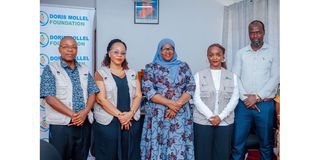
Regional Administrative Secretary Zuwena Omary of Lindi Region (third right), Communications and Media Relations Officer Jacqueline Shuma of the Doris Mollel Foundation (second right), Regional Social Welfare Officer Bahati Meshack of Lindi Region (right), Protection Officer Bishagazi Selemani of the Doris Mollel Foundation (left) and Human Resources and Operations Officer Beatrice Matama of the Doris Mollel Foundation (second left) during an event marking the implementation of the AGYW Social Protection Intervention Programme in Lindi Region.
Dar es Salaam. More than 1,600 out-of-school girls have been identified for support under a nationwide programme aimed at helping vulnerable adolescents return to education and access protection services, according to figures released after the initiative's first month of operation.
The Adolescent Girls and Young Women (AGYW) Social Protection Intervention Programme has identified 1,623 eligible girls across 24 councils in six regions since its launch in April.
Funded by the Global Fund and implemented by the Christian Social Services Commission (CSSC) in partnership with the Doris Mollel Foundation (DMF), the programme operates in 47 councils across 15 regions and targets girls and young women aged between 10 and 24 who have dropped out of school.
The initiative seeks to reconnect beneficiaries with education and strengthen protection services for survivors of gender-based violence, violence against children and human trafficking.
Programme officials said the girls were identified through community outreach and household visits conducted by District Social Welfare Officers and Community Health Workers.
Depending on their circumstances, beneficiaries are supported to return to formal schooling, enrol in Complementary Basic Education in Tanzania (COBET) and MEMKWA programmes, or pursue vocational training.
To address barriers that often keep girls out of school, the programme provides support including school fees, uniforms, learning materials and dignity kits. Additional assistance such as boarding facilities, hostel accommodation and transport is also available for girls facing challenges linked to distance, family pressures or early marriage.
Beyond education, the programme is also strengthening support systems for survivors of abuse. Assessments have been conducted at 57 Safe Houses and Makao facilities in 24 councils, with 21 centres selected for additional support.
The facilities provide emergency accommodation, psychosocial counselling, healthcare and legal assistance for survivors seeking protection and rehabilitation.
Regional Administrative Secretary Zuwena Omary of Lindi Region welcomed the intervention, saying it addresses a longstanding challenge affecting girls in the region.
“This programme addresses a need we have seen growing for years. Our girls deserve this support, and I am asking the programme to think seriously about increasing the number of beneficiaries it reaches,” she said.
The programme is being implemented through collaboration between social welfare, education, health and law enforcement authorities. Orientation meetings have already been held in eight regions, bringing together Regional and District Social Welfare Officers, Education Officers, Medical Officers, Community Health Workers and representatives from Police Gender Desks.
Director Eveline Jumanne of Caring Hands Loving Hearts Safe House in Lindi Municipal Council said the facility was ready to work with the programme to provide shelter and support for survivors of violence.
Officials said retention monitoring would be carried out after three and six months to assess whether beneficiaries remain in education and continue accessing HIV prevention services.
The AGYW Social Protection Intervention Programme runs from April to October 2026 and focuses on expanding educational opportunities for out-of-school girls while strengthening protection services for vulnerable young women across the country.