Dodoma. The government has unveiled an ambitious Sh1.8 trillion health sector budget for the 2026/27 financial year, placing universal health insurance (UHI), expansion of local pharmaceutical manufacturing, and advanced specialist healthcare services at the centre of a sweeping reform agenda aimed at transforming the country’s healthcare system.
The proposed budget represents an increase of about Sh200 billion from the Sh1.6 trillion allocated for the 2025/26 financial year.
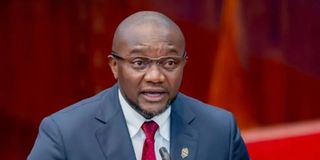
Presenting the budget estimates in Parliament on Monday, May 11, 2026, Health Minister, Mr Mohammed Mchengerwa, said the ministry would implement 11 strategic priority areas designed to improve healthcare access, quality, and affordability while positioning Tanzania as a regional hub for specialised medical treatment.
Mr Mchengerwa said the priorities align with Tanzania’s Vision 2050, the Fourth National Development Plan, the ruling CCM election manifesto for 2025-30, and President Samia Suluhu Hassan’s agenda on strengthening social services and human capital development.
A major focus of the plan, he said, is the continued implementation of the Universal Health Insurance legislation, which the government considers critical in expanding healthcare coverage to all Tanzanians, regardless of income level.
He told Parliament that the government would intensify registration of poor and financially stable households into the national health insurance scheme while increasing public awareness campaigns to encourage enrolment.
The ministry also plans to strengthen domestic healthcare financing mechanisms and deepen partnerships with the private sector to support funding for health services.
“The government will continue implementing the Universal Health Insurance programme by registering citizens from vulnerable and capable households while strengthening sustainable financing for health services,” he said.
Mr Mchengerwa told the House that since the UHI rollout, the government has spent a total of Sh48.8 billion to enable citizens from special groups to access reliable healthcare services.
“Through implementation of the programme, a total of 172,297 households have already been reached and enrolled, while 463,228 beneficiaries have started receiving various medical services at registered health facilities across the country,” he said.
Furthermore, he said the ministry is also banking on domestic pharmaceutical production to reduce dependence on imported medicines and improve the security of essential medical supplies.
Under the new budget, the minister said the government plans to construct a modern pharmaceutical research laboratory and invest in local drug manufacturing industries, including production of antiretroviral drugs for HIV/AIDS treatment at Tanzania Pharmaceutical Industries (TPI).
He said the government will also coordinate investment forums to attract local and foreign investors into the pharmaceutical sector.
The strategy further includes strengthening procurement, storage, and distribution systems for medicines and health products while tightening oversight of antimicrobial resistance and antibiotic use.
In another major policy direction, the government plans to significantly expand specialist and super-specialist medical services across the country in an effort to reduce costly overseas referrals and promote medical tourism.
Mr Mchengerwa said the ministry would continue rolling out specialised services in regional, zonal, specialised, and national referral hospitals while introducing new super-specialist services at higher-level facilities.
The government, he said, also plans to establish centres of excellence for cardiovascular treatment, kidney transplants, bone marrow transplants, and oral health services.
Regional referral hospitals offering specialist services will increase from eight to 17, while five district hospitals are expected to begin providing specialised care.
The minister said the expansion would be supported by investments in modern diagnostic equipment, laboratory technologies, safe blood services, and biomedical engineering capacity to improve maintenance of medical equipment nationwide.
As part of efforts to strengthen the health workforce, the ministry plans to expand specialist and super-specialist training programmes in priority medical fields while continuing recruitment of healthcare workers on permanent and contract terms.
The budget also allocates resources for improving maternal and child health services through increased availability of reproductive health commodities, expansion of neonatal care units, and strengthening of midwifery services to reduce maternal and newborn deaths.
On disease prevention, he said the government intends to enhance surveillance and rapid response systems for infectious diseases, epidemics, and non-communicable diseases.
It also plans to recruit 8,000 new community health workers and expand digital immunisation systems through electronic vaccine management technologies, he told the House.
The ministry further pledged to accelerate the use of digital technology and artificial intelligence in healthcare delivery by strengthening interoperable health information systems, telemedicine services, and a central national health data repository.
Mental health services also feature prominently in the new plan, with the government set to develop a national mental health and psychosocial support strategy while improving rehabilitation services for children, older persons, and people with disabilities.
The ministry’s budget estimates show that Sh652.2 billion will go towards recurrent expenditure, including salaries and operational costs, while Sh1.148 trillion, equivalent to 64 percent of the total budget, will finance development projects.
Of the development budget, Sh789.4 billion will come from domestic sources, while Sh358.5 billion is expected from external funding.
The Health Ministry, its institutions, and hospitals are meanwhile projected to collect Sh747.2 billion in revenue during the 2026/27 financial year.