Josephine Christopher is a senior business journalist for The Citizen and Mwananchi newspapers
Mwananchi Communications Limitted
Dar es Salaam. Tanzania is pushing for a fair and development-aware transition in the global climate diplomacy to ensure the shift does not undermine energy security.
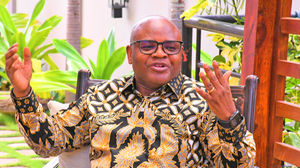
Speaking at a virtual press conference yesterday, presidential adviser on climate change and chair of the African Group of Negotiators (AGN), Dr Richard Muyungi, said Africa is increasingly asserting itself in climate negotiations, rejecting approaches that fail to account for the continent’s development realities.
Dr Muyungi referred to the recently concluded United Nations Environment Assembly (UNEA) in Nairobi and the 30th Conference of the Parties (COP30) that was conducted in Brazil in November.
He noted that negotiations on fossil fuels and deforestation remain contentious, largely because some proposals would unfairly constrain countries that are still building basic energy infrastructure.
“From a logical standpoint, this directly undermines energy security. You cannot expect African countries to abandon available energy options when nearly 600 million people on the continent still lack reliable access to electricity,” he said.
Dr Muyungi stressed that Africa is not rejecting climate action, but is demanding sequencing that reflects where countries are starting from and where they aim to go.
He highlighted a major institutional milestone achieved under his leadership the formal institutionalization of the African Group of Negotiators.
“For the first time, the AGN is being strengthened as a permanent, structured institution rather than an ad-hoc negotiating platform,” he said.
“This gives Africa continuity, technical depth and a stronger collective voice in global climate processes.” He said the move ensures that African positions are developed systematically, supported by evidence, and sustained beyond individual negotiation cycles.
Among Africa’s major diplomatic gains, Dr Muyungi confirmed that Ethiopia will host the 32nd United Nations Climate Change Conference (COP32) in November 2027, marking a significant return of the global climate conference to the continent. Dr Muyungi outlined several concrete outcomes from COP30 that he described as important wins for developing countries and Africa.
One of the core breakthroughs was progress towards agreeing on indicators for the Global Goal on Adaptation, which will allow countries to measure whether climate actions are genuinely strengthening resilience on the ground.
He also cited advances in just transition discussions, with greater recognition that transition pathways must be nationally defined and grounded in social and economic realities. Additionally, Dr Muyungi said COP30 helped advance conversations on technology implementation.
At the national level, Dr Muyungi announced plans for Tanzania to establish a climate training centre targeting young people, aimed at building technical capacity, negotiation skills and climate leadership among the next generation.
“This centre will prepare Tanzanian and African youth to engage meaningfully in climate science, policy and negotiations,” he said. “Youth must not remain spectators in decisions that will shape their future.”
Dr Muyungi also welcomed progress on the Gender Action Plan, noting that climate policy is increasingly recognising the role of women in adaptation and resilience, though he cautioned that financing and implementation remain weak.
He said Tanzania’s growing influence in global environmental diplomacy reflects sustained investment in expertise, leadership and regional coordination.
Moreover, Tanzania Media Foundation executive director Dastan Kamanzi emphasised that the meaningful involvement of journalists in environmental negotiations is critical to strengthening transparency, accountability, and public understanding of climate decisions.
He said journalists serve as the bridge between complex global talks and citizens whose lives are directly affected by climate policies, environmental degradation, and adaptation failures.
Register to begin your journey to our premium contentSubscribe for full access to premium content