Tanzania rolls out new programme to boost disease surveillance

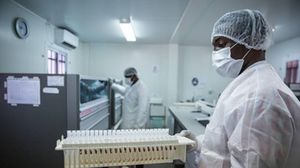
Participants during a working session to discuss a special plan to strengthen the national disease surveillance system through the integration of the Integrated Disease Surveillance and Response (IDSR) system. The plan is being implemented in collaboration with the World Health Organization (WHO) through its Tanzania office, with funding from the Health Emergency Preparedness and Response Contingency Fund. PHOTO | HAMIDA SHARIFF


Morogoro. The Ministry of Health has launched a programme aimed at strengthening the national disease surveillance system by integrating the Integrated Disease Surveillance and Response (IDSR) framework into health training.

The initiative seeks to equip current and future health workers with the skills to detect diseases early, report cases promptly, and respond effectively to outbreaks and other public health emergencies.

The programme is being implemented by the World Health Organization (WHO) office in Tanzania and funded by the National Disaster Management Health Fund.

Speaking to The Citizen on Sunday, March 15, 2026, the Ministry of Health’s National Surveillance Coordinator, Dr Danstan Ngenzi, said the main objective is to strengthen health education as a sustainable approach to enhancing the country’s disease surveillance capacity and protecting community health.

Under the programme, he said the government has decided to formally integrate the IDSR system into curricula offered at health science universities and community health worker training institutions.

“The reforms aim to ensure that students across various health disciplines acquire practical knowledge and skills on how to detect, report, and respond quickly and effectively to infectious disease threats,” said Dr Ngenzi.

WHO Surveillance Coordinator, Dr George Kauki, explained that the programme began implementation in November 2025 with a review of training curricula at health universities and community health worker programmes.

He said the review sought to assess the extent to which IDSR-related content had already been incorporated into existing health training curricula.

Dr Kauki said the assessment found that although some disease surveillance topics were included in several curricula, the content was fragmented, lacked coherence, and was insufficient to equip students with the practical skills needed for effective disease surveillance.

He added that certain critical capacities, including outbreak investigation, health data analysis, and risk communication, had not received adequate emphasis in many training programmes.

“This month, the next phase of the programme began with the development of a strategy to address the gaps identified in health training curricula,” said Dr Kauki.

“This step aims to align the training programmes with national health education standards, the technical IDSR guidelines (third edition) and international health security frameworks,” he added.

Dr Kauki noted that the curriculum revision process involved a wide range of stakeholders, including university lecturers, training experts, curriculum development specialists, and IDSR experts from the Ministry of Health and the Prime Minister’s Office–Regional Administration and Local Government (PMO-RALG).

“This collaboration has enabled detailed discussions and consensus on the most effective approaches to strengthen the country’s disease surveillance capacity,” said Dr Kauki.

Following the curriculum review, the government has outlined several implementation steps, including developing new teaching materials, building the capacity of lecturers on IDSR content, and distributing the resources to health universities and training institutions.

Dr Kauki also revealed plans to launch the National Digital Health Library (NDHL), which will serve as a repository for guidelines and key disease surveillance information.

The platform is expected to enable lecturers, students, and health professionals to access reliable and up-to-date information more easily.

Through these reforms, Tanzania aims to build a stronger and more responsive disease surveillance system while preparing highly skilled health professionals capable of addressing emerging public health threats.