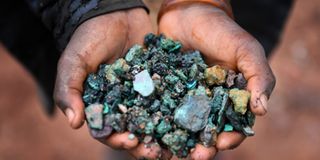
In 2024, Africa took a bold and necessary step. Through the adoption of the Africa Green Minerals Strategy, the continent signalled its intention to move beyond extraction and into value creation.
At the heart of this vision lies Pillar 3: Building Key Value Chains a commitment to local beneficiation, green technology manufacturing and mineral-based industrial transformation.
It is an idea both powerful and overdue. For decades, Africa has exported raw minerals and imported finished products at a premium. The new strategy seeks to reverse that logic: to process lithium into battery materials, refine cobalt for clean technologies and transform graphite into the building blocks of a digital and decarbonised world.
But beneath this ambition lies a quieter, more uncomfortable question: how can Africa benefit from what it cannot power?
The quiet contradiction
Africa is not a continent of scarcity. It is a continent of abundance. Beneath its soil lie lithium, cobalt, nickel, graphite and rare earth elements the very minerals driving the global energy transition. Above ground, it holds vast natural gas reserves, immense hydropower potential and nearly 60 percent of the world’s best solar resources.
Yet reality tells a different story. Around 600 million Africans, nearly 43 percent of the population still live without access to electricity. The continent accounts for more than 80 percent of the global population without power, while overall electricity access stands at about 58 percent.
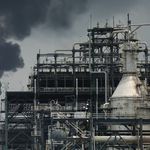
This is not merely a development gap; it is an industrial fault line. Beneficiation is not an abstract policy goal. It is a physical, energy-intensive process. It requires heat, power, stability and scale. Processing lithium into battery-grade chemicals, refining cobalt or producing precursor materials for clean technologies demands reliable baseload electricity and modern grid infrastructure.
Yet across many African economies, firms lose up to 15 percent of their sales value due to power outages. Businesses and households spend billions each year running diesel generators just to keep the lights on. In some regions, per capita electricity consumption remains as low as 180 kWh, compared to between 6,000 and 13,000 kWh in developed economies.
In such conditions, beneficiation risks becoming not an industrial pathway but an expensive aspiration.
Ambition meets infrastructure
The Africa Green Minerals Strategy is right in its direction. But strategy must meet infrastructure.
Today, Africa contributes only about 5.7 percent of global energy production, despite its vast resource base. It receives just around 2 percent of global clean energy investment, even as global demand for its minerals accelerates.
This mismatch explains why mineral-rich regions often remain industrially underdeveloped. The minerals leave; the value does not stay. It is not because Africa lacks vision. It is because the systems required to support that vision particularly energy systems have not kept pace.
Energy is not a side issue
There is a growing tendency in global discourse to treat energy transition as a uniform path. But Africa’s reality is different.
Energy here is not just about decarbonisation. It is about access, affordability and survival. It determines whether factories can operate, industries can emerge and jobs can be created.
Natural gas, for instance, continues to play a critical role not as a contradiction to transition, but as an enabler of it. It provides stable baseload power, supports industrial activity and complements the intermittency of renewables.
At the same time, renewable energy must scale. Already, over 55 percent of Africa’s energy consumption comes from renewable sources, demonstrating long-term potential. But renewables alone, without storage and grid stability, cannot yet sustain large-scale mineral beneficiation.
The question, therefore, is not whether Africa should choose between gas and renewables. It is whether Africa can design an energy system practical enough to power its ambitions.
From policy to power
If beneficiation is to move from paper to practice, the approach must be deliberate and sequenced.
Energy infrastructure must be prioritised alongside mineral corridors. Industrial zones must be developed with dedicated and reliable power supply. Mining operations should be supported to establish captive and embedded generation solutions. Beneficiation itself must evolve in stages — from basic processing to advanced manufacturing.
Above all, policy alignment is essential. Mining policy, energy policy and industrial policy cannot operate in isolation. They must speak to each other and move together. Without power, value chains do not form. They stall.
A call for grounded action
Africa’s transition must be designed on its own terms. But it must also remain credible to investors, partners and markets. Capital will not flow where power is uncertain. Technology will not scale where systems are weak. Industrialisation will not occur where energy is unreliable.
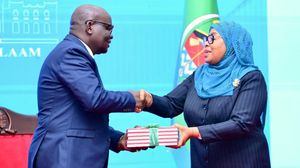
For Tanzania, this moment presents both a challenge and an opportunity. With significant natural gas reserves, expanding renewable potential and growing mineral prospects — particularly in graphite — the country is well positioned to lead.
But leadership will depend on one critical factor: continued and accelerated investment in energy — not only in generation, but also in transmission, distribution and industrial power systems. Because, in the end, the future of minerals is inseparable from the future of energy.
Africa’s mineral wealth has never been in question. What has always been in question is how that wealth is transformed. The Africa Green Minerals Strategy offers a vision of transformation from extraction to value, from raw exports to industrial strength. It is a vision worth pursuing.
But vision alone is not enough. Beneficiation without power is not a strategy; it is a slogan.
If Africa is to truly industrialise to capture value from its resources and shape its place in the global energy transition then one truth must be confronted with clarity and urgency: Africa cannot benefit from what it cannot power.
Baraka Masubo Thomas is an energy, mining, finance and investment lawyer. He can be reached at [email protected].