Dar es Salaam. Recent political unrest in Iran and Tanzania has drawn attention to how governments confronted with instability frame moments of crisis, often using similar language to explain violence, protests and the response of state institutions.
While the two countries differ significantly in political structure, global influence and geopolitical positioning, statements from their leaders reveal parallel narratives centred on national security, sovereignty and the role of external actors in moments of internal tension.
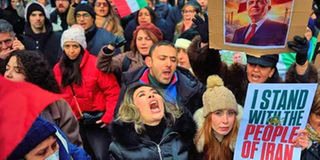
In Iran, the latest unrest followed a prolonged period of economic hardship that culminated in nationwide demonstrations late last year.
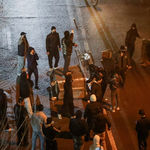
The protests, initially driven by frustration over soaring inflation and a rapidly collapsing currency, quickly escalated into violent confrontations in several cities.
Iranian authorities say the situation has since been stabilised, but the political, diplomatic and security implications continue to reverberate both domestically and internationally.
In an exclusive interview with Al Jazeera Arabic on Monday, January 12, 2026, Iranian Foreign Minister Seyyed Abbas Araghchi described the unrest as part of what he termed a “terrorist war” directed against the Islamic Republic.
Speaking after 16 consecutive days of demonstrations, he said the protests were deliberately turned violent through the involvement of foreign actors, accusing the United States and Israel of orchestrating destabilising actions inside Iran, saying “what we witnessed was not a normal protest movement.
These demonstrations were deliberately turned violent and bloody by outside forces and terrorist groups with a clear agenda,” Mr Araghchi said.
According to the Iranian Foreign Minister, the violence that accompanied the protests was not an organic development of public demonstrations but the result of external interference aimed at weakening the Iranian state and creating conditions that could justify foreign military intervention, noting that “we have extensive and documented evidence showing the role of foreign intelligence services and terrorist networks in directing acts of sabotage, arson and organised violence.
Their objective was to destabilise the country and pave the way for foreign intervention,” he said.
The Iranian Foreign Minister’s remarks came amid heightened international tension, including reports of U.S. strikes on Iranian nuclear enrichment facilities in 2025 and continued Western pressure over Tehran’s nuclear programme.
Iran’s economic crisis has also formed a critical backdrop to the unrest, with inflation reaching extreme levels and the Iranian rial falling to historic lows of about 1.4 million to the US dollar, severely eroding purchasing power and living standards.
Despite reports from human rights organisations estimating that more than 500 people were killed during the unrest, Mr Araghchi told foreign diplomats in Tehran that the situation had come under control, saying “the situation is now fully under control. State institutions have restored order after a period of intense unrest, and stability has returned,” he said.
Addressing regional and international security concerns, the Iranian Foreign Minister responded to recent threats from U.S. President Donald Trump by saying Iran does not seek war but is fully prepared to defend itself if necessary, insisting that “we do not want war, but Iran today has large and extensive military preparedness, and we are ready for all options,” Mr Araghchi said.
At the same time, he signalled that diplomatic engagement was not entirely off the table, confirming that communication channels with Washington remain open and stressing that “we are open to dialogue if it is fair, with equal rights and based on mutual respect. What we reject are negotiations based on unilateral dictation,” he said.
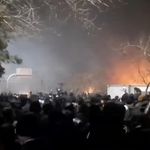
In Tanzania, a similar narrative has been presented by the country’s leadership following unrest that erupted on October 29, 2025, and the violent incidents that followed.
President Samia Suluhu Hassan has said the events were not spontaneous but the result of a carefully organised political scheme designed to destabilise the country.
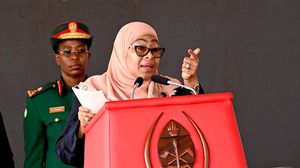
Speaking to the Dar es Salaam Region Council of Elders at the Julius Nyerere International Convention Centre on December 2, 2025, President Samia said intelligence assessments and investigations had pointed to a coordinated plot involving planners, financiers and individuals mobilised on the ground.
“What took place was a manufactured event, and those who planned it were determined to overthrow our government,” she said, adding that some participants were misled while others were enticed or paid to take part. The unrest coincided with election day and involved attacks on government development projects, police infrastructure and private businesses.
President Hassan said such actions could not be equated with lawful demonstrations, which she described as peaceful, orderly and conducted within the framework of the law.
“In a lawful demonstration, people march peacefully with grievances, escorted by police, and disperse after delivering their message,” she said. “What happened instead were organised riots for a specific purpose.”
She defended the actions of security forces, arguing that the state had a constitutional duty to protect citizens, property and national stability.
Responding to criticism that authorities had used excessive force, she questioned what alternative response would have been appropriate in the face of what she described as an attempt to overthrow the government. “We swore to protect this country, its borders, its people and their property,” President Hassan said.
“So when some say we used excessive force, what lesser force was expected? Should we have simply watched as those plotting an overthrow succeeded?”
President Hassan also raised concerns about foreign interference, saying some external actors had been unsettled by Tanzania’s stability and progress. She accused unnamed outsiders of seeking to undermine the country after failing in their own societies and criticised what she described as lingering colonial attitudes.
“Who are you?” she asked. “Some think they are our masters, our colonisers. That is unacceptable.”
She linked external interest in Tanzania to the country’s natural wealth, including rare minerals, saying such resources had made the nation a target.
Calling for unity, she urged Tanzanians to safeguard peace and national dignity.
“It should not become a curse that we fight and kill each other,” she said. “Tanzania belongs to all of us, and we must protect it.”
Addressing concerns raised by young people over the cost of living, President Hassan acknowledged the challenges but argued that economic hardship was a global issue.
“If I could, I would send Tanzanian youths to different countries—even within Africa and neighbouring states—to see what true hardship looks like, and then claim that Tanzania is a bad place,” she said.
Political analysts say the similarities in how Iran and Tanzania have framed unrest reflect a broader pattern in global politics, where governments emphasise security, sovereignty and intelligence assessments when confronting instability.
A political analyst from the State University of Zanzibar, Prof Makame Ali Ussi, said states facing unrest often rely on security narratives to explain violence and justify firm responses.
“In many cases, governments interpret large-scale unrest through a security lens, particularly when there is destruction of public infrastructure and threats to constitutional order,” he said.
“This does not necessarily mean grievances do not exist, but it shows how leaders prioritise stability.”
For his part, a political analyst from the University of Dodoma, Dr Paul Loisulie, said the two cases highlight how narratives of foreign interference resonate strongly in both domestic and international politics.
“Claims of external involvement are not unusual, especially in strategic or resource-rich countries,” he said. “However, long-term stability also depends on addressing internal economic and social concerns alongside security measures.”