At a time when Zanzibar is pursuing inclusive growth, gender equality, youth employment and climate-resilient agriculture, the Project for Advancing Gender Equality in Tanzania (PAMOJA) has become a strategic development vehicle capable of reshaping livelihoods for thousands of women and vulnerable communities across Unguja and Pemba.
The initiative reflects a wider policy shift in which economic empowerment is no longer viewed solely as a welfare issue, but as a core pillar of national productivity, social stability and sustainable development.
The PAMOJA programme, funded by the World Bank through a package worth approximately $104 million, equivalent to over Sh262 billion, was designed to expand women’s access to economic opportunities while strengthening systems for the prevention of gender-based violence.
According to World Bank implementation reports, the project aims to directly benefit at least 319,850 women and indirectly reach nearly 399,000 additional beneficiaries, including families and communities.
The programme officially became operational in April 2025 and will continue until February 2029, covering both Mainland Tanzania and Zanzibar.
In Zanzibar, implementation is being coordinated through the Ministry of Community Development, Gender, Elderly and Children in collaboration with ZEEA, an institution established to strengthen economic empowerment systems for citizens.
The agency was specifically created to improve productivity, market access, entrepreneurship support, financing opportunities and coordination of empowerment programmes throughout Zanzibar.
Through PAMOJA, ZEEA has gained an unprecedented platform to mobilise women’s groups, youth enterprises and community-based cooperatives into structured economic activities linked to agriculture, fisheries, trade, tourism and small industries.
The significance of the partnership was highlighted during a high-level meeting held on May 11, 2026, at Kinazini in Unguja, where Permanent Secretary Abeida Rashid Abdalla met with Varalakshmi Vemuru to discuss implementation strategies for PAMOJA.
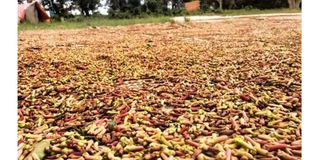
One of the most transformative opportunities connected to the PAMOJA-ZEEA partnership is the proposed expansion of Zanzibar’s clove economy through the planting of 30 million clove trees under women-led community initiatives.
Cloves remain Zanzibar’s historic economic backbone and one of its most recognisable export commodities.
However, declining productivity, aging trees, climate variability and limited value addition have constrained the sector for decades.
Under the proposed women empowerment framework, thousands of women’s groups could participate in nursery establishment, seedling distribution, organic farming, spice processing and export-oriented packaging.
The multiplier effect would be substantial. Agricultural experts estimate that a mature clove tree can produce between 2 and 8 kilograms of cloves annually depending on age and climate conditions.
If even half of the proposed 30 million trees reach productive maturity over the next decade, Zanzibar could significantly increase foreign exchange earnings while creating tens of thousands of rural jobs in farming, transportation, drying, storage and export logistics.
Beyond agriculture, the initiative also creates opportunities for industrial diversification.
Clove by-products support essential oil extraction, cosmetics manufacturing, pharmaceuticals, herbal medicine production, food processing and tourism souvenirs.
Zanzibar currently imports many processed consumer products despite possessing abundant raw materials.
By linking women entrepreneurs with business development services, training and financing under PAMOJA, the islands could gradually shift from exporting raw cloves toward exporting higher-value finished products.
Equally important is the project’s social impact. Zanzibar, like many developing regions, continues to face challenges associated with youth unemployment, gender inequality and gender-based violence.
World Bank reports indicate that PAMOJA combines economic empowerment with social protection and community support systems.
The programme includes plans for safe houses for GBV survivors, childcare centres and institutional strengthening for social welfare services.
Such investments recognise that sustainable development cannot be achieved without protecting vulnerable populations and ensuring women participate fully in economic life.
Evidence strongly supports this approach. Studies consistently show that increasing women’s participation in economic activities leads to higher household incomes, improved child nutrition, stronger educational outcomes and greater community resilience.
In Tanzania, women already form a major share of informal agricultural and tourism labour, yet many remain excluded from financing, land ownership and formal markets.
PAMOJA seeks to address these structural inequalities by strengthening community institutions, expanding training opportunities and improving financial inclusion for women-led enterprises.
Environmental sustainability is another major advantage of the Zanzibar partnership model.
Large-scale clove tree planting supports reforestation, biodiversity protection and climate adaptation while reducing land degradation in vulnerable rural areas.
Clove trees also contribute to long-term carbon absorption and ecosystem restoration, aligning Tanzania’s development agenda with global climate goals.
By combining environmental protection with women’s empowerment and economic modernisation, the initiative represents a rare example of integrated sustainable development planning in East Africa.
As Umoja Conservation Trust (UCT), we believe the success of PAMOJA in Zanzibar could eventually serve as a continental model for inclusive island economies.
If effectively implemented with urgency, transparency, accountability and strong public, private and community participation, the Ministry of Gender and Community Development – ZEEA -World Bank partnership could transform Zanzibar from a largely consumption-driven economy into a resilient, export-oriented and gender-responsive green economy.
More importantly, it could demonstrate that empowering women is not merely a social policy objective, but one of the most powerful economic investments a nation can make.