EDITORIAL: CHILD MALNUTRITION is NOT ACCEPTABLE; LET’S END IT
What you need to know:
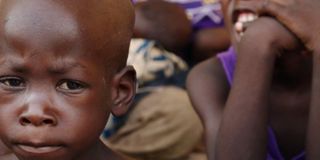
Tanzania is one good example showing that severely malnourished infants are more likely to die than those who are well-nourished.
One adage goes thus: “A healthy child grows up to be a healthy adult”. Clearly, this is more or less a statement of fact. Its validity has been verified right from the local level right through to international level, as nutrition contributes to healthy child growth as well as learning, according to experts.
Tanzania is one good example showing that severely malnourished infants are more likely to die than those who are well-nourished.
Between January and March, for instance, forty-two children below the age of five were admitted to Sengerema District Hospital in Mwanza Region due to malnutrition complications.
Unfortunately, two of them died, according to the medical officer in-charge at the hospital, Dr Jose Marie.
Studies indicate that malnourished children suffer irreversible damage to physical growth for children, and their brains may not develop to their full potential.
Chronic malnutrition is also linked to academic underperformance in schools. In Mbeya, for instance, all districts in the region didn’t surpass 60 per cent of the pass rate, below the national target of 80 per cent in Primary School Learning Examinations.
This is in accordance with analysis carried out by ‘Your Health’ from the National Examination Council of Tanzania (Necta) last year.
Despite being one of the leading food producers in the country, and home to varieties of fruits, birds and animals, 31.1 per cent of children in the region (Mbeya) have been affected by chronic malnutrition.
Malnutrition is caused, not just by lack of food, but by several interrelated processes linking health, education, sanitation and hygiene, access to productive resources amongst others.
This requires innovative approaches through adoption of long-term interventions geared towards resolving underlying constraints, while also dealing urgently with immediate needs.
We can start by empowering mothers with the information they need to make good nutritional decisions and access vital supplements. We must also support the poor to fight poverty, which is one of the contributors to malnutrition.