Finance Act, 2026: Should government borrow from the central bank?
By Anna Tibaijuka
Imagine a household that spends more money than it earns. Normally, the family would have to borrow from a bank, relatives or friends.
The lender would ask difficult questions: How much do you need? How will you repay? Can you afford the loan? These questions impose discipline because the lender risks losing money if the borrower cannot repay.
Now imagine that the family owns a machine capable of creating money whenever it runs short. The temptation would be obvious. Why go through the trouble of convincing a bank or a relative to lend when you can simply create the money yourself?
This simple example helps explain one of the most important principles of modern economics. Governments are generally expected to borrow from financial markets, commercial banks and the public through Treasury Bills and Treasury Bonds.
They are discouraged from borrowing directly from their central banks because central banks possess a unique power: they can create money.
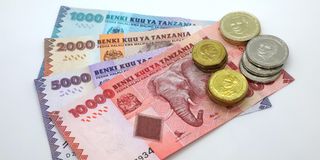
The Finance Act, 2026 has therefore generated considerable public debate because it introduces a new provision allowing the government, under specified emergency circumstances, to obtain temporary advances from the Bank of Tanzania. Supporters argue that every country requires emergency financing mechanisms during disasters and major economic shocks.
Critics fear that such provisions could become a back door through which governments gradually finance ordinary budget deficits by creating money. Who is right?
The answer is that both sides have a point.
Central bank financing is not inherently bad. The economic concern is not simply that the government may borrow from the Bank of Tanzania.
It is that borrowing from a central bank differs fundamentally from borrowing from commercial banks or the public. When the government issues Treasury Bonds, it mobilises savings that already exist within the economy.
When it borrows from the central bank, new purchasing power can be created. If used sparingly during genuine emergencies, such financing can help stabilise an economy during crises.
However, if used repeatedly to finance ordinary budget deficits, the result may be excessive growth of money relative to production, leading to inflation, pressure on the exchange rate and a gradual erosion of confidence in the national currency.
For this reason, economists generally regard central-bank financing as an emergency instrument rather than a routine source of government funding.
History also provides cautionary lessons.
In this regard, Zimbabwe’s experience remains the most familiar example in Africa. Faced with severe fiscal pressures and shrinking financing options, the government increasingly relied on the Reserve Bank of Zimbabwe to finance public expenditure.
What began as a response to economic difficulties gradually evolved into persistent monetary financing.
The result was runaway inflation that destroyed savings, eroded public confidence and eventually forced widespread reliance on foreign currencies, particularly the US dollar.
Zimbabwe’s experience was not caused by central bank financing alone, but it demonstrated how dangerous the situation can become when emergency measures lose effective restraint.
Tanzania is neither the United States nor Zimbabwe. Our circumstances are different.
Nevertheless, these international experiences illustrate an important lesson: borrowing from a central bank can either help a nation overcome a crisis or contribute to economic instability depending on the safeguards that accompany it.
This is why the exact wording of the new law matters.
The Finance Act, 2026 allows temporary advances where an unforeseeable or unavoidable event causes a temporary deficiency of revenue.
It identifies three circumstances: a disaster as defined under the Disaster Management Act; an external economic event, circumstance or cause of exceptional magnitude and impact; or a constitutional state of emergency.
The first and third conditions are relatively clear. The second is less so.
What exactly constitutes an external economic event of exceptional magnitude and impact? A global recession? A sudden increase in oil prices? A decline in aid flows? A fall in export earnings? A sharp depreciation of the shilling? The law does not specify.
As a result, much would depend on how this provision is interpreted and implemented.
This concern becomes more significant when viewed against the country’s broader fiscal situation. In a recent series of articles on debt and development, I noted that Tanzania’s debt-service obligations are estimated to consume approximately 45 percent of government revenue.
Whether one agrees with the precise figure or not, it is clear that debt servicing now absorbs a substantial share of public resources.
The International Monetary Fund generally regards debt-service burdens above approximately 18 percent of government revenue as an early warning indicator for low-income countries.
In such circumstances, access to direct central bank financing may become increasingly attractive to any government facing revenue pressures.
This is why Parliament should strengthen the safeguards in the law itself.
It should consider introducing amendments requiring the Minister for Finance to report any such borrowing to the National Assembly within a specified period, indicating the amount borrowed, the interest rate charged, the reason for the borrowing and the proposed source of repayment.
The Governor of the Bank of Tanzania should certify that the advance is consistent with the Bank’s mandate to maintain monetary stability.
The law could also require all such advances to be disclosed publicly and repaid within a fixed period unless Parliament expressly approves an extension.
These measures would not weaken the government’s ability to respond to genuine emergencies.
On the contrary, they would strengthen public confidence that extraordinary powers will be used only for extraordinary circumstances.
The issue, therefore, is not whether the government should ever borrow from the central bank.
Most economists would agree that exceptional situations sometimes require exceptional measures.
The real issue is who decides when circumstances are exceptional, and who ensures that tomorrow’s emergency does not quietly become today’s budget policy.
Prof Anna Kajumulo Tibaijuka is a former Tanzanian Cabinet minister and former United Nations Under-Secretary-General and Executive Director of UN-HABITAT