Orca’s ICSID case and special dividend put Tanzania’s gas sector in focus
By Baraka Thomas
Energy is never just about molecules and megawatts. In Tanzania, gas is the quiet heartbeat of modern life-keeping lights glowing in Dar es Salaam apartments, powering cement kilns, and sustaining the promise of industrial growth.
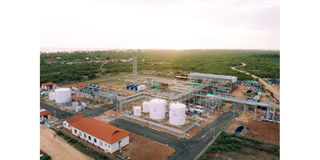
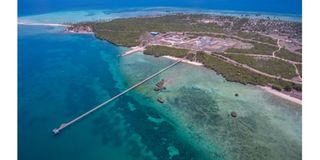
Yet today, the Songo Songo fields, once a symbol of partnership between sovereign authority and foreign capital-have become the stage for a drama that blends law, commerce, and politics.
For over two decades, Orca Energy Group has been a central player in Tanzania’s domestic energy system through its subsidiary Pan African Energy Tanzania Limited (PAET). The Production Sharing Agreement (PSA) and Gas Agreement (GA), signed in 2001, were hailed as models of cooperation.
But contracts, like societies, evolve. Governments revisit fiscal terms; investors expect stability. When those expectations diverge, friction is inevitable.
By August 2025, that friction had hardened into formal dispute. Orca announced three arbitrations at the International Centre for Settlement of Investment Disputes (ICSID): one under the Mauritius–Tanzania Bilateral Investment Treaty, and two under the PSA and GA.
The claims-valued at roughly US$1.2 billion-allege Tanzania failed to extend the development licence, prolonged the “Protected Gas” regime beyond its contractual term, withheld royalties, and subjected PAET to regulatory harassment. Tanzania, for its part, is likely to argue that these measures fall within its sovereign mandate to protect consumers and manage strategic resources.
The legal doctrines invoked-fair and equitable treatment, legitimate expectations, indirect expropriation-are familiar in international arbitration.
Tribunals often scrutinize whether sudden regulatory shifts undermine the “economic equilibrium” of an investment. The outcome will hinge on whether Tanzania’s actions are seen as legitimate regulation or breaches of contractual stability.
The dividend that spoke volumes
As the arbitration unfolded, Orca added another twist. On 9th of February 2026, the company declared a special dividend of C$2.00 per share, signaling a shift from reinvestment to value extraction.
Jay Lyons, Orca’s CEO, explained that with no constructive engagement from Tanzania on licence renewal, “there is no compelling business case to reinvest or retain excess cash.” Instead, Orca would return funds to shareholders while pursuing arbitration.
For investors, this reads as disciplined capital management. For Tanzania, it raises questions about commitment to long-term growth. Dividends distributed abroad rather than reinvested locally alter perceptions of partnership. Confidence-among banks, insurers, and potential partners-depends not only on gas flows but on trust in the durability of agreements.
Sovereignty and stability
The tension here is archetypal: sovereignty versus stability. States must adapt policies to evolving national priorities.
Investors commit capital on the assumption that rules will not change midstream. Arbitration becomes the crucible where these competing imperatives are tested.
Yet disputes need not mean rupture. Around the world, many investor–state cases end in settlements that modernize contracts, refine pricing, or clarify governance.
For Tanzania, the lesson is clear: transparent processes, timely decisions, and consistent application of agreements can prevent disputes from escalating.
For companies, reinvestment, technology transfer, and genuine engagement with local development goals can demonstrate that partnership extends beyond balance sheets.
A shared future
Gas still flows from Songo Songo. Turbines still spin. Families still depend on the electricity they produce. Behind the dense legal language-air treatment, legitimate expectations, economic equilibrium-ies a simple truth: both Tanzania and Orca want the project to succeed.
The challenge is to rediscover the partnership logic that first brought the project to life.
This moment is not merely about claims or dividends. It is about proving that sovereignty and investment are not opposing forces, but two hands steadying the same wheel-guiding Tanzania’s energy future toward reliability, fairness, and shared prosperity.
Baraka Masubo Thomas is Energy, Mining, Finance and Investment Lawyer you can reach him by an email: [email protected]